
Last updated November 15, 2026
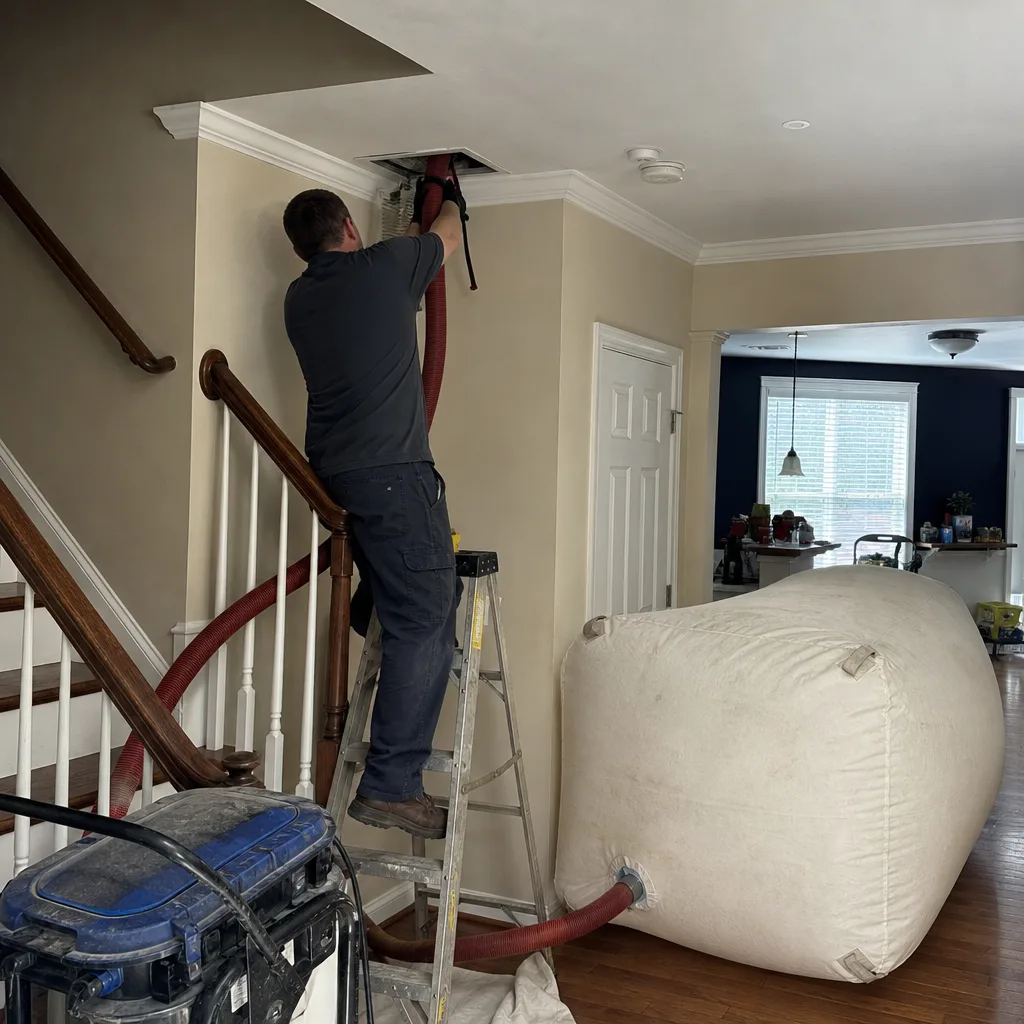
 Whole-home duct cleaning
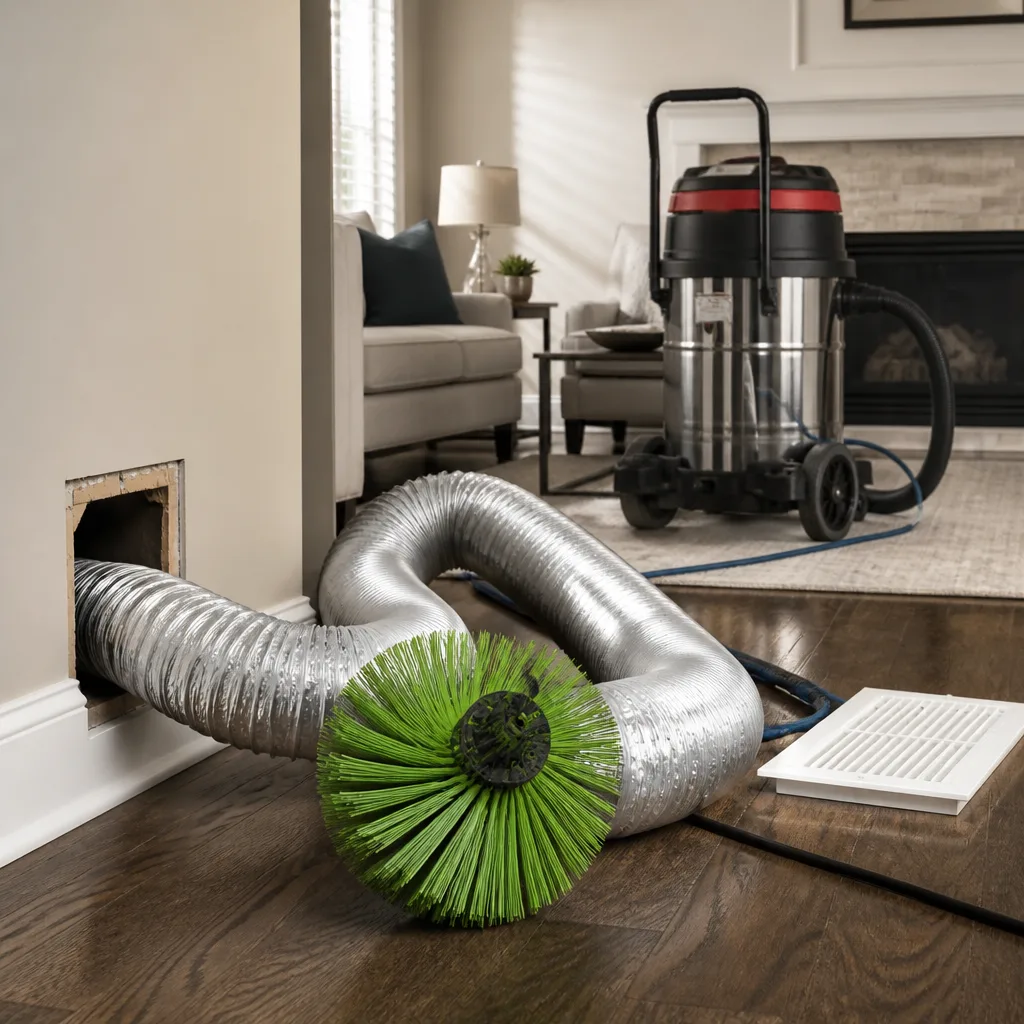
 Dryer vent cleaning
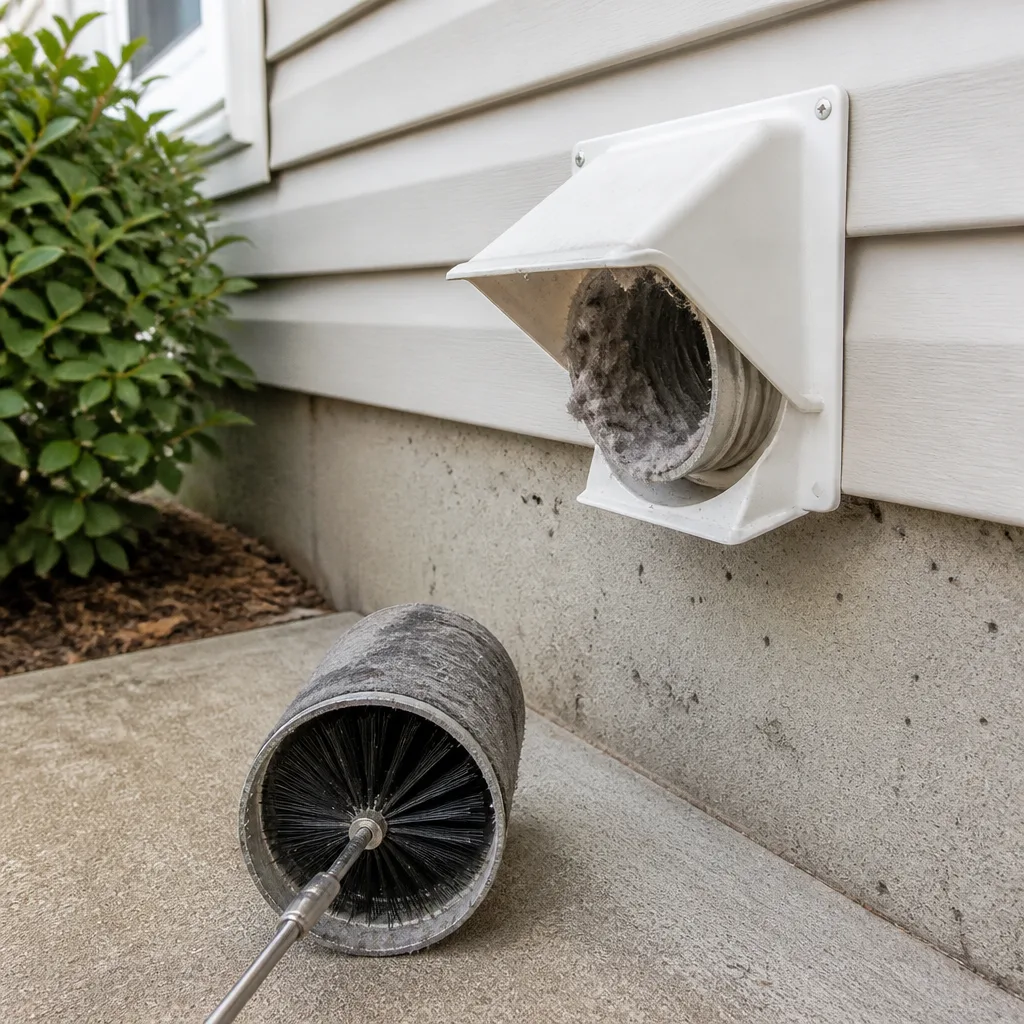
 Camera inspection
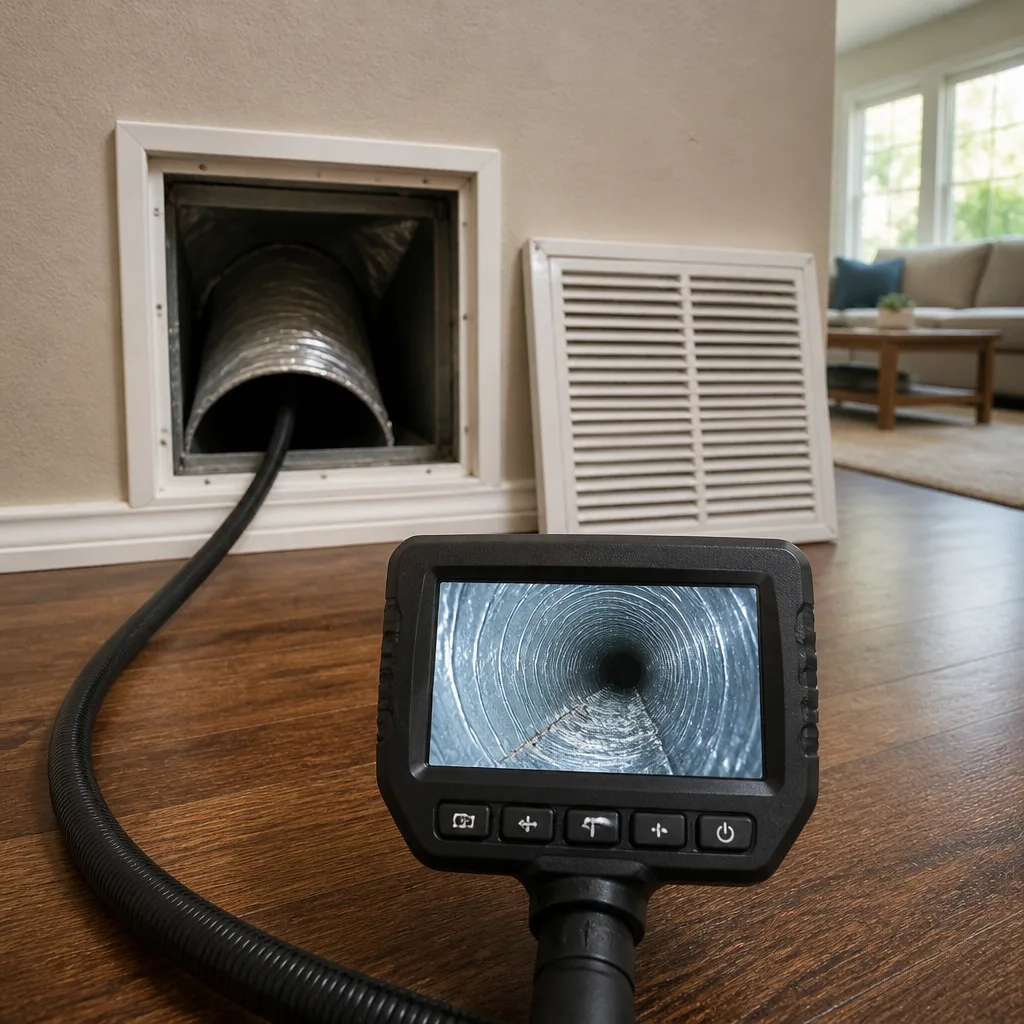
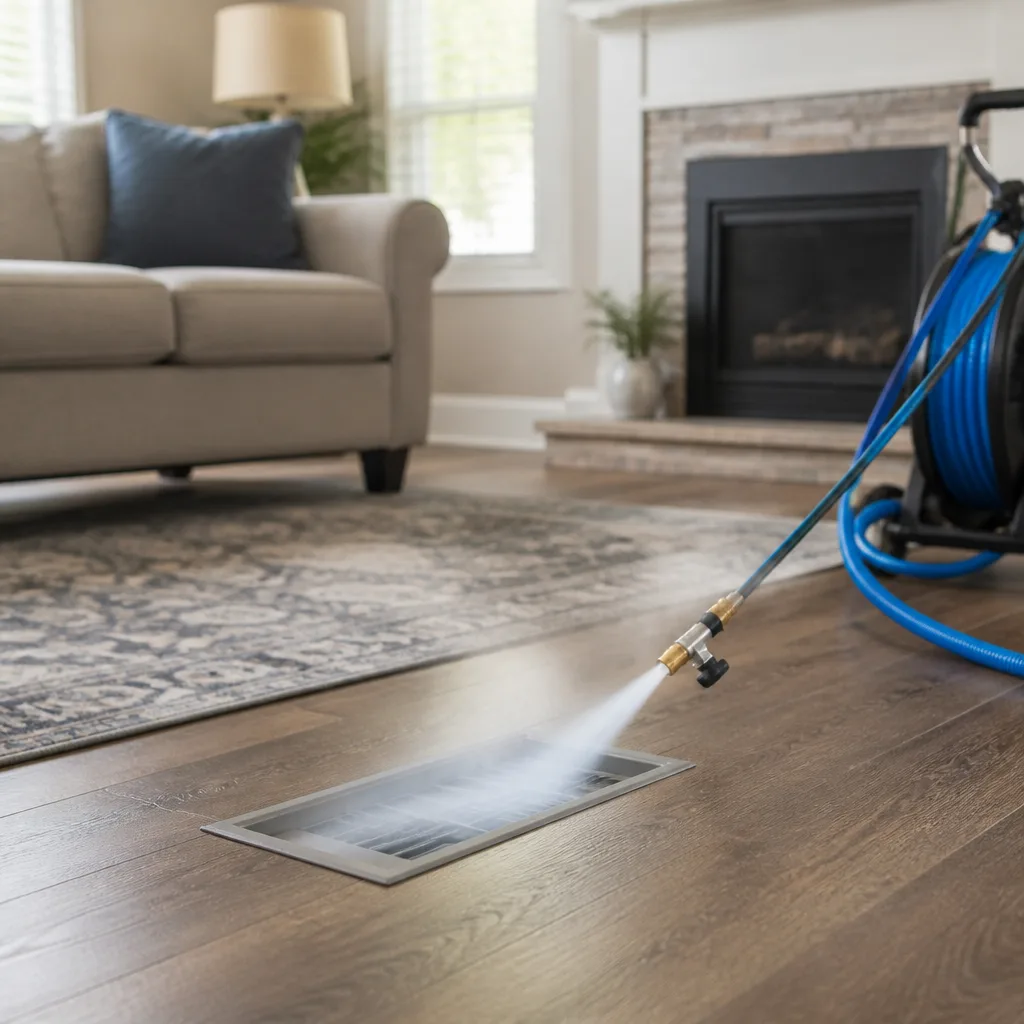 Sanitizing & deodorizing
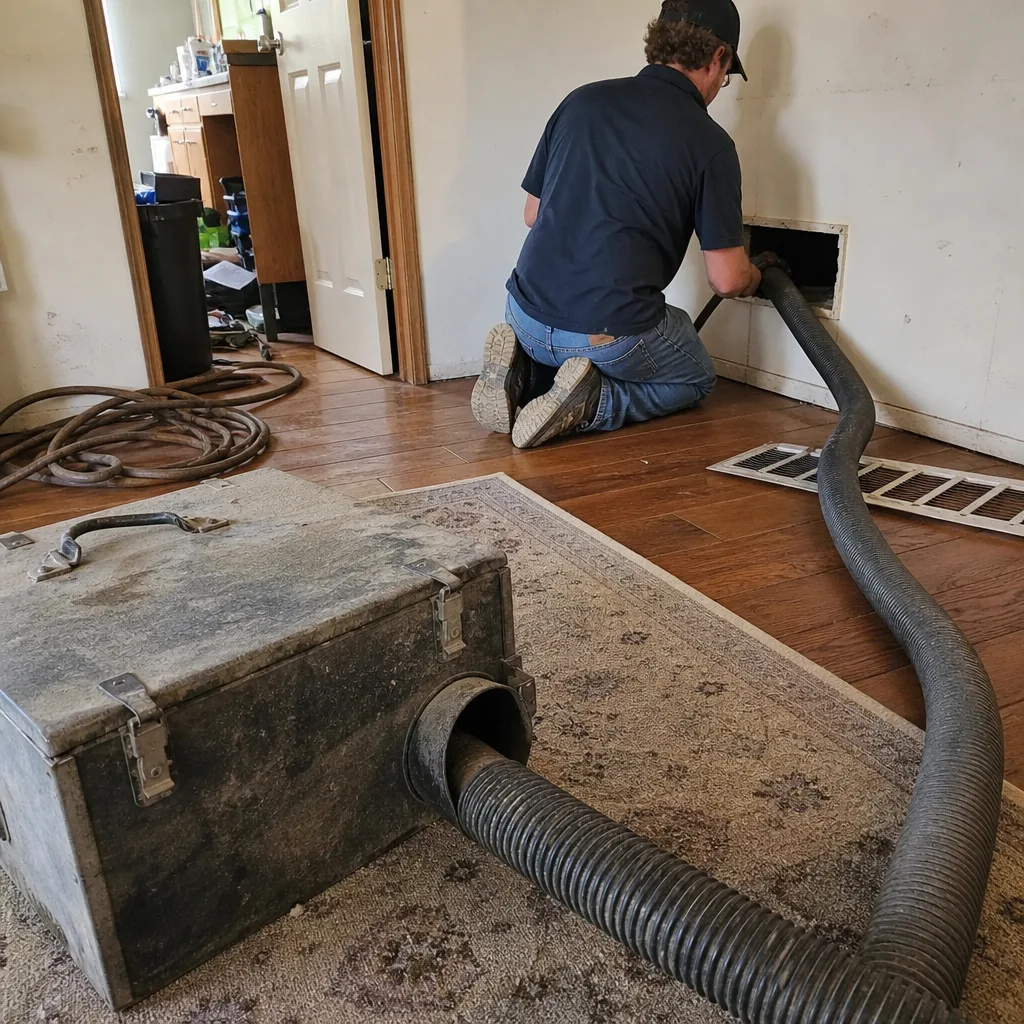
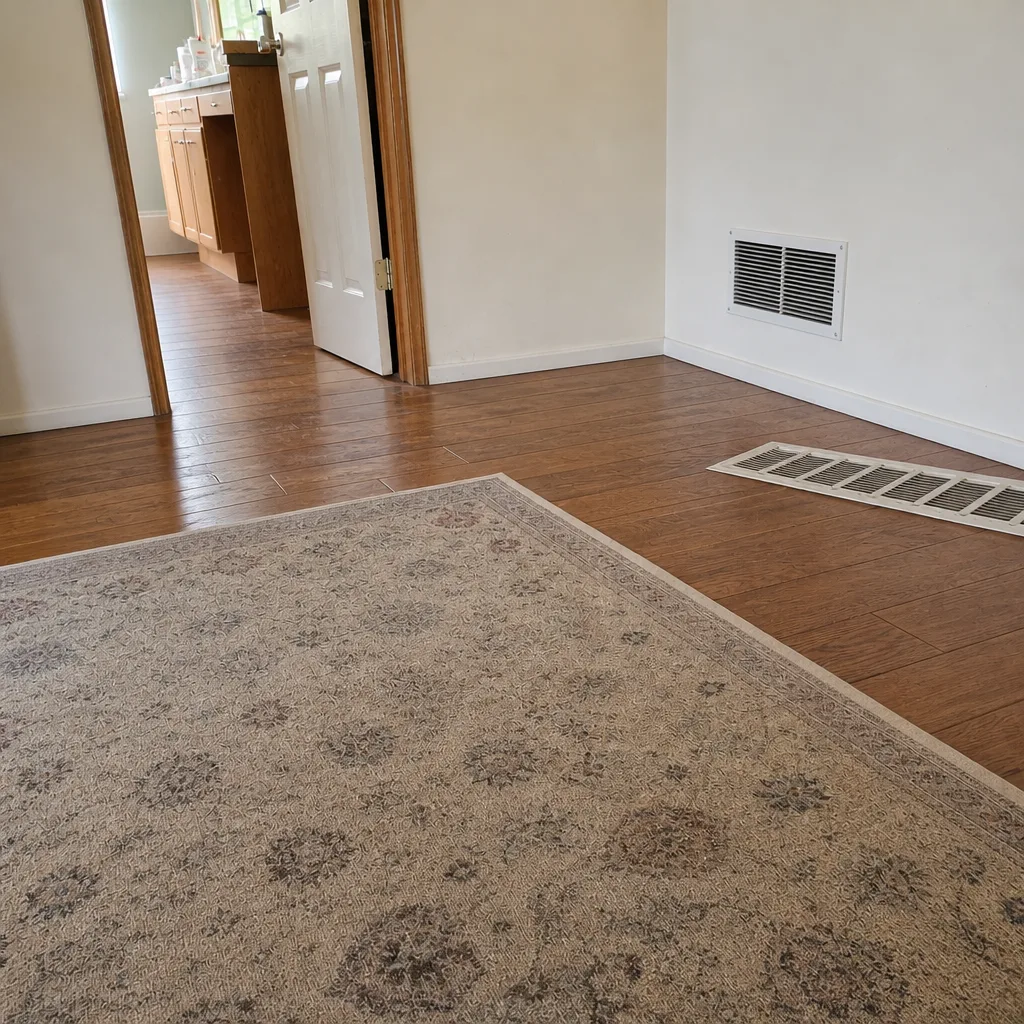
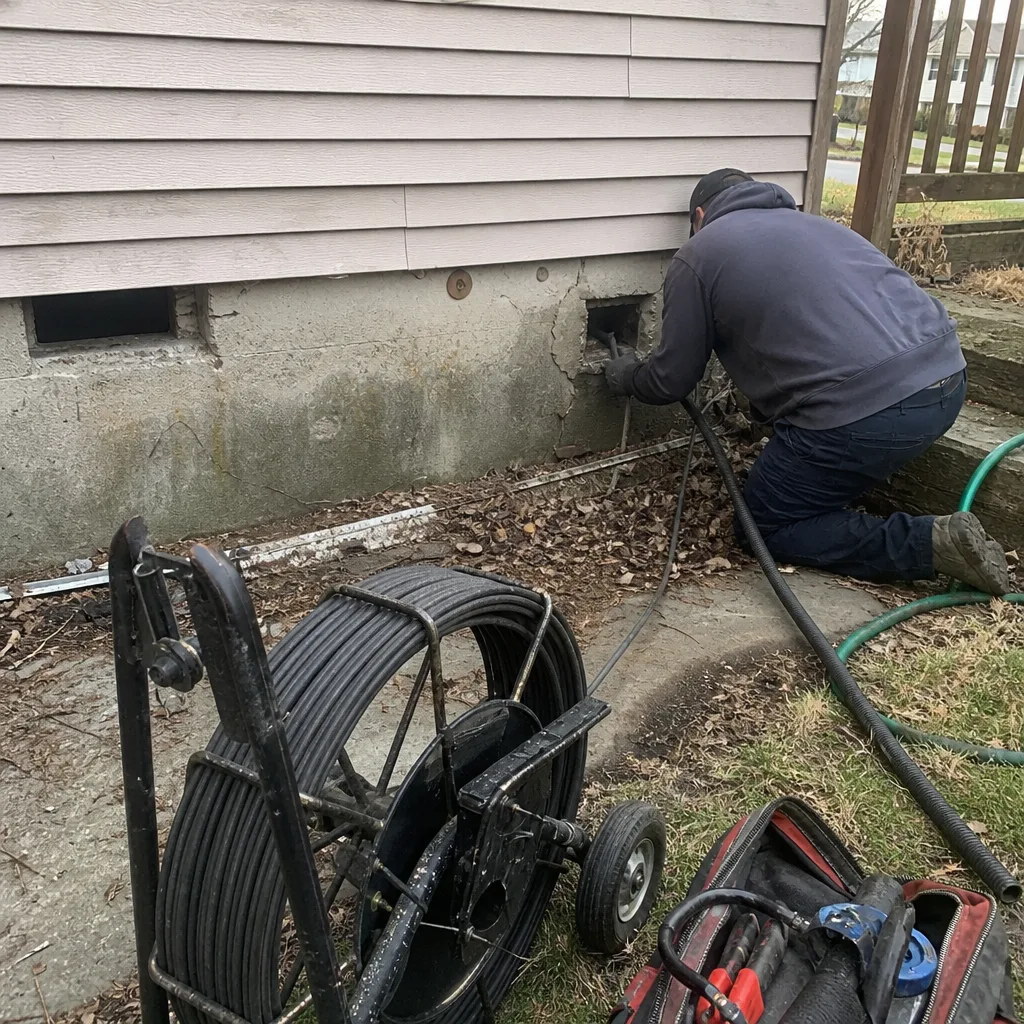
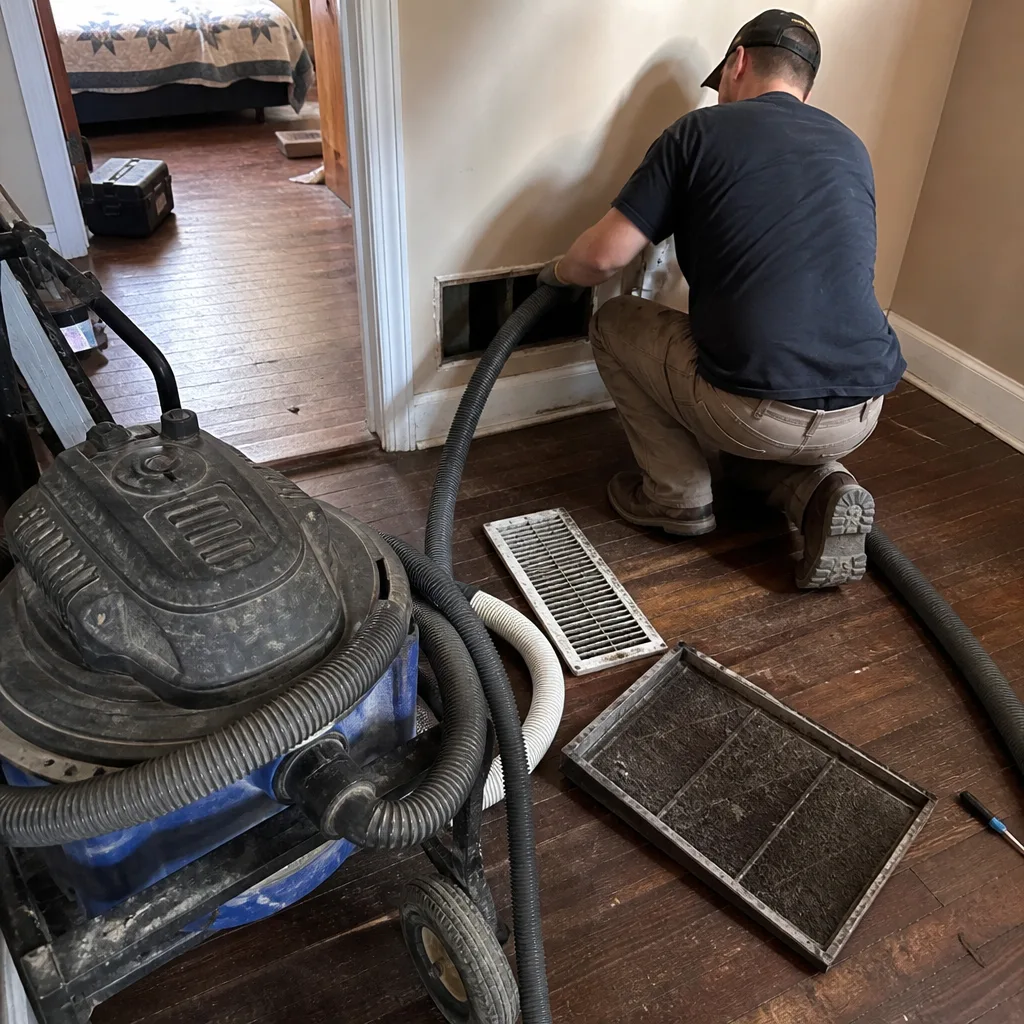
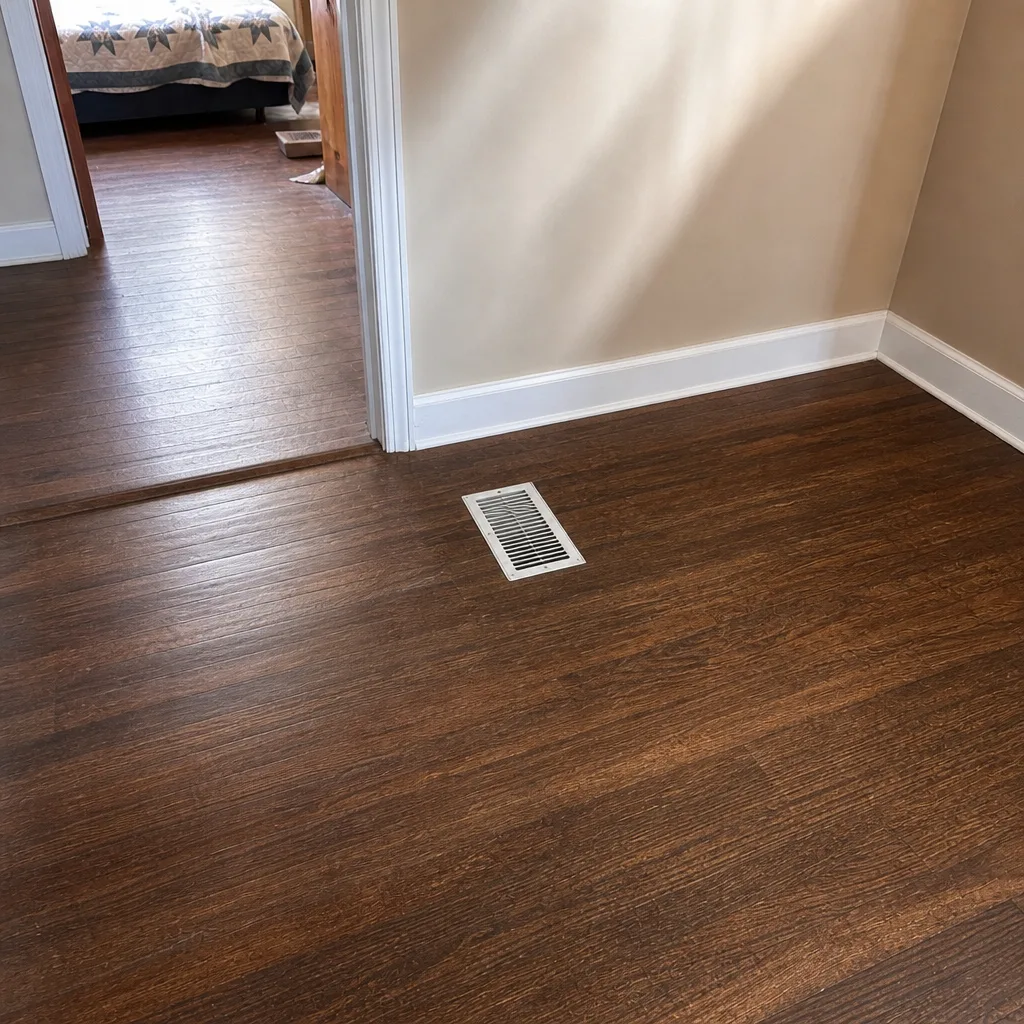
Whole-system duct and dryer vent check with before-and-after photos - you see exactly what came out of your vents
That "$99 whole-house special" is a bait ad - the real number appears once they are in your hallway, or the "clean" is a shop-vac at the register. We photograph the inside of your ducts before and after instead.
Air Duct Cleaning Warning Signs: An Evansville Homeowner’s Reference Guide
Most advice about dirty ductwork tells you to pull a register and look inside. That’s the least reliable test there is. By the time dust and debris are visible at the supply grille, the problem has usually been building for years, and the signs homeowners actually notice first have nothing to do with what’s sitting on the vent cover. A 15% jump in your summer electric bill paired with weak airflow from the upstairs registers tells you more about your ductwork than any flashlight inspection ever will. This guide walks through the signals that matter, how to tell a dirty duct system apart from a failing coil or a tired blower motor, and what each smell and stain inside your registers is telling you. If you’re in Evansville and something in this list feels familiar, you’ll finish with a clear sense of what to do next.
Styles & brands we work with
- Whole-home duct cleaning
- Dryer vent cleaning
- Camera inspection
- Sanitizing & deodorizing
Quick Answer
The most reliable warning signs of dirty or restricted air ducts are performance changes you feel and pay for, not grime you can see: a rising energy bill with no other explanation, uneven room temperatures, longer run times, short cycling, and morning congestion that clears after you leave the house. Visible dust at the registers and musty odors matter too, but they usually confirm a problem the performance signals flagged first. When several of these show up together, it’s worth having the system looked at by a professional.
Table of Contents
- Five HVAC Performance Signals That Point to Duct Restriction
- Occupant Health Patterns That Track With Duct Contamination
- Dirty Ducts vs. a Dirty Coil, a Failing Blower, or Leaky Ducts
- What the Inside of Your Registers Is Telling You
- Smell-Based Warning Signs and What Each One Means
- Why Evansville’s Climate Makes Duct Contamination Worse
- How a Proper Duct Inspection Actually Works
- Common Mistakes to Avoid
- When to Call a Professional
- Frequently Asked Questions
Five HVAC Performance Signals That Point to Duct Restriction
Airflow is measurable, and the system tells you when it’s falling short. Here are the five performance changes we look for first when a homeowner describes a comfort problem rather than a visible mess.
- CFM drop. CFM, or cubic feet per minute, is the volume of air moving through your system. A duct run packed with dust and debris narrows its effective width, and the volume that reaches the register falls. You won’t measure CFM yourself, but you’ll feel it as weak airflow from vents that used to blow strong.
- Uneven room temperatures. If the upstairs bedrooms run several degrees warmer than the ground floor in summer, and the gap has widened over time, restricted ductwork is one likely cause. The longest runs lose the most airflow first, which is why the rooms furthest from the air handler complain earliest.
- Short cycling. A system that starts and stops more frequently than it used to is often struggling to satisfy the thermostat because the air can’t get where it needs to go. Short cycling wears on the equipment and does nothing good for your comfort.
- Increased run time. If the furnace or air conditioner runs noticeably longer to reach the same setpoint, you’re paying for it whether or not you’ve noticed the bill yet.
- Coil freeze-up. Restricted airflow across the indoor coil can drop its temperature below freezing, and ice forms. Ice on the coil is a genuine frost warning for the whole system, so treat it as a reason to investigate airflow, not just a nuisance to thaw out.
Notice that none of these require you to see inside a duct. They’re changes in how the system behaves. Track them over a season or two and you’ll have a better diagnostic picture than any single vent inspection.
Occupant Health Patterns That Track With Duct Contamination
Air quality complaints follow a pattern, and the pattern is the useful part. A single symptom tells you little. A symptom that keeps to a schedule tells you a great deal.
The most telling pattern is morning congestion that clears after you leave the house. If you wake up stopped up and find your breathing opens up once you’re at work or out running errands, the trigger is very likely something in your indoor air. Your home has been closed up overnight, and whatever is circulating in the ductwork has had hours to settle into the rooms you sleep in.
The second pattern is symptom onset that tracks with HVAC season changes. If allergy-like complaints show up in the spring when the air conditioning switches on, and again in the fall at first furnace startup, draw the connection. The first run of the season blows out whatever collected in the ductwork during the months the system sat idle.
A third pattern is location-specific complaints. If one bedroom or one room with a single supply register causes more sneezing than the rest of the house, that run deserves attention. Dust distribution in a home is not even, and it follows the duct layout.
We’re not in a position to diagnose medical conditions, and we don’t claim duct cleaning cures anything. What we can say is that people who have dust or debris built up in their ductwork often describe this exact set of patterns, and homeowners who have the system professionally cleaned frequently report the pattern easing. If you’re in Evansville and the timing of your symptoms matches the timing of your HVAC, that overlap is worth acting on.
Dirty Ducts vs. a Dirty Coil, a Failing Blower, or Leaky Ducts
Here’s the part most guides skip. Every performance signal above has at least three possible causes, and dirty ductwork is only one of them. Getting the diagnosis right before anyone touches your system saves real money.
- A dirty evaporator coil restricts airflow just like clogged ductwork, and the symptoms can be nearly identical: weak airflow, longer run times, and eventually freeze-up. The difference is location. A coil problem lives at the air handler; a duct problem lives in the distribution runs. In our experience this distinction is where a lot of homeowners get sold the wrong service.
- A failing blower motor shows up as weak airflow across every register at once, not just the distant ones. If every vent in the house is blowing soft in equal measure, look at the blower before assuming the ducts. A motor on its way out often also sounds different, so listen.
- Duct leakage wastes conditioned air into attics, crawlspaces, and wall cavities. The symptom pattern resembles restriction, but the cause is a gap or disconnected joint rather than buildup. Duct leakage also raises your energy bill in a way restricted airflow alone won’t, because you’re paying to cool a space you don’t live in.
We work through this comparison on every inspection. Cleaning is one of the three services we offer alongside dryer vent cleaning and air duct repair, and we repair duct problems in-house when we find them, so a leak discovered during a cleaning doesn’t send you looking for another contractor. Getting the diagnosis right is the whole point; a cleaning that doesn’t address the real cause of your symptoms is money you don’t get back. If the problem turns out to be a coil or a motor, that falls outside our three services and we’ll tell you so plainly. A professional-grade tool set matters here, which is why we work with Rotobrush and Nikro equipment rather than a shop vac and a hose, but no tool replaces an accurate diagnosis.
What the Inside of Your Registers Is Telling You
Visual signs aren’t the first warning, but they’re specific. When you do pull a register cover, here’s what different stains and coatings indicate.
- Gray, fibrous dust. That appearance often points to liner deterioration. Many duct systems have an internal fiberglass or foil-faced liner, and it can break down and shed fibers into the airstream. Shed fibers are a repair issue as much as a cleaning issue, and a system with that problem needs both.
- Black streaking or spotting. Black marks around a register or along a duct joint usually signal moisture and biological growth. Moisture inside ductwork doesn’t fix itself, and cleaning without fixing whatever is introducing dampness won’t hold for long. When we find this, we can bring Guardsman treatments to bear for concerns inside the duct system, and we’ll track down the moisture source before the job is done.
- A brown, even film. General accumulation varies with home and household, so don’t read much into light uniform dust coverage on its own. It confirms that contamination is present; it doesn’t tell you how severe it is. Combined with the performance and health patterns above, it supports a cleaning recommendation.
- Visible pests or droppings. Any sign of rodent or insect activity inside ductwork calls for a professional look, and it means the whole system should be inspected, not just the register where you found it.
If you’re working with a whole-home filtration setup using Honeywell or Aprilaire equipment, check those components too. A neglected filter or media cabinet can look fine at the register while it’s quietly loading the airstream with what it should be trapping.
Smell-Based Warning Signs and What Each One Means
Smell is the most underrated diagnostic. Your nose catches changes before your eyes do, and the type of smell tells you something specific about urgency.
Musty, damp, or basement-like. Mustiness means moisture is present somewhere in the system, and where there’s moisture, biological growth follows. This is the smell that warrants prompt attention, because the underlying problem gets worse with time. In a humid summer, Evansville homes trend toward this one more than dry-climate homes do.
Burning or hot-wire smell. A burning smell is not a duct-cleaning signal; it’s an equipment signal. Turn the system off and have it checked. Dust burning off heat elements at first startup is a separate, expected issue discussed below, but a persistent burning smell while running is not something to ignore.
“Dusty heat” at first furnace startup. When a furnace hasn’t run since spring, the first few cycles often smell faintly of dust cooking off the heat exchanger and components. That’s normal and clears within a couple of cycles. The concerning version is a dusty smell that doesn’t clear, or one that gets stronger each season, which points to accumulation that the airflow is pushing past you every time the heat runs.
A stale, closed-up smell that lingers. If a room smells faintly stale even after you’ve aired it out, and it comes back, the source is usually the airstream itself. That’s a strong candidate for a system that’s ready for professional cleaning.
We treat odor as part of the diagnosis, not a separate product. Musty smells in Evansville homes usually lead us back to moisture, and moisture control comes before any treatment. Where biological concerns are found, we can apply Guardsman treatments as part of the job, but the treatment goes on after the containment setup, not instead of it. Abatement Technologies negative-air and HEPA equipment is what we bring for that work, and it’s the same standard used in professional remediation for exactly this reason.
Why Evansville’s Climate Makes Duct Contamination Worse
Evansville sits in a humid-subtle climate, and the seasonal swings matter for ductwork in ways homeowners don’t always connect. Louisville and the Ohio River corridor. The summer humidity is relentless. That humidity has a direct effect on what happens inside a duct system.
In summer, the supply air is cold while the attic or crawlspace around the duct run can be hot and humid. Any moisture that gets into the duct system from a joint gap, a condensation issue, or high indoor humidity has an ideal environment to linger and grow. That’s why the black streaking and musty smells are common findings in Evansville homes, and why moisture control matters here as much as the cleaning itself.
Winter adds its own pattern. The furnace runs more often, drawing more air through the return side, and dust and debris that settled during the cooling season gets disturbed. If you notice a dusty smell or an uptick in congestion in November, the system is delivering what collected during the summer.
Older homes in the city, particularly the established neighborhoods around Downtown and the historic districts, often have duct systems that grew piecemeal, with additions and modifications that don’t match the original design. That history shows up in airflow complaints. Newer subdivisions on the city’s fringes tend to have tighter homes with standard ductwork but sometimes neglect filtration maintenance. We see both regularly in Evansville, and the warning signs we look for are the same, but the likely causes aren’t always.
How a Proper Duct Inspection Actually Works
A real inspection is not a technician shining a flashlight into one register and pronouncing the whole system dirty. Here’s how the process should go, and what a professional-grade approach looks like compared to the commodity version.
- Walk-through and symptom review. We ask about the performance and health patterns covered above. The answers are diagnostic. “The upstairs is hotter than it used to be and my son coughs in his room at night” points to a specific duct run.
- Access and visual assessment. Access to the air handler, the main trunk, and representative branch runs. We don’t remove access panels and leave holes open; we seal them back up.
- Equipment selection. Some jobs need agitation to free the buildup, which is where Rotobrush and Nikro equipment earns its keep. Some jobs need containment and HEPA filtration to make sure what’s disturbed doesn’t end up in your living room. Abatement Technologies equipment is what we bring to containment-level jobs. Right tool for the job, matched to the system.
- In-wall inspection where needed. Duct runs in walls or tight chases need a camera to see what’s actually happening. This is where leak repairs often get discovered.
- Before-and-after documentation. Photos of the interior before, and after, tell you whether the work was actually done. Ask for them.
- Written findings and estimate. Anything found that needs repair gets laid out clearly. The written estimate, not a phone guess, sets the price.
Notice that cleaning is not step one. If a technician starts cleaning before assessing, they haven’t done the diagnostic work. That’s true whether you call us or anyone else.
Common Mistakes to Avoid
- Judging the whole system by one vent cover. A dusty register is not a diagnosis. A clean register doesn’t mean the ductwork is clean, and a dusty one doesn’t tell you what the main trunk looks like. Judge by the performance signals and let a professional assess the whole system.
- Hiring a generalist HVAC contractor for the add-on ticket. Your HVAC tune-up guy can be excellent at what he does and still be the wrong choice for duct cleaning if the duct work is an upsell, not the specialty. Ask what equipment is brought to the job. A consumer-grade vacuum hooked to a hose is not the same as a dedicated duct cleaning system.
- Ignoring a burning smell while the system runs. Burning smells are equipment signals, not duct signals. Turn the system off and get it checked before you think about cleaning.
- Cleaning a system with black streaking without addressing the moisture. Contamination caused by moisture will come back if the moisture source is never found. Insist on the full diagnosis.
- Skipping the filter you already have. If you run a Honeywell or Aprilaire filter system, maintain it as instructed. A neglected filter adds to the load inside the duct system. Cleaning the ducts while ignoring filtration is working harder than you need to.
- Letting a disconnected or torn run go unrepaired. A duct problem found during a cleaning needs a repair, not a note. Choose a company that repairs what it finds; ours does duct repair in-house so you don’t need a second contractor.
- Putting off a dryer vent job because it looks fine. If your dryer vent hasn’t been cleaned in a long time, or the dryer runs hot and takes longer than it used to, that’s a separate and serious warning sign. Lint buildup in a dryer duct is a genuine fire risk, and it doesn’t announce itself the way a blocked air duct does. Evansville Duct Cleaning treats dryer vent cleaning as a real safety service, not a footnote.
When to Call a Professional
Not every dusty register needs a call. The signals to act on are the ones that come in clusters. If two or three of these are true, it’s time for a professional diagnosis: your energy bill has risen without a change in usage, some rooms run warm while others run cold, the system runs longer or short cycles more often, you’ve woken up congested with the pattern clearing after you leave the house, musty odors linger even after airing out, or you see black streaking inside a register. Same for a dryer vent that hasn’t been cleaned in years. When the performance signals and the health patterns show up together, you’re past the point of blaming the thermostat.
Evansville Duct Cleaning is built around exactly these problems. We offer free estimates in Evansville and use professional-grade equipment from Rotobrush, Nikro, and Abatement Technologies. If you’re seeing the warning signs, call (833) 725-5641. We answer 24/7. Fast dispatch from 7am to 7pm, Sunday through Friday.
Frequently Asked Questions
Most homes don’t need cleaning on a fixed schedule; they need it when the warning signs show up. A system with pets, recent renovation dust, moisture problems, or symptoms that match the patterns above is a better candidate than a system that simply hasn’t been touched in a while. If you can’t tell whether yours qualifies, an inspection answers the question definitively, and a free estimate in Evansville is the cheapest way to find out. Call (833) 725-5641.
More dust in the home is worth noting, but it’s less specific than the performance and health patterns. A single dusty room may point to one branch run, while dust throughout the house can mean the filtration is struggling or the return side is drawing in debris. The pattern is more diagnostic than the dust itself. If it’s been going on and you live in Evansville, have someone look at it.
Not necessarily. A rising bill can come from rising rates, a failing blower, duct leakage, or a dirty coil, and dirty ducts are only one possible cause. The key is pairing the bill with other symptoms: uneven temperatures, longer run times, weak airflow at distant registers. If they’ve arrived together, get the system evaluated. Cleaning alone won’t fix a bill caused by leaking ducts if the leak isn’t repaired, which is why our in-house repair service matters.
No. A phone diagnosis would be a guess, and guesses are how homeowners end up paying for a service they didn’t need. We look at the system, check the performance signals, and give you a written estimate based on what we find. That’s what the free estimate is for. Call (833) 725-5641 to schedule.
Black streaking or spotting usually means moisture and biological growth inside the ductwork, and it’s a sign to get the system inspected promptly. It’s also a sign that cleaning alone may not solve it; the moisture source needs to be found and fixed. We handle that as part of a cleaning and repair visit, and where biological concerns are found we can use Guardsman treatments. Don’t wait if it’s spreading.
Yes, but not the same ductwork as your air ducts. A dryer that runs hot and takes longer than it used to is a classic sign of a clogged vent, and lint buildup in a dryer duct is a real fire risk. That’s dryer vent cleaning, a separate and serious job, and in Evansville Duct Cleaning treats it as a safety priority. If you’re seeing that pattern, call (833) 725-5641.
The Bottom Line
The warning signs that matter most aren’t at the register; they’re in your system’s performance and in the patterns your household lives with. Rising energy bills with no other explanation, uneven temperatures, longer run times, morning congestion that lifts when you leave the house, musty odors that keep coming back, and black streaking inside a vent are all worth acting on. In Evansville’s humid climate, moisture makes these problems worse and harder to ignore. Don’t judge the whole system by one dusty cover, don’t let a generalist upsell you into a cleaning you don’t need, and don’t put off a dryer vent that’s running long. When the signs cluster, get the diagnosis. Our technicians have up to 14 years of experience with professional-grade equipment, and we’ll tell you plainly what your system needs. Call (833) 725-5641 for a free estimate.
Written by the team at Evansville Duct Cleaning.
See the difference
 Before
 After
 Before
 After
 Before
 After