
Last updated November 15, 2026
 Whole-home duct cleaning
 Dryer vent cleaning
 Camera inspection
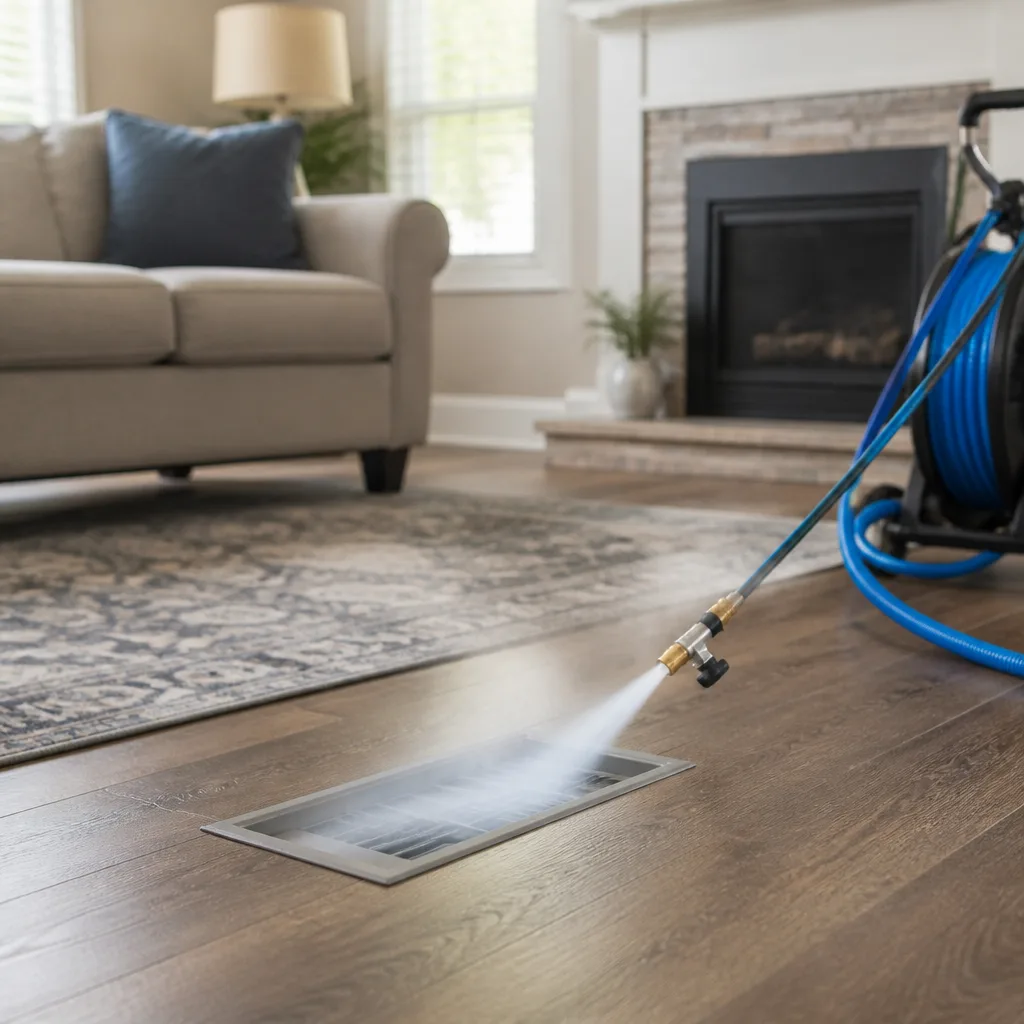 Sanitizing & deodorizing
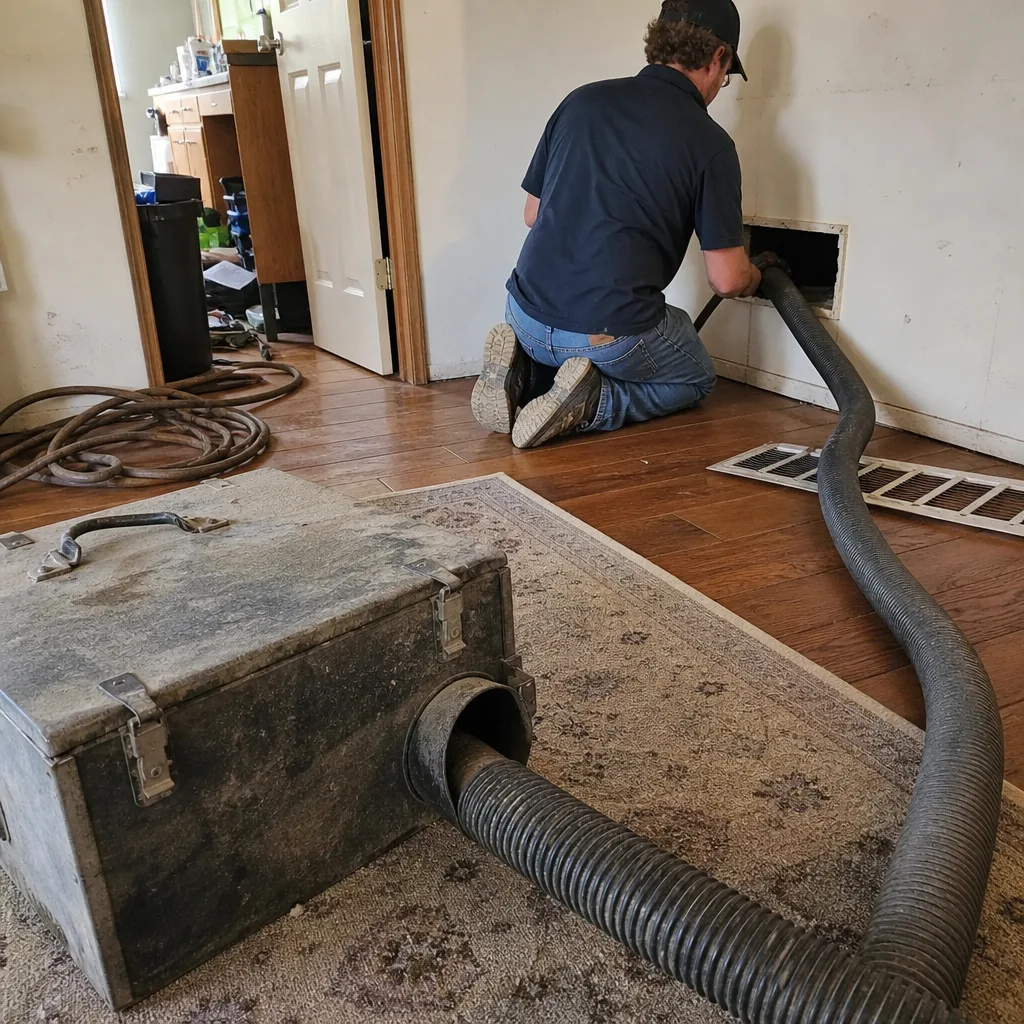
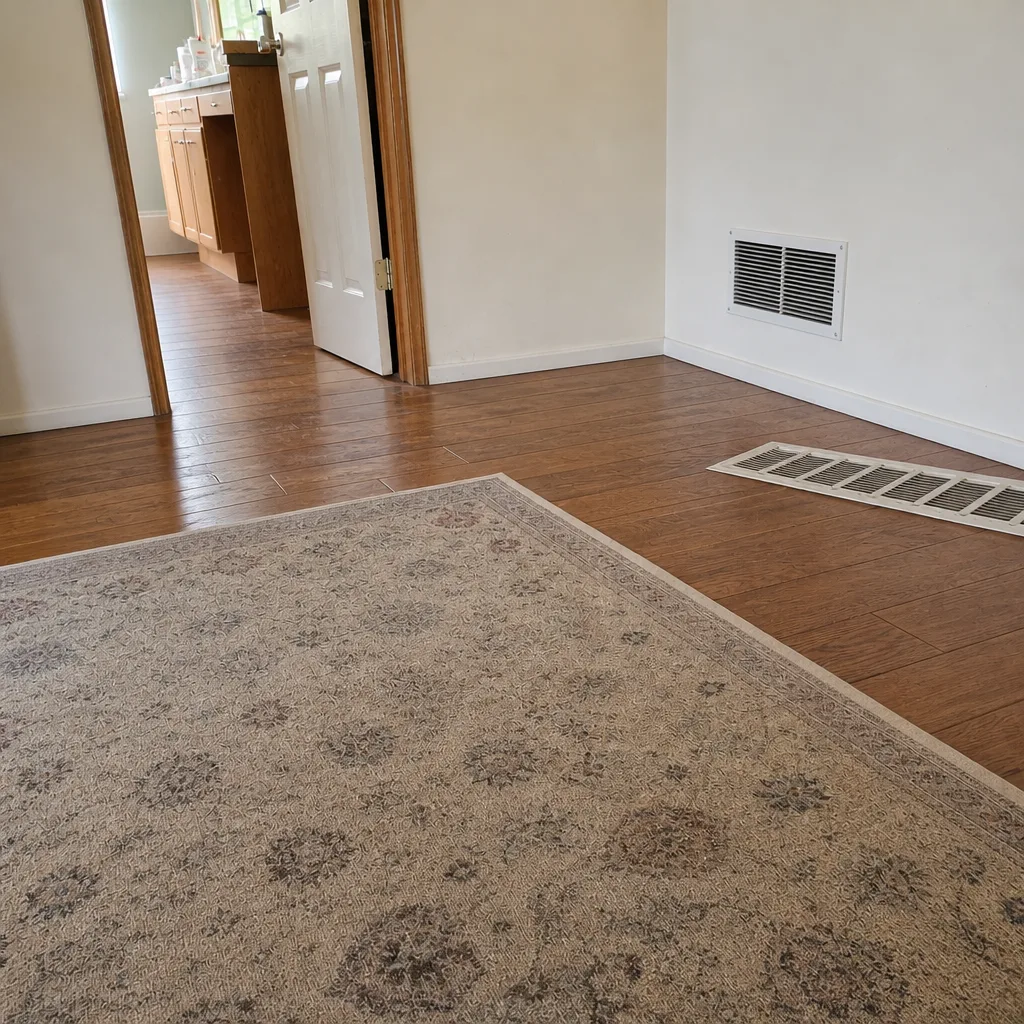
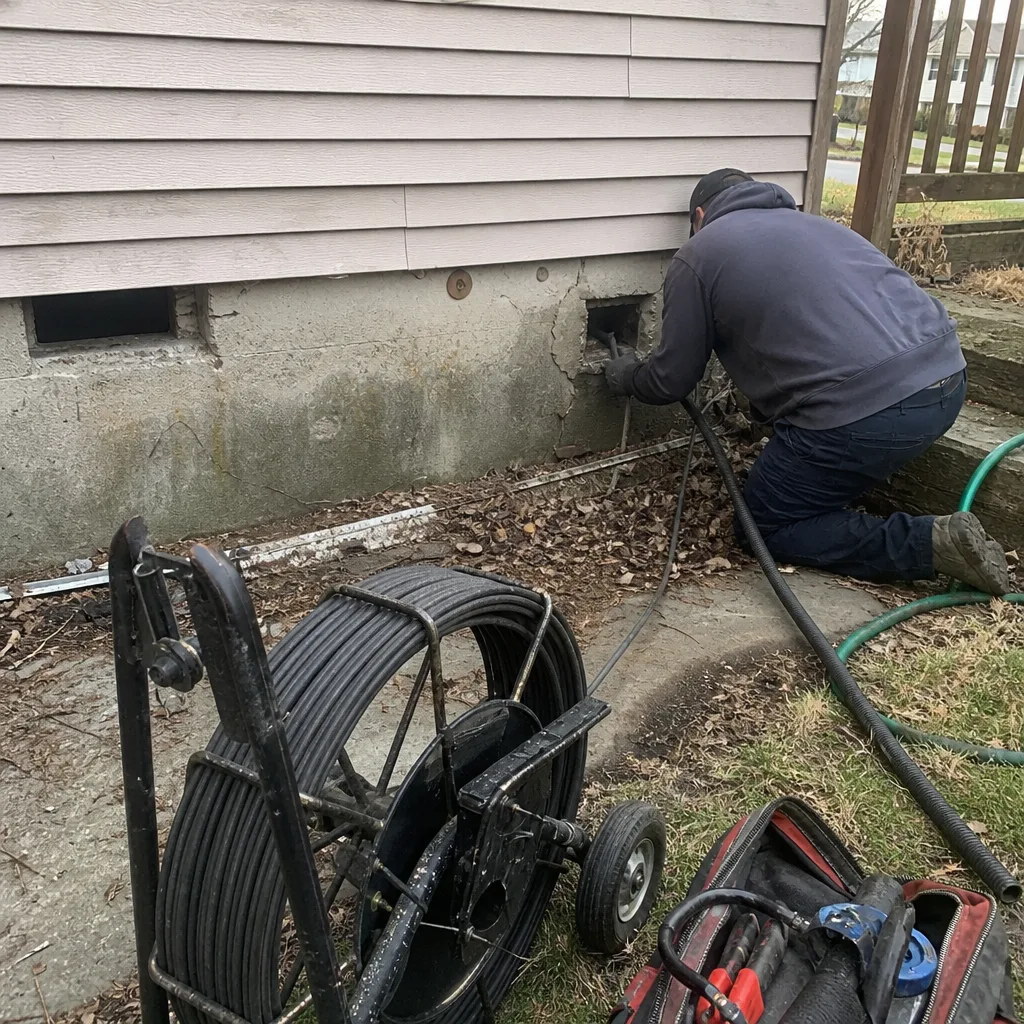
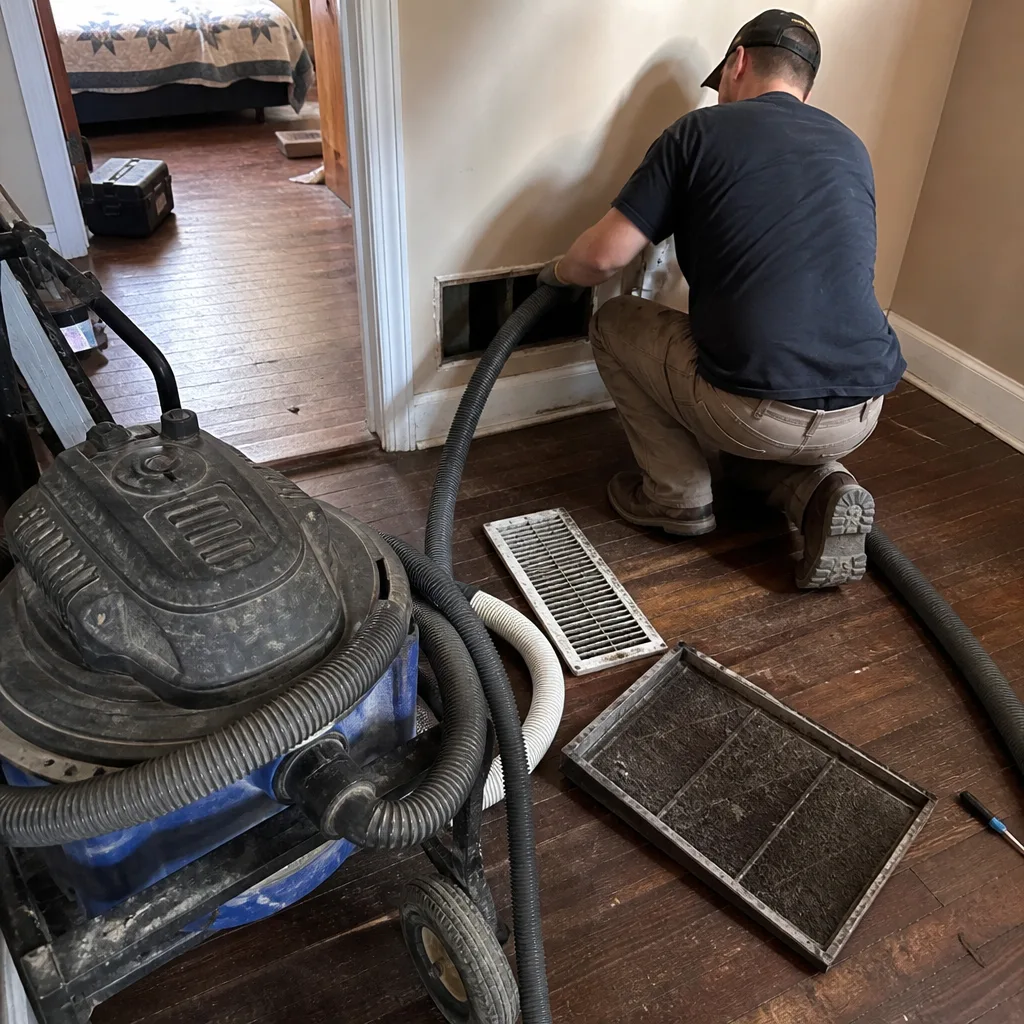
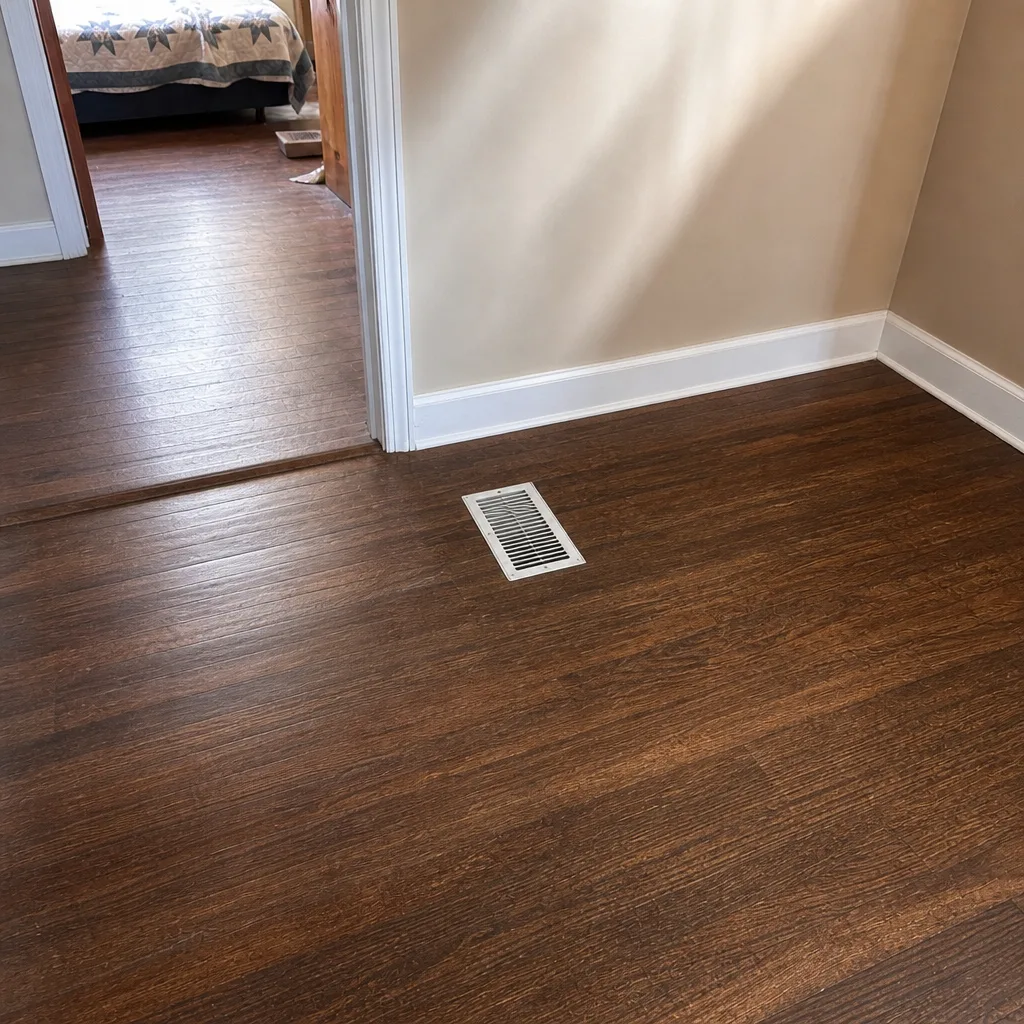
Whole-system duct and dryer vent check with before-and-after photos - you see exactly what came out of your vents
That "$99 whole-house special" is a bait ad - the real number appears once they are in your hallway, or the "clean" is a shop-vac at the register. We photograph the inside of your ducts before and after instead.
The Complete Guide to Air Duct Cleaning in Evansville
Most Evansville homeowners are working from one of two extremes. Either they’ve never had their ducts cleaned because nobody ever told them what “dirty” actually looks like inside a system, or they’ve been sold a quick pass with a hose through each register and assume the job is done. Neither is really cleaning. The truth is that duct contamination in Evansville behaves differently than it does in drier Midwest cities, and the right approach depends on the era and material of your ductwork, not on a calendar. This guide gives you a system-specific framework: what to check, how a real source-removal process works, and how to verify a job was done right before anyone packs up. All of it, grounded here in Evansville.
Quick Answer
Air duct cleaning in Evansville removes accumulated dust, biological growth, and debris from the entire duct system, including supply runs, return plenums, and the air handler cabinet, using negative pressure and mechanical agitation rather than a simple vacuum pass. Most homes here benefit from cleaning every three to five years, but Evansville’s humid summers and common flex-duct installations can push that interval shorter. The job should be measured by what gets removed and verified, not by how long a hose stays in each register.
Styles & brands we work with
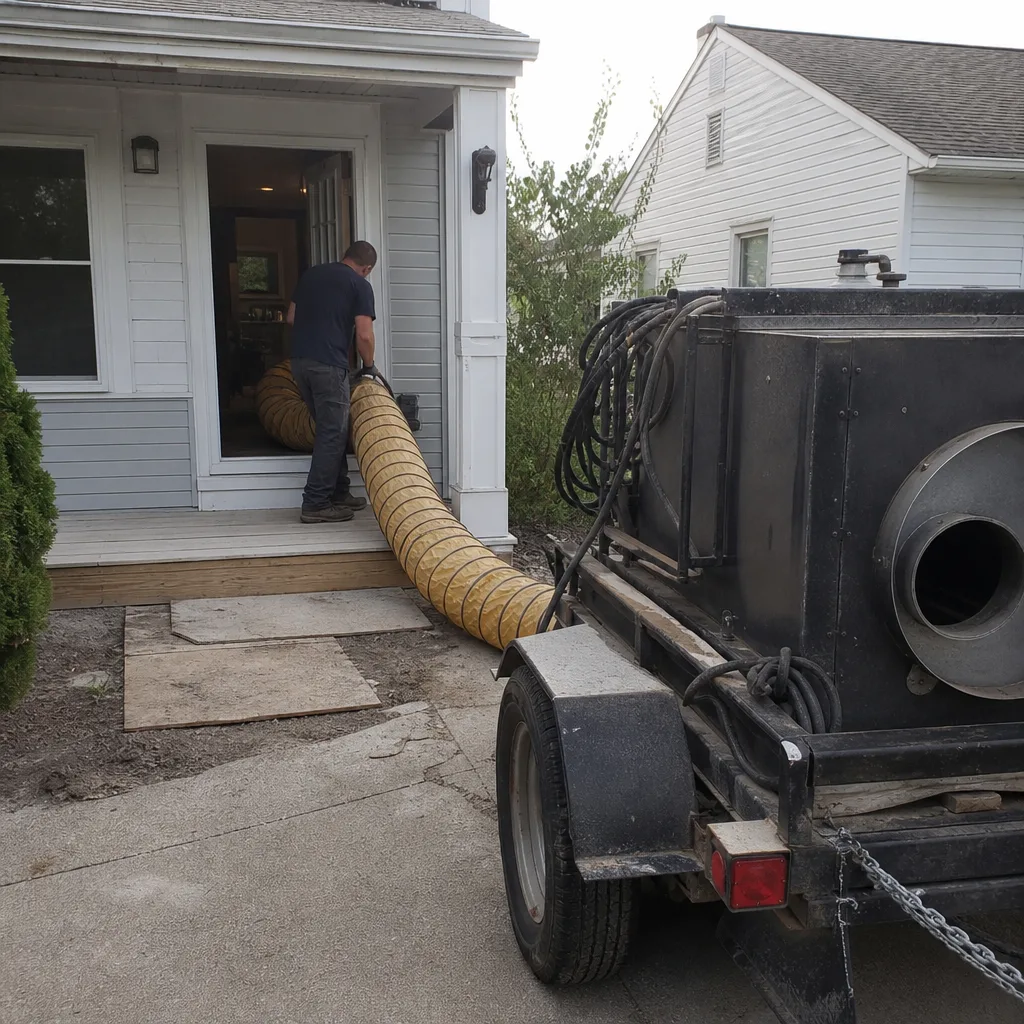
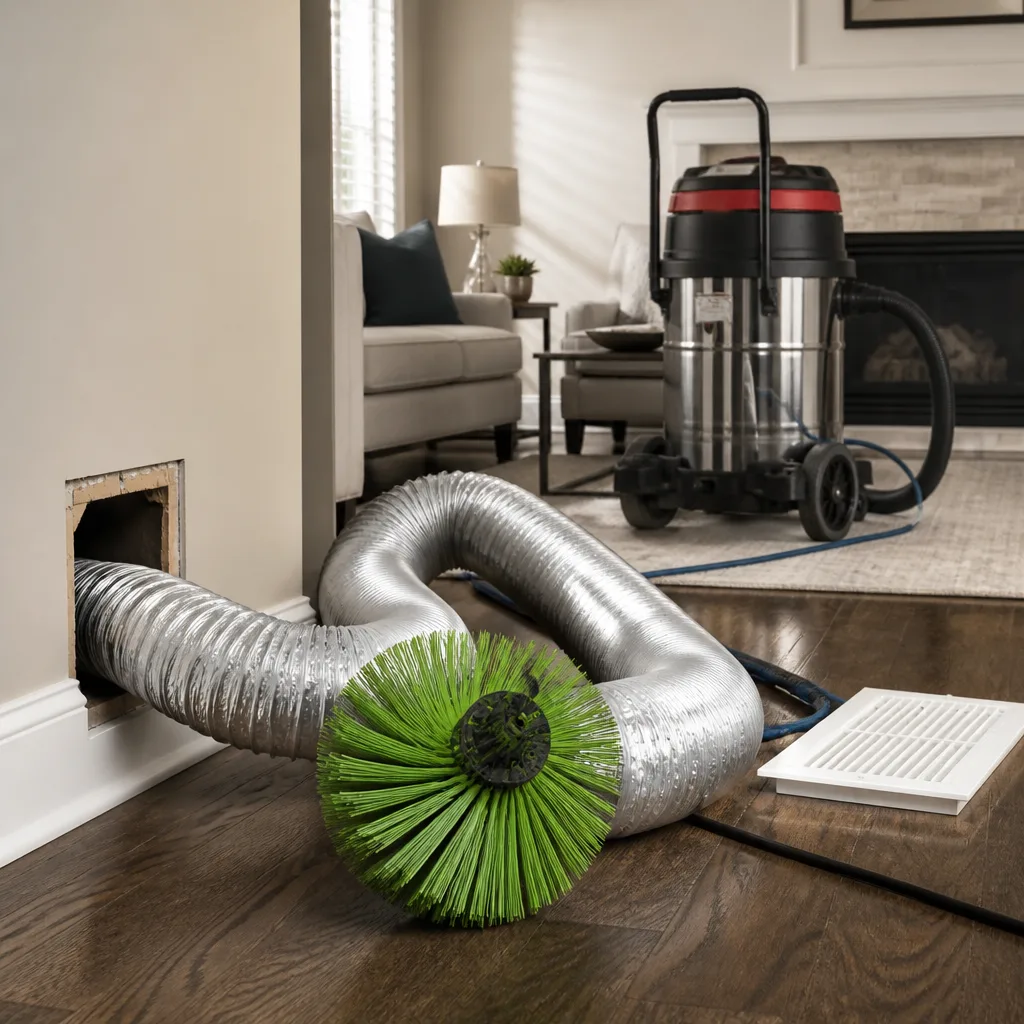
- Whole-home duct cleaning
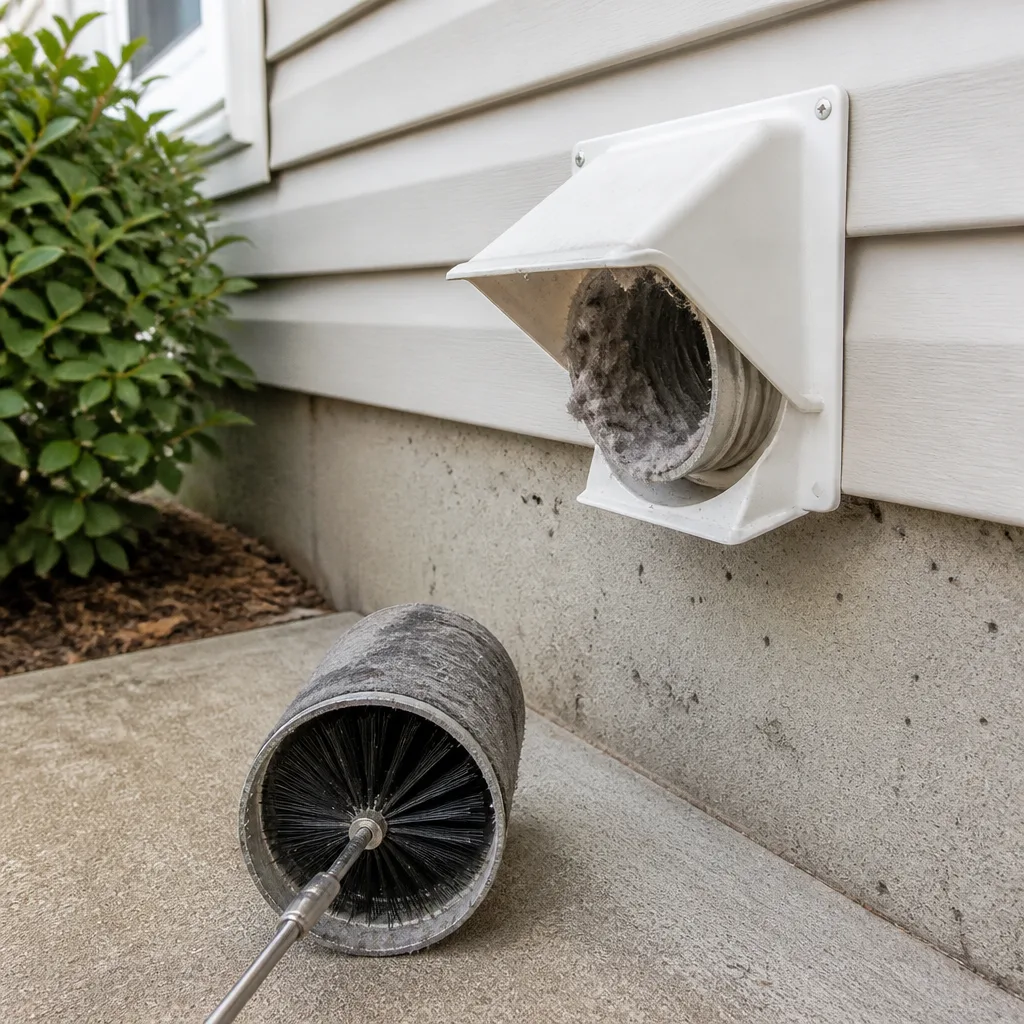
- Dryer vent cleaning
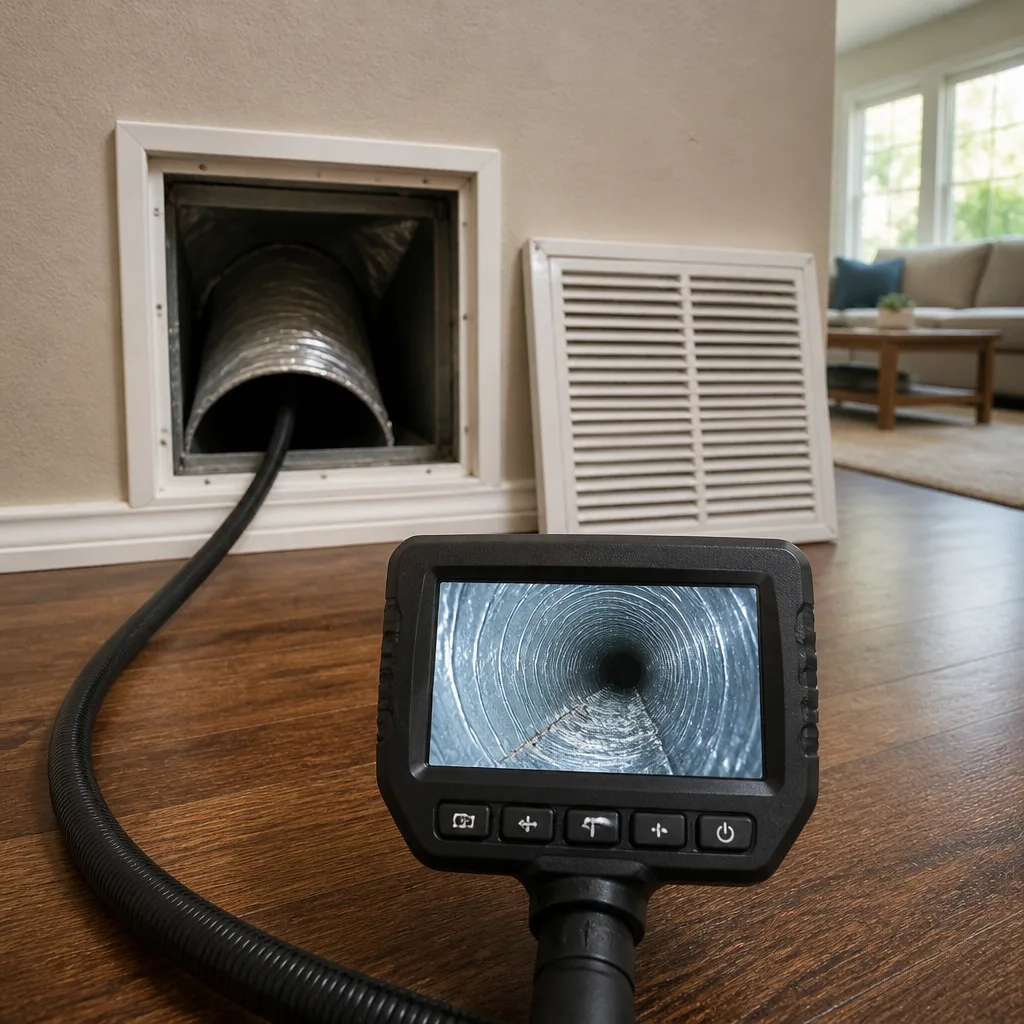
- Camera inspection
- Sanitizing & deodorizing
Table of Contents
- Why Evansville’s Climate Changes the Duct Cleaning Equation
- Duct Materials in Evansville Homes by Construction Era
- What a Real Negative-Pressure Cleaning Actually Looks Like
- Supply and Return: Why Half a Job Isn’t a Job
- How to Verify the Cleaning Was Done Correctly
- How Often Should You Clean Ducts in Evansville?
- What Duct Cleaning Costs in Evansville
- Common Mistakes to Avoid
- When to Call a Professional
- Frequently Asked Questions
Why Evansville’s Climate Changes the Duct Cleaning Equation
Evansville sits in a humidity corridor where summer dew points regularly push above 70°F. That single fact changes how duct contamination behaves here compared with drier Midwest cities like Indianapolis or Columbus. High dew point means moisture hangs in the air even when the sky is clear, and that moisture rides through return ducts into the air handler and settling dust.
What that produces is a system that hosts biofilm and dust-mite activity far more readily than a low-humidity home. Dust alone is fairly inert. Dust plus persistent humidity becomes a food source. Return plenums, which pull air back from multiple rooms and see less airflow than supply runs, are where the problem tends to concentrate first. If you pull the register grill on a return in an Evansville home that hasn’t been serviced in years, you often see a dark, slightly tacky film rather than dry gray fluff. That tackiness is the tell.
Two practical consequences for Evansville homeowners:
- Cleaning interval shortens. A dry-climate home tolerates five years between cleanings. An Evansville home with a basement or crawlspace and a running AC can go from clean to noticeably loaded in two or three summers.
- Biological concerns get addressed differently. Mechanical cleaning removes the material. When the surface itself shows microbial growth, a Guardsman-certified treatment addresses it at the surface level, which is a different tool than a vacuum.
Winter matters too. Evansville runs a forced-air heating system for months, moving dry, warm air through ducts that just spent the summer in humidity. That cycle of moisture and heat is one reason the air handler cabinet and the coil area often look worse than the ducts themselves, which is why our air duct cleaning process includes the cabinet and not just the runs.
Duct Materials in Evansville Homes by Construction Era
The age of your Evansville home tells you a lot about what duct material you’re dealing with, and the material dictates the cleaning approach. One tool does not clean every system, which is why we use a matched arsenal rather than a single machine.
Mid-Century Ranch Homes (roughly 1950s-1970s)
Many older Evansville neighborhoods are built on galvanized sheet-metal ductwork. Galvanized is durable and cleans well, but it’s often connected with interior sheet-metal screws or sealed with old mastic. Aggressive brush work can tear aged mastic seams or dislodge insulation liner from the inside of the trunk. The cleaning approach on galvanized is controlled, with attention to seam integrity, and a post-cleaning inspection of the joints is standard.
1990s and 2000s Subdivisions
The building boom through the 1990s and 2000s filled out subdivisions across the area with flexible round duct. Flex duct is the most common source of trouble we find. Its ribbed interior catches and holds dust on every ridge, and it doesn’t tolerate hard-brush contact the way galvanized does. Cleaning flex requires softer rotary tooling, careful airflow routing, and often replacement of runs that are crushed or torn. That’s part of why we offer Evansville duct cleaning alongside in-house repair: a damaged flex run found mid-clean doesn’t require a second contractor.
Sheet-Metal vs. Lined Internals
Some systems use internally insulated sheet-metal trunks, common on 1980s builds. The internal liner is fragile. If a technician doesn’t know the material before starting, a brush can shred it. Which brings us to the process question.
What a Real Negative-Pressure Cleaning Actually Looks Like
A proper whole-system duct cleaning is not a hose snaked into each register. It is a controlled negative-pressure process where the system is held under suction while debris is mechanically loosened from every surface, then captured at the source. The order matters as much as the tools. Here is the step-by-step sequence, using professional equipment from Abatement Technologies, Rotobrush, and Nikro.
- Pre-inspection and containment setup. Before any cleaning, we inspect the air handler and accessible runs, and set up a HEPA negative-air unit from Abatement Technologies. That’s the same class of containment equipment used in professional remediation work, sized to the CFM of your system. The unit creates a pressure differential that pulls air and dust toward the collection point, not out into your living rooms.
- Register and grill removal. Supply and return registers and grills come off so the runs can be reached. Grills themselves get cleaned and later reinstalled.
- Source-removal from the trunk and plenum. A high-CFM vacuum source is attached at the trunk or plenum. Then a rotary agitator (Rotobrush is the standard for this) or a compressed-air whip from Nikro contacts the interior surface wall-to-wall. Agitation loosens the bonded debris; the negative pressure carries it out.
- Branch runs. Each supply and return branch is worked individually. Flex duct gets soft rotary tooling; galvanized gets brush work scaled to the seam condition.
- Air handler cabinet and coil face. The cabinet interior and the visible face of the evaporator coil are cleaned of the dust mat that builds up there. Coil fins themselves are not cleaned here; that’s a separate service, but the surrounding cabinet matters and is often the dirtiest part of the system.
- Containment breakdown and post-inspection. The HEPA unit runs until the air is clear. Then we photograph the interior of the ducts and the air handler, before and after, and walk through the results with you.
The whole point of the equipment sequence is containment-level care. Dust a vacuum kicks up achieves nothing helpful. Dust a HEPA-filtered negative-air system captures at the source gets removed from the building.
Supply and Return: Why Half a Job Isn’t a Job
Here is the single most common failure in low-cost duct cleaning: the return side gets skipped, and only supply registers get a pass. Return plenums pull in the air from every room, carrying dust from door gaps, hallway returns, and filter housings. Because returns typically run at lower static pressure than supply runs, dust settles and stays. Cleaning supply runs while leaving return plenums loaded is like wiping a counter and leaving the sink.
A complete cleaning treats supply and return, and the plenums, and the air handler cabinet. When you’re evaluating a quote, ask directly: does the price include the return plenums and the air handler cabinet? If the answer is vague or the scope stops at “the vents,” the scope is incomplete.
This is also where we coordinate with the air-quality equipment you already have installed. Homes in this region commonly have whole-home media filters or humidifiers from Honeywell or Aprilaire. Those components sit in or near the air handler and need to be handled correctly during cleaning so nothing is dislodged. Familiarity with Honeywell and Aprilaire systems means the cleaning can be worked around your existing filtration setup instead of forcing removal or damaging it.
How to Verify the Cleaning Was Done Correctly
You shouldn’t need to trust a photo op or a technician’s word. You can verify a duct cleaning before the technician leaves, in about five minutes, using your own eyes and a few concrete checks.
- Look inside a return plenum. Shine a flashlight into the return trunk at the air handler after the grills are off. The interior surface should be visibly clean of the dark film and settled dust you saw at inspection.
- Check the air handler cabinet. The cabinet walls and the coil face should show clean surfaces. A cabinet still caked with dust mat means the cabinet wasn’t cleaned.
- Confirm the before-and-after photos match your ducts. Photos should show identifiable details of your system (a flex rib pattern, a specific duct seam, a register location), not generic stock imagery.
- Ask for the scope in writing. The written estimate and the completed work order should list supply runs, return plenums, and the air handler cabinet.
- Reinstall and test. Grills should be reinstalled properly, and airflow from each register should feel consistent.
- Feel the air. Odor should be noticeably fresher within a day or two, and register strong suction is not a diagnostic; airflow balance is.
If any of these checks come up short, that’s your signal to ask questions before signing off. Our technicians have up to 14 years of experience working through exactly these confirmations with homeowners, and we expect to be checked. Before-and-after photos of your own ducts are part of the standard job, and one flat price per system is agreed in writing before work starts, so there’s no per-vent negotiation while a technician is on site.
How Often Should You Clean Ducts in Evansville?
Every three to five years is a reasonable baseline for most Evansville homes, but the right interval depends on a handful of specific factors. In this climate, the humid summer months accelerate accumulation inside the system, so a home that has just gone through several summers with a running AC may be due sooner than the calendar suggests.
- Recent construction or a major renovation: drywall dust, sawdust, and construction debris enter the system and should be cleaned out once the work is finished.
- Pets: animal hair and dander load the return side faster, often within two years.
- High humidity or a damp basement: moisture drives biological growth on duct surfaces, shortening the interval.
- New home purchase: you don’t know the prior owners’ maintenance history, so a first cleaning is a reasonable place to start.
- Recent furnace or air handler work: if the system was opened for repairs, loose debris may have settled.
There’s no single rule that fits every Evansville home. A visual inspection of your return and air handler is the most honest measure, and it’s the reason we look at those areas before recommending anything.
What Duct Cleaning Costs in Evansville
Pricing for duct cleaning varies by system size, the number of runs, and whether repair is needed, so no honest specialist quotes a per-register figure. What you can rely on is a written estimate that fixes one flat price for the whole system before work starts, with the scope (supply runs, return plenums, air handler cabinet) spelled out. Many companies advertise a low number that expands once the technician is on site. We set the price up front and don’t charge by the vent.
Two pricing questions to ask any company you call:
- Does the quoted price cover the return plenums and air handler cabinet, or only supply registers?
- Is the price fixed in writing for the whole system before work begins?
Repair work (damaged flex runs, torn liner, disconnected joints) found during cleaning is quoted separately once you see what needs attention, and it’s done in-house, so a second contractor and a second visit aren’t required. If you’re comparing quotes, ask for the estimate in Evansville in writing. Call (833) 725-5641. We answer 24/7. Fast dispatch from 7am to 7pm, Sunday through Friday, and the estimate is free.
Common Mistakes to Avoid
- Cleaning only the supply side. Supply registers are the visible ones, but returns carry most of the load. A quote that stops at “vents” skips the plenums and the air handler cabinet, which is where the contamination concentrates.
- Trusting a shop vac and a hose. A consumer-grade vacuum through each register agitates dust into the air and leaves it in the system. Containment with a HEPA negative-air unit is the difference between cleaning and stirring.
- Choosing based on the lowest advertised number. A teaser price frequently expands once the technician is inside, and the final invoice can climb fast. Ask for a written, per-system price with the full scope listed.
- Cleaning ducts but ignoring the dryer vent. Dryer vent cleaning is a separate safety service and a leading home-appliance fire risk area. Evansville homes with long or heavily linted vent runs benefit from having it checked as a standalone job; it’s one of our three core services.
- Letting an insulation-lined system get hard-brushed. Internal duct liners are fragile. A technician who doesn’t identify the material before starting can shred the liner, and a cleaning becomes a repair.
- Skipping the air handler cabinet. The cabinet and coil face are often the dirtiest part of the system. Cleaning ducts without cleaning the cabinet leaves the source of the reload in place.
- Not asking how the job will be verified. Make before-and-after photos and a post-inspection walk-through part of the agreement up front, so you know exactly what “done” looks like.
When to Call a Professional
Some problems are a cleaning, and some are signs you need a technician to look at the system. Call a professional if you notice a musty or stale odor that lingers after the AC runs, persistent allergy flare-ups that seem tied to the time you spend indoors, uneven airflow where some registers blow noticeably weaker than others, or visible dust mat building up on return grills. If you’ve just finished a renovation or moved into a home with an unknown maintenance history, an inspection before you settle in is worthwhile. And if you can’t remember the last time the ducts were serviced, a simple visual check of the air handler cabinet tells you more than a guess. Evansville Duct Cleaning offers free estimates in Evansville. Call (833) 725-5641. We answer 24/7. Fast dispatch from 7am to 7pm, Sunday through Friday.
Frequently Asked Questions
There’s no honest per-vent price, because the job depends on system size, number of runs, and whether repair is needed. The reliable cost signal is a written estimate fixing one flat price for the whole system, with the scope spelled out. Be cautious of a low teaser number that expands on site. Call (833) 725-5641 for an exact quote. Estimates are free.
Cheaper quotes usually mean a narrower scope: supply registers only, a shop vac instead of HEPA negative-pressure containment, and no return plenums or air handler cabinet. The lower price buys less work, not the same work for less. Ask any company to write the scope into the estimate. Call (833) 725-5641 to talk through what a whole-system price covers.
Before-and-after photos of your own ducts and air handler, plus your own flashlight check inside a return plenum, tell you nearly everything. A properly cleaned return interior is visibly free of the dark film and settled dust. Ask for the post-inspection walk-through. Call (833) 725-5641 to schedule an estimate and ask what the verification includes.
Every three to five years is a good baseline, but Evansville’s humidity shortens it. Homes with pets, recent renovations, or a damp basement often need it closer to every two or three years. A visual check of the return and air handler is the honest way to know. Call (833) 725-5641 to arrange an inspection.
A proper job shouldn’t be. A HEPA negative-air containment unit from Abatement Technologies holds the system under suction throughout, so loosened debris travels to the collection point instead of into your rooms. If a technician arrives without containment equipment, that’s a red flag. Call (833) 725-5641 if you have questions about the process.
Yes. Dryer dryer vent cleaning is one of our three core services, alongside duct cleaning and repair, and it’s a genuine safety service rather than an add-on. If you’re already scheduling duct work, it’s worth asking about the dryer vent at the same time. For homes in Evansville, call (833) 725-5641 for a free estimate.
The Bottom Line
Air duct cleaning in Evansville works best when it matches your system, not a generic checklist. Know your duct material and era, insist on a negative-pressure process that covers supply, returns, and the air handler cabinet, and verify the job with your own eyes before signing off. Evansville’s humid summers mean the interval between cleanings is shorter than in drier cities, so a visual inspection is the honest measure, not the calendar. One flat price per system, agreed in writing, with before-and-after photos, is what a serious job looks like. Call (833) 725-5641 for a free estimate. We answer 24/7, with fast dispatch from 7am to 7pm, Sunday through Friday.
Written by the team at Evansville Duct Cleaning.
See the difference
 Before
 After
 Before
 After
 Before
 After