
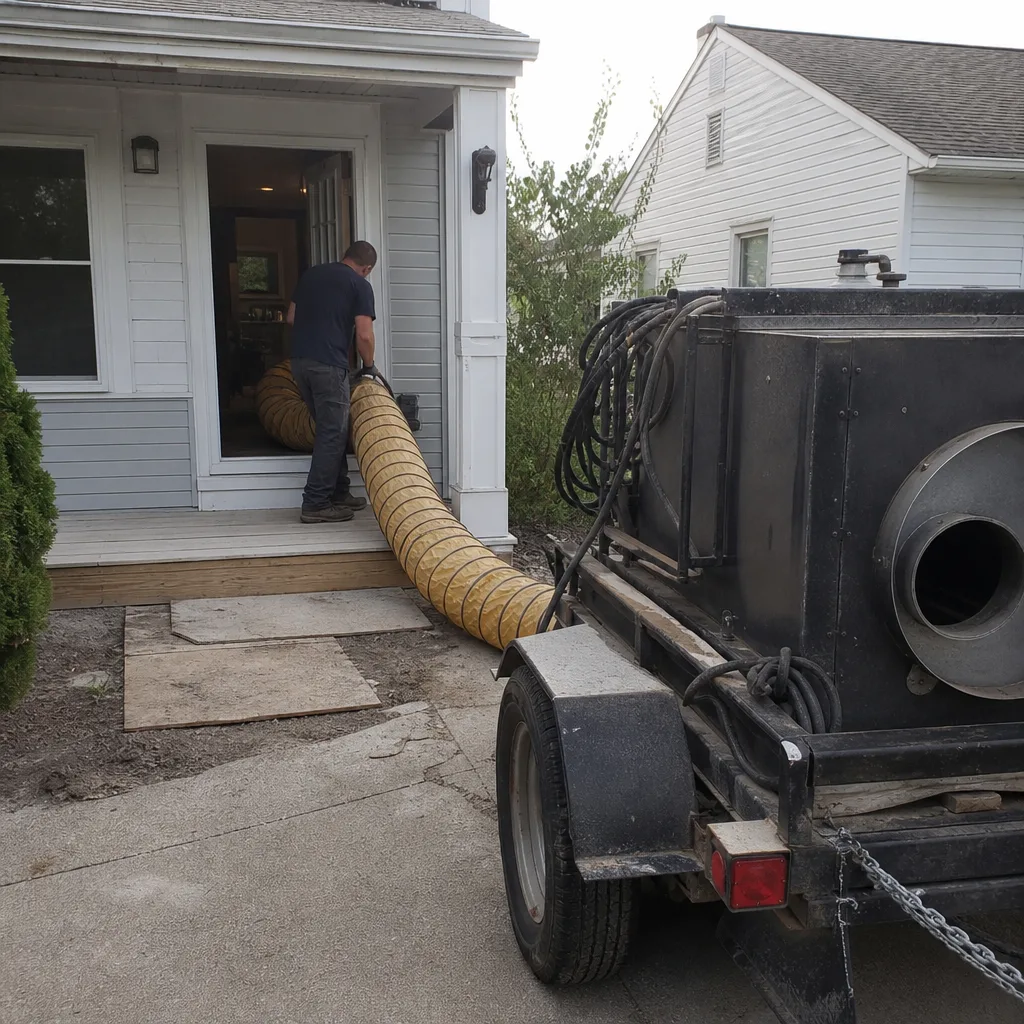
Last updated November 15, 2026
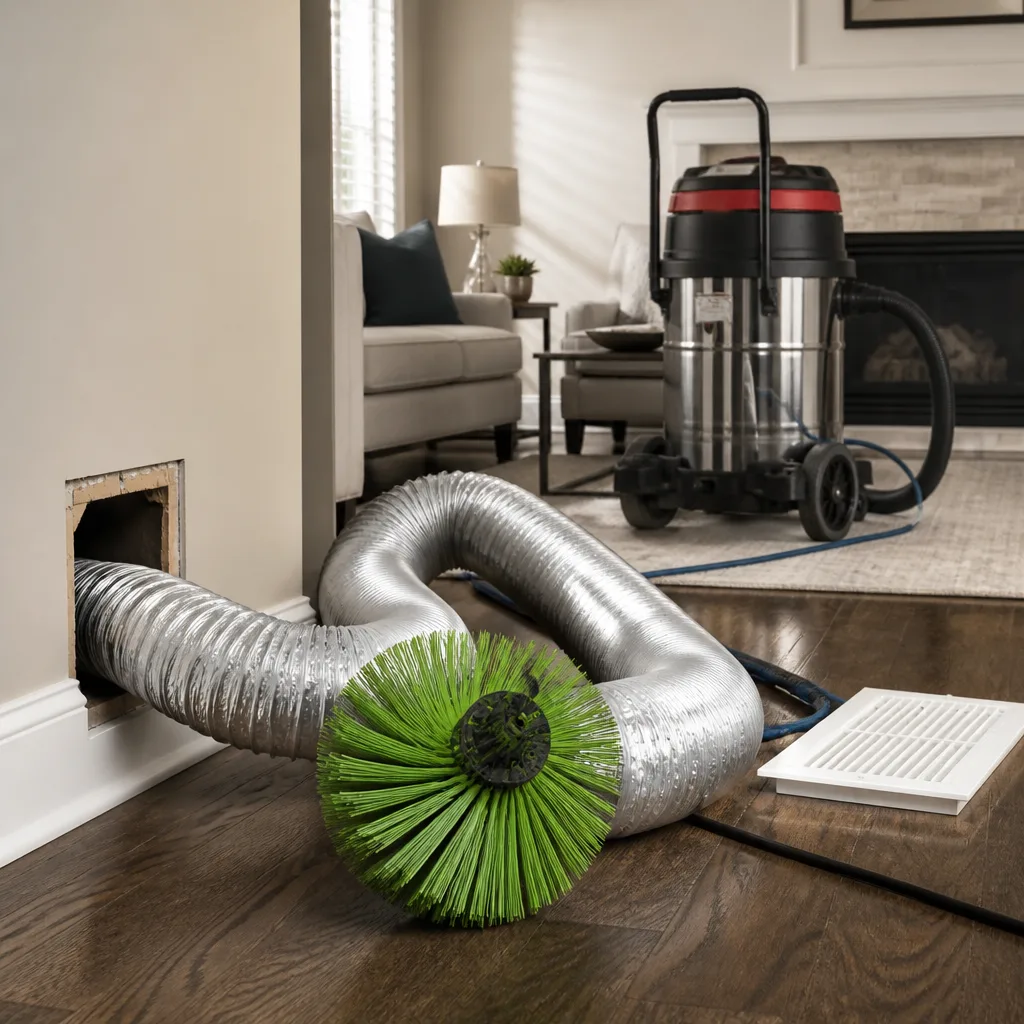 Whole-home duct cleaning
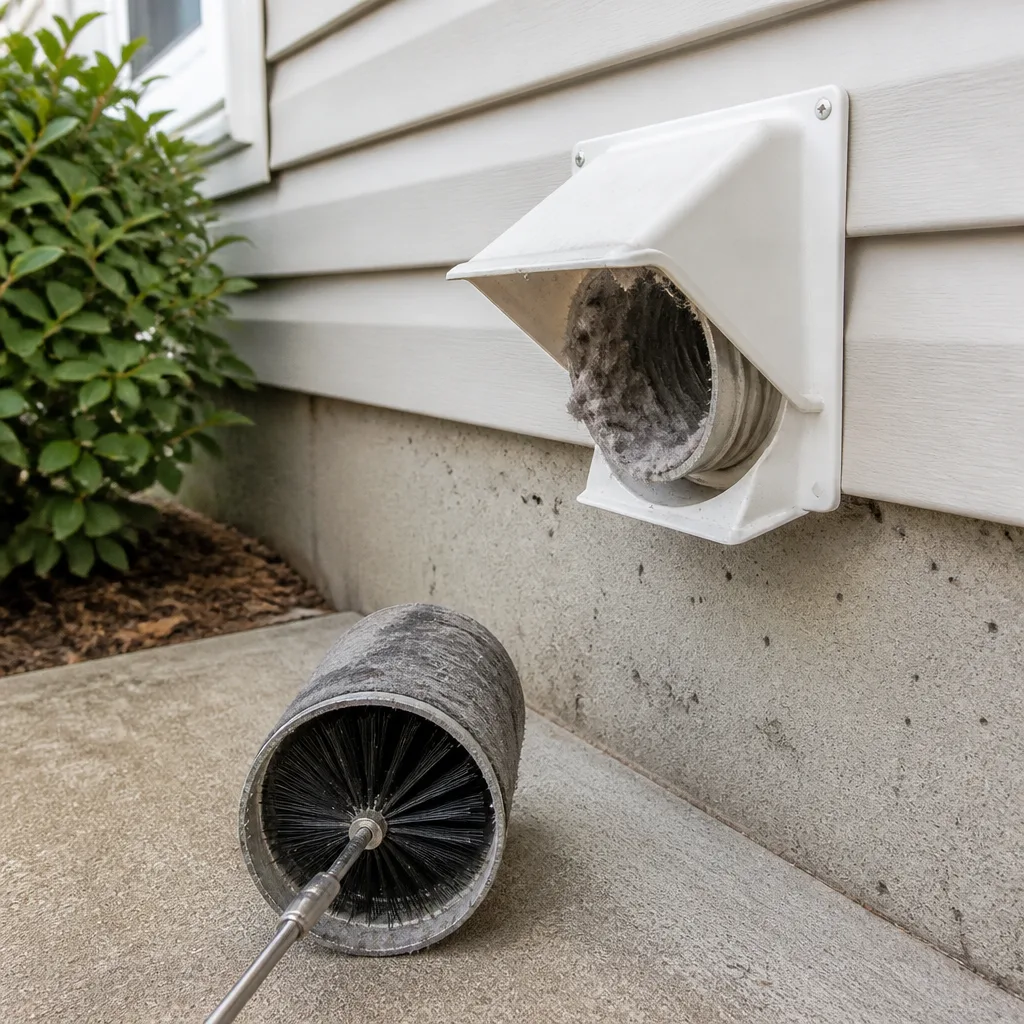 Dryer vent cleaning
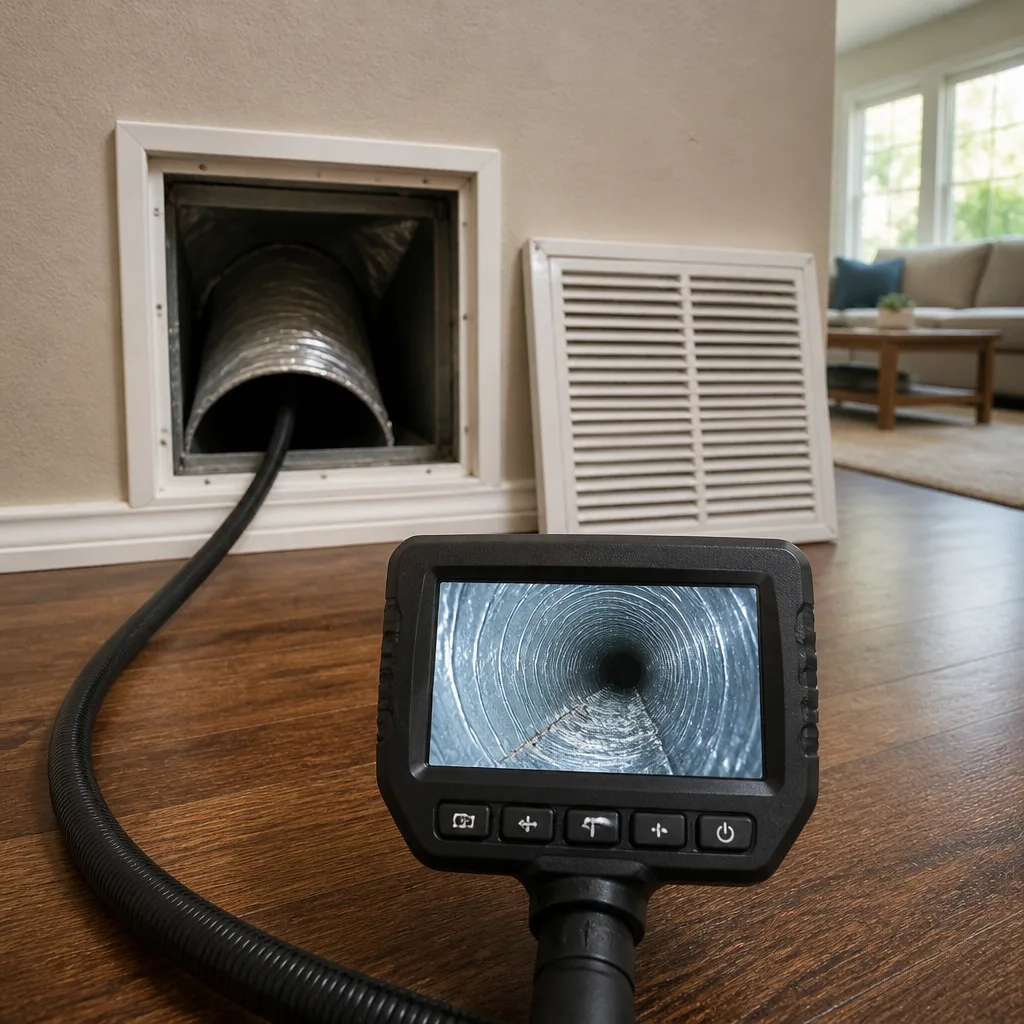 Camera inspection
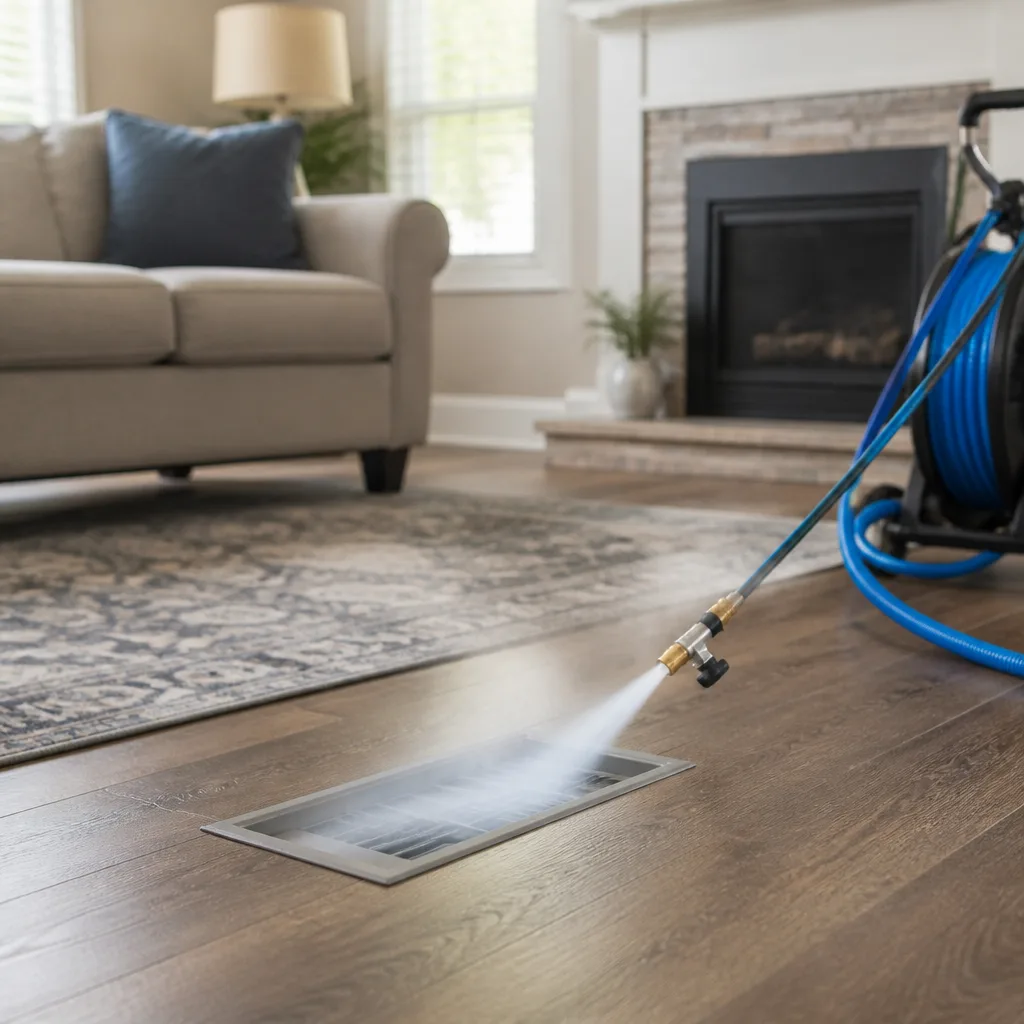 Sanitizing & deodorizing
Whole-system duct and dryer vent check with before-and-after photos - you see exactly what came out of your vents
That "$99 whole-house special" is a bait ad - the real number appears once they are in your hallway, or the "clean" is a shop-vac at the register. We photograph the inside of your ducts before and after instead.
Seasonal Air Duct Cleaning Care for Evansville: Year-Round Homeowner’s Guide
Most duct cleaning advice says to schedule a cleaning every three to five years and leaves it at that. That advice ignores something specific to this part of Indiana: Evansville’s four-season climate delivers four distinct stress periods to your ductwork, not one steady grind. A single spring pollen season here can load a return plenum faster than years of ordinary operation. Then summer humidity, fall leaf mold, and winter’s dry forced-air heat each add their own layer. A once-a-year visit timed by habit rather than climate often misses the worst of it. In this guide we walk through what each season does to a duct system in Evansville, what to monitor, and a month-by-month plan that puts inspections and cleaning where they actually pay off.
Quick Answer
The best seasonal approach for Evansville is to clean after spring pollen peaks in late May, check condensation and coil areas through the humid summer, inspect dampers and duct interiors before switching to heat in fall, and watch for liner shedding in older homes during winter dry-air season. Rather than one annual visit, stagger an inspection in spring and a deeper cleaning after pollen drops, then tackle repairs before the heating season begins. That rhythm matches the climate instead of fighting it.
Styles & brands we work with
- Whole-home duct cleaning
- Dryer vent cleaning
- Camera inspection
- Sanitizing & deodorizing
Table of Contents
- Why a Single Annual Cleaning Misses Evansville’s Real Stress Points
- Spring in Evansville: Why Late May Is the Highest-Value Cleaning Window
- Summer Humidity: Condensation Risk Near the Evaporator Coil
- Fall: Leaf Mold Spores and the Damper Check Before Heat Mode
- Winter: Dry Forced-Air Heat and Liner Shedding in Older Homes
- A Month-by-Month Duct Care Calendar for Evansville
- How a Professional Seasonal Inspection Actually Works
- Common Mistakes to Avoid
- When to Call a Professional
- Frequently Asked Questions
Why a Single Annual Cleaning Misses Evansville’s Real Stress Points
A national “clean every three to five years” schedule is a placeholder, not a plan. It assumes the same particulate load everywhere, and that’s simply not how air moves through a home in Evansville. This city sits in a humid continental climate zone with a long, heavy spring pollen period, a sticky summer where the air conditioner runs for weeks without a break, a damp fall with leaf litter everywhere, and a winter that pushes dry heated air through the same ducts for months. Each of those seasons deposits something different and stresses the system in a different way.
Think about what actually accumulates. Spring brings tree and grass pollen that a return plenum can trap deep in the seams. Summer adds moisture and the conditions for biological growth near the cooling coil. Fall pulls in leaf mold spores. Winter circulates fine dust from dried duct liner and household debris. A single cleaning in, say, late summer addresses the summer problem but does nothing for the pollen that’s been sitting since May or the liner particles coming in December.
The practical takeaway is to split your care into a two-touch rhythm and add inspections between. A spring inspection tells you how much winter load is sitting in the system. A post-pollen cleaning in late May or early June removes the biggest single load of the year. A fall check gets the system ready for heat. Anything that needs repair gets handled before the heating season, not in the middle of it.
The four stress periods at a glance
- Spring (March to late May): Pollen load peaks; return plenums collect the heaviest particulate of the year.
- Summer (June to September): Constant AC operation raises condensation risk near the evaporator coil and damp interior surfaces.
- Fall (September to November): Leaf mold spores enter through outdoor air intakes and return grilles; damper issues surface when heat first runs.
- Winter (December to February): Dry forced-air heat dries out duct liners in older homes, and liner particles shed into the airstream.
Spring in Evansville: Why Late May Is the Highest-Value Cleaning Window
The highest-value cleaning window for an Evansville home is late May, right after the spring pollen peak drops off. Here’s the reasoning. Through March, April, and May this region sees a prolonged tree pollen period followed by grass pollen, so the outside air that gets pulled into your return ducts is carrying a heavy, sustained particulate load for roughly ten weeks. By late May that load is sitting in the duct seams and plenum. Clean it then and you remove the year’s biggest single deposit before the AC season pushes it into the living space. Clean it in August and you’ve spent all summer breathing part of it.
If anyone in the house has seasonal allergies, this timing matters more. The pollen that lands in your ducts doesn’t vanish when the season ends. Every time the blower runs, some of it lifts off the seams and rejoins the airstream. Cleaning after the peak, rather than before, captures the whole season’s deposit in one pass instead of interrupting it. You’ll also want the filter schedule to match: change or clean filters more often during pollen season than the box recommends, and go by what the filter looks like, not by a date on the calendar.
What spring care includes
- Inspect the return plenum and main trunks for visible pollen accumulation and debris.
- Check and replace the air filter before the AC season starts running hard.
- Confirm supply and return grilles are sealed and not drawing in attic or crawlspace air.
- Schedule the cleaning for late May or early June to capture the peak deposit.
- Note any airflow complaints room by room, so the technician can compare them against the duct layout.
Spring is also when a lot of homeowners first notice musty odors or uneven airflow. If that’s you, our air duct cleaning service covers the full inspection and cleaning in one visit. We use Rotobrush and Nikro systems to match the tool to the duct material, not force one machine through every system.
Summer Humidity: Condensation Risk Near the Evaporator Coil
Evansville summers push the air conditioner to run almost continuously, and that constant runtime creates a specific problem: condensation. The evaporator coil is cold, the air around it is warm and humid, and where they meet, water forms. That’s normal. What isn’t normal is that water staying put. A wet coil and damp interior duct surfaces become a place for biological growth, and once growth takes hold inside a duct system, the blower spreads it every time it runs.
You can’t see your own evaporator coil, and we’re not going to tell you to open the air handler and start wiping it down. What you can do is monitor the symptoms. Watch for a musty or sour smell that gets stronger when the AC is running. Watch for water stains or rust near the air handler, or a drain pan that isn’t draining. Watch for a rise in allergy or asthma symptoms that seems to track with the AC season. Any of those point to a moisture issue worth a professional inspection.
What to monitor through summer
- Musty odors that appear only when the cooling system is on.
- Standing water or a slow drain in the condensate pan.
- Rust or water staining on the air handler cabinet or nearby floor.
- Dampness in the duct insulation around the coil.
- Any visible growth on register faces or grille backings.
Containment matters when moisture or microbial concerns are present. Our team deploys Abatement Technologies equipment – the same class of negative-air and HEPA filtration used in professional remediation work – so particulate stays contained during the service rather than drifting into the rest of the house. Where microbial concerns exist inside a duct system, Guardsman-certified treatments are available. If you run a whole-home filtration setup built around Honeywell or Aprilaire components, we’re familiar with those systems and can coordinate the cleaning around them rather than working blind.
Fall: Leaf Mold Spores and the Damper Check Before Heat Mode
Fall introduces two distinct issues in Evansville. The obvious one is leaf litter, and the less obvious one is what grows on it. As leaves fall and begin to break down, leaf mold spores go airborne, and they enter homes through outdoor air intakes, return grilles, and any gap around a window or door. If your system has an outdoor air damper – a component that allows a controlled amount of outside air into the return – that damper needs a check before you switch to heat. A damper stuck open over winter pulls cold, spore-loaded air into the system and can drive heating costs up while it’s at it.
The second fall issue is the first-run-of-heat smell. When the furnace kicks on for the first time in months, dust that settled on the heat exchanger and in the plenum during summer burns off. A little of that smell is normal for a few hours. A strong or persistent odor isn’t, and it’s worth having inspected before you settle into the heating season. Fall is also the right time to book any duct repair work, because a small leak or disconnected joint fixed in October is far less disruptive than the same problem discovered in January.
The pre-heating-season checklist
- Have the outdoor air damper checked for proper operation before heat mode begins.
- Inspect return grilles and any exterior air intakes for leaf debris and buildup.
- Replace the filter before the first sustained heat run.
- Note any persistent odor when the furnace first cycles on, and have it inspected if it lingers.
- Book duct repair for any leaks, disconnected joints, or crushed sections found during inspection.
If a problem turned up during a cleaning, being able to fix it without calling a second contractor saves you a lot of back and forth. Our in-house air duct repair service means the same visit can clean, inspect, and repair. And while you’re going through the fall checklist, a quick look at the dryer vent belongs on it too – we cover that in the calendar below.
Winter: Dry Forced-Air Heat and Liner Shedding in Older Homes
Winter is the quiet season, and that’s exactly why it causes problems nobody notices. Furnaces in Evansville run through months of dry, heated air. In older homes – and this city has plenty of them, especially in established neighborhoods where houses date back decades – the interior of the duct system is often lined with fiberglass or an older internal liner. That liner holds up reasonably well in normal humidity, but dry heated air pulls moisture out of it over time, and a dried-out liner begins to shed fine particles into the airstream. Those particles end up on your furniture, in your filters, and in the air you breathe all winter.
You can’t see liner shedding directly, but you can watch for the signs. Excess dust settling on surfaces within days of cleaning. A gritty or dusty smell from the registers. Visible fiberglass particles on a register face. Any of these suggests the duct interior needs a professional look, because liner damage caught early can often be repaired, while advanced shedding may point to re-lining or replacement of the affected section. This is where the repair side of our work matters: our three services are cleaning, dryer vent cleaning, and air duct repair, and we don’t push anything beyond them.
Winter monitoring for older Evansville homes
- Check register faces weekly for fine dust or visible particles.
- Note how quickly dust returns to furniture and surfaces after cleaning.
- Watch for a persistent dry, dusty smell from any register.
- Keep indoor humidity in a reasonable range; too dry accelerates liner drying.
- Have the duct interior inspected if any of the above persists.
A Month-by-Month Duct Care Calendar for Evansville
Here’s the calendar that follows from everything above. It’s built around Evansville’s actual climate pattern, not a generic national template. Adjust the exact weeks if the season runs early or late, but keep the sequence.
January and February
- Monitor register dust and any new musty or dusty odors.
- Change filters on schedule for winter runtime.
- Note any rooms with weak airflow for a spring inspection.
March and April
- Spring inspection: check the return plenum, main trunks, and grille seals.
- Step up filter changes through the pollen season.
- Note allergy symptoms that track with HVAC activity.
May and June
- Book the post-pollen cleaning for late May or early June – the year’s highest-value window.
- Replace the filter before cooling season ramps up.
- Address any duct repair found during inspection.
July and August
- Monitor for musty odors and condensation symptoms around the air handler.
- Check the condensate pan and nearby surfaces for water or rust.
- Confirm the outdoor air damper isn’t stuck open.
September and October
- Check the outdoor air damper before switching to heat.
- Inspect return grilles for leaf debris and buildup.
- Replace the filter before the first heat run.
- Book any duct repair before the heating season starts.
November and December
- Watch for liner-shedding signs in older homes.
- Keep humidity in a reasonable range to slow liner drying.
- Clean the dryer vent if it hasn’t been done this year.
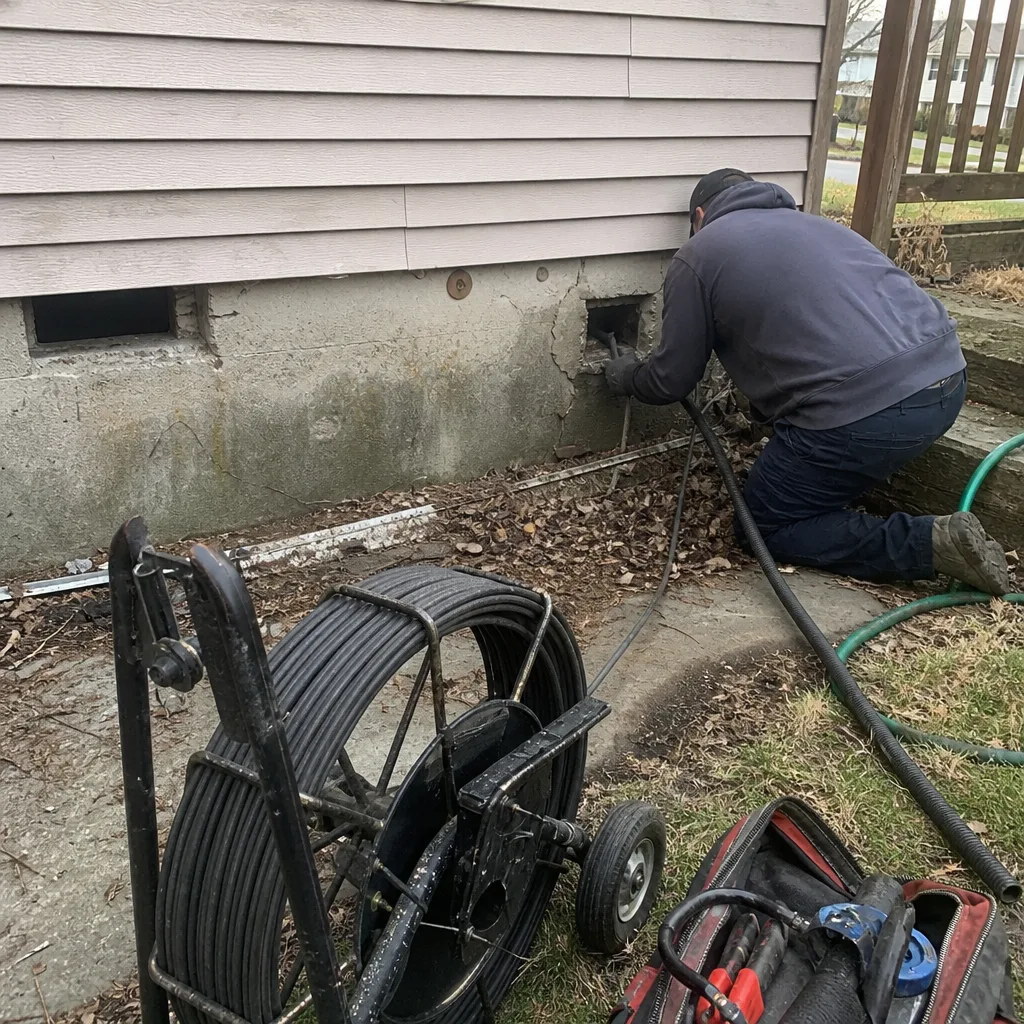
One item that deserves its own line is your dryer vent cleaning. Lint buildup in a dryer vent is a genuine fire risk, and it’s the leading appliance fire risk in U.S. homes. We treat it as a standalone safety service rather than an air-quality add-on, and cleaning it once a year keeps it in check.
How a Professional Seasonal Inspection Actually Works
A professional inspection is not a peek with a flashlight. It’s a documented check of the whole system, and knowing what it involves helps you judge whether you’re getting a real one. When we inspect a duct system in Evansville, the process looks like this.
- Source assessment. We identify what kind of system you have – flex, rigid metal, or lined – because the equipment choice depends on it. Rotobrush suits one kind of duct, Nikro another; matching the tool to the system is the whole reason we run both.
- Containment setup. Where conditions call for it, Abatement Technologies negative-air and HEPA equipment keeps particulate contained during the work.
- Access and reach. We open the necessary access points and work through the full run, not just the trunk nearest the air handler.
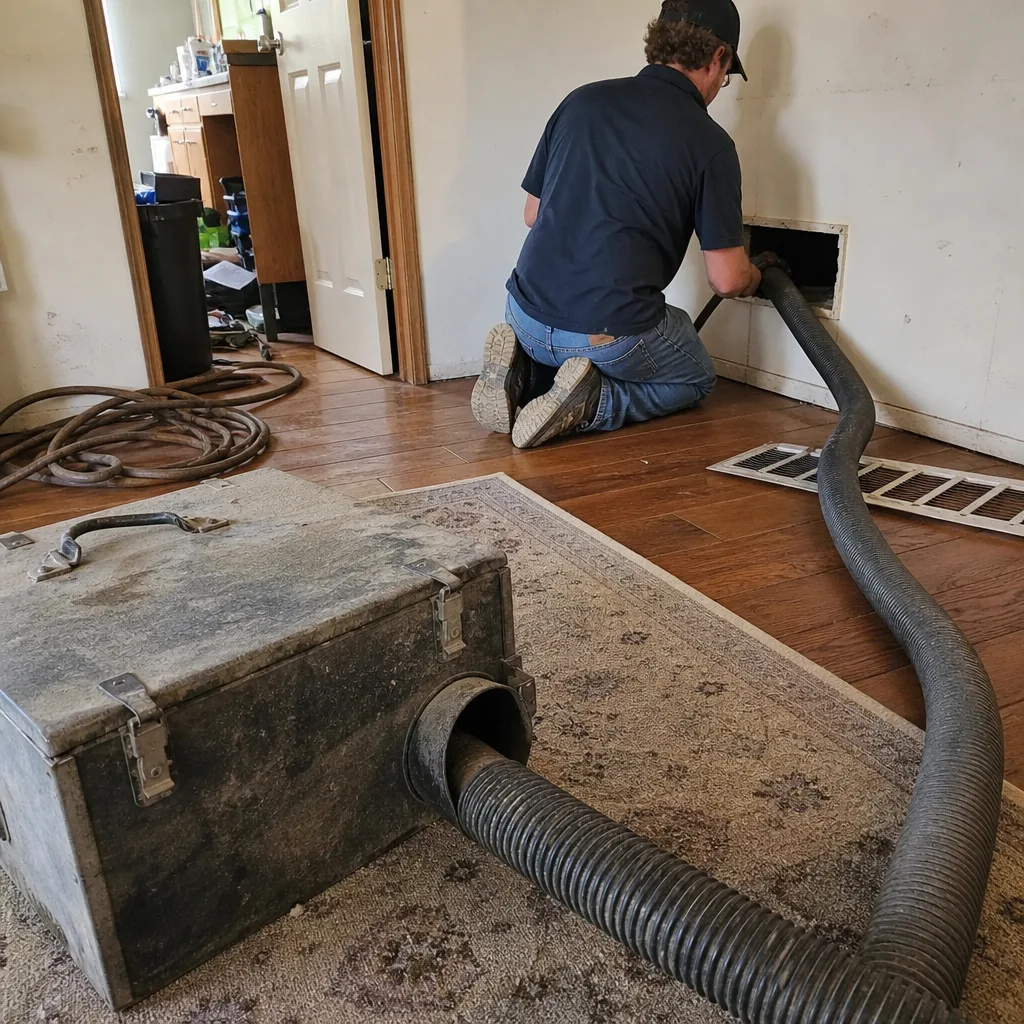
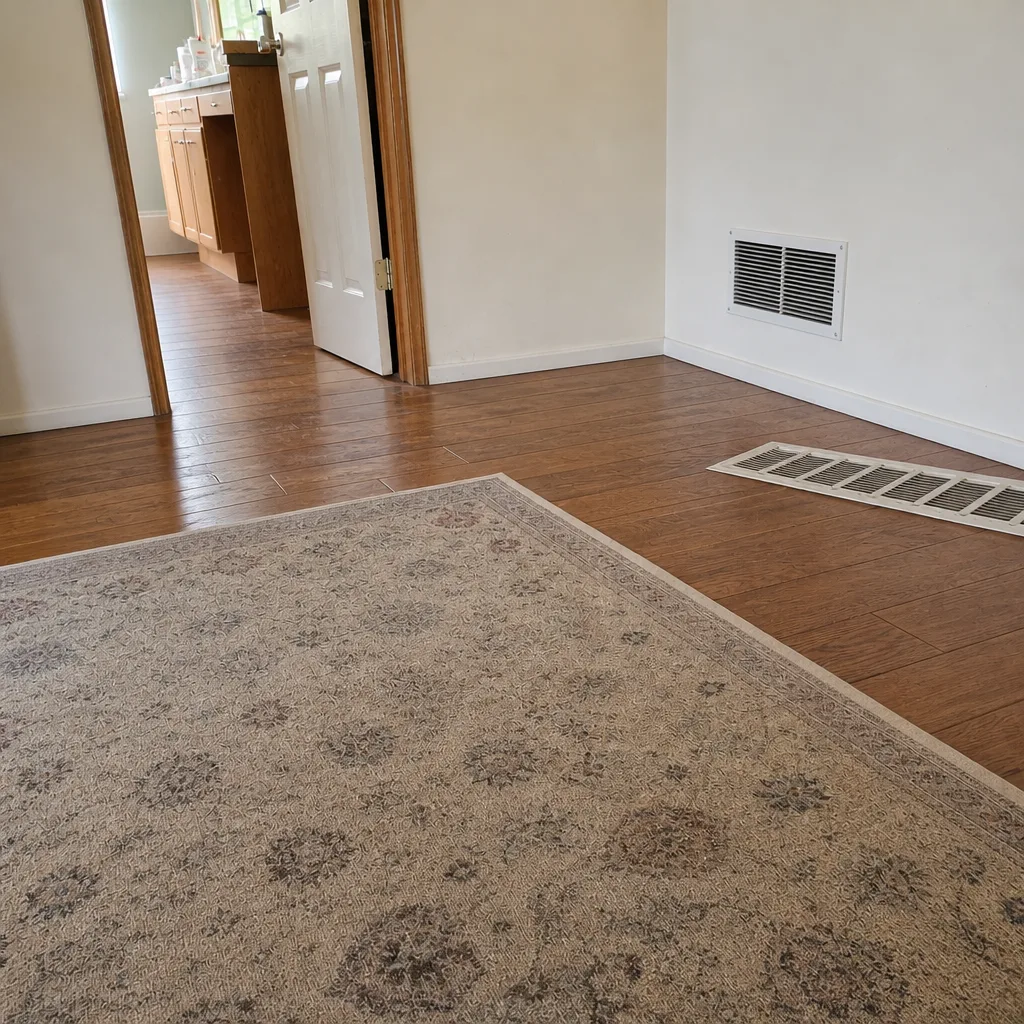
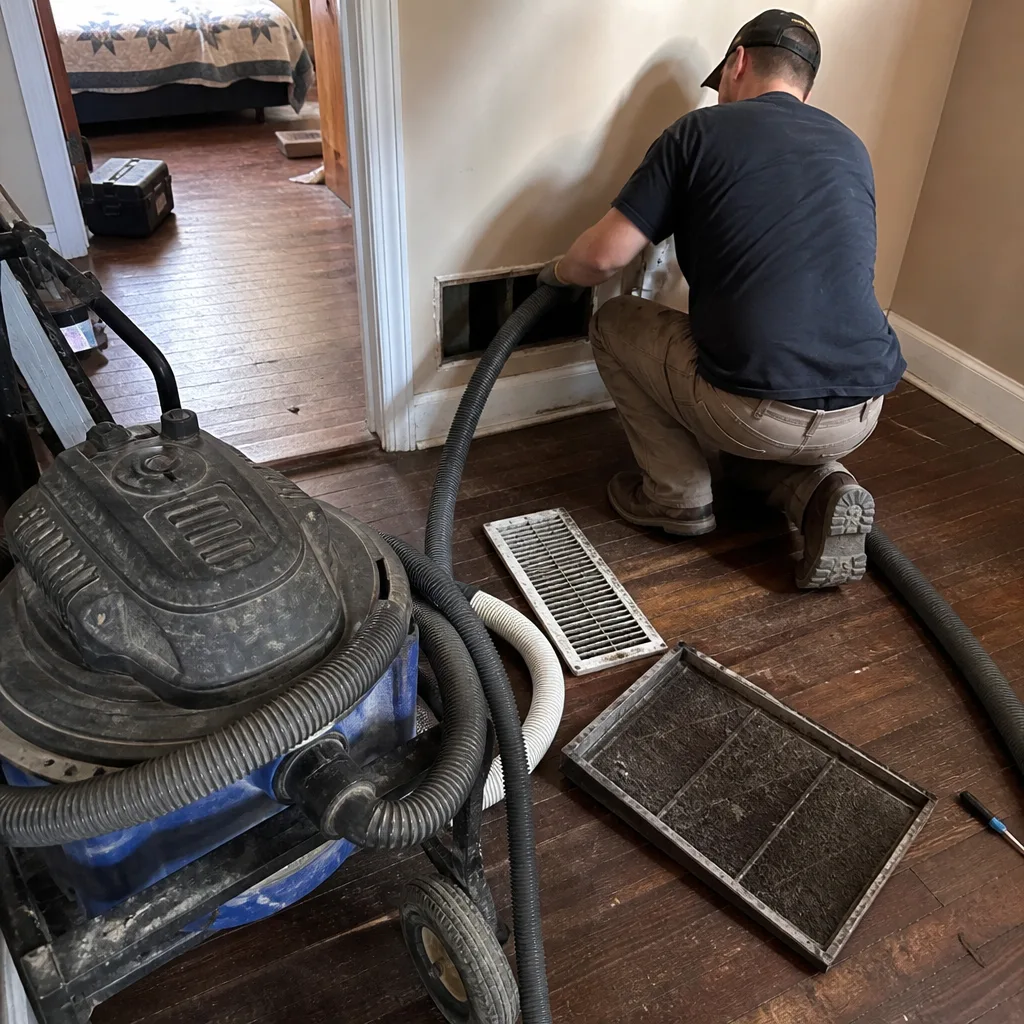
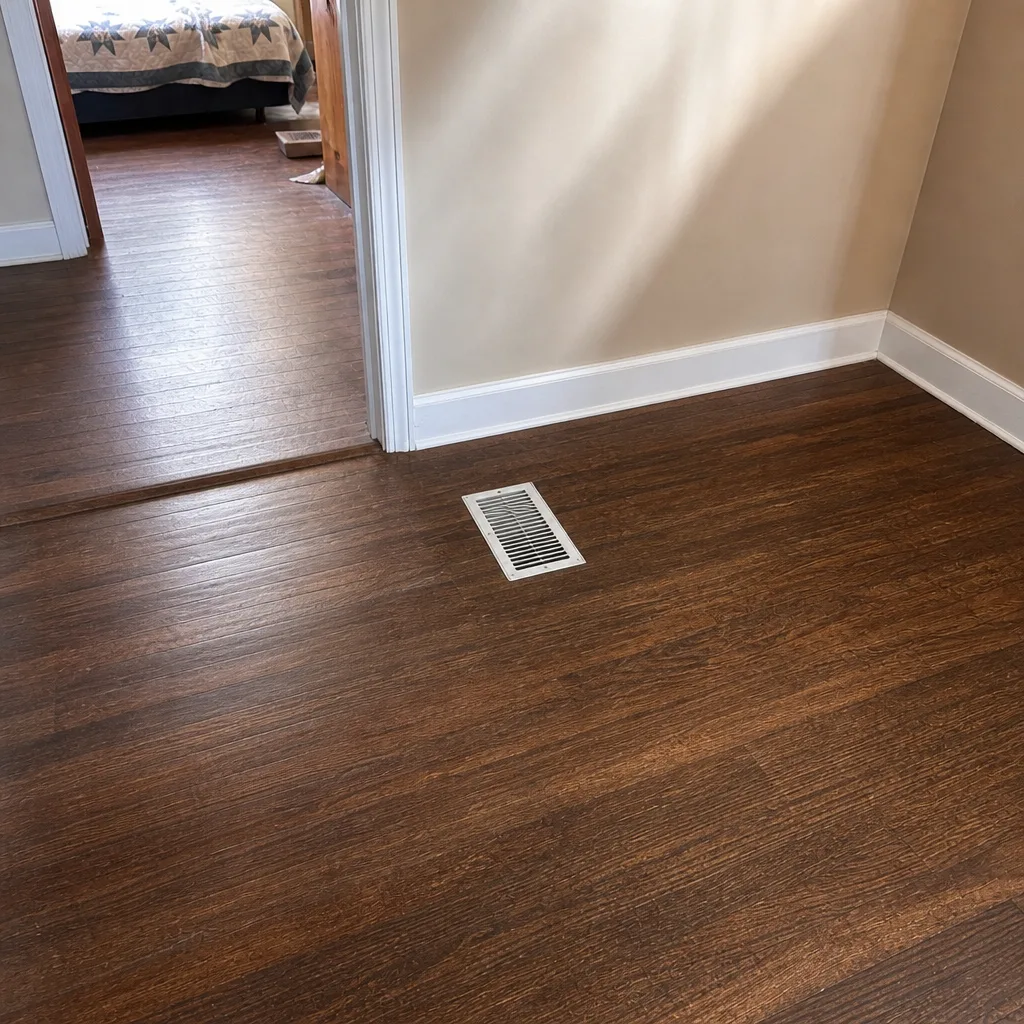
- Photo documentation. Before-and-after photos of your own ducts show what changed, so you can verify the work rather than take it on faith.
- Repair note. Any leak, crushed section, disconnected joint, or liner damage gets recorded and quoted separately – and since we handle air duct repair in-house, it can often be resolved on the same visit.
- Filtration check. If you run Honeywell or Aprilaire whole-home filtration, we confirm it’s set up correctly and coordinate the cleaning around it.
That last point – before-and-after photos of your own ducts – is the simplest way to answer the question every homeowner asks after a duct cleaning. You shouldn’t have to guess whether the work was done.
Common Mistakes to Avoid
- Cleaning by the calendar instead of the climate. A generic “every three to five years” schedule may get you to mid-summer and miss the spring pollen deposit entirely. Time the cleaning to Evansville’s pollen peak instead.
- Skipping the fall damper check. An outdoor air damper stuck open pulls cold, spore-loaded air in all winter, and most homeowners never think to check it. Have it inspected before the first heat run.
- Ignoring winter dust as normal. Dust returning within days of cleaning, or a gritty smell from the registers, can point to liner shedding in an older Evansville home. It’s worth a professional look, not a new air purifier.
- Treating the dryer vent as optional. Lint buildup in the dryer vent is the leading appliance fire risk in U.S. homes. Put it on the annual calendar as its own task.
- Hiring on price alone. Some quotes are cheap because the work is a shop vac pass and a hose. Named equipment, containment, and photo documentation are what separate a real cleaning from a cosmetic one.
- Letting a found problem sit until next year. A small duct leak or disconnected joint fixed now is far cheaper than the same problem tangled up with a winter heating failure.
- Running the wrong humidity year-round. Too dry in winter accelerates liner drying, and too damp in summer encourages growth near the coil. A humidity gauge is a cheap way to catch both.
When to Call a Professional
Some duct problems are worth a call sooner than the calendar suggests. Musty or sour odors that get stronger when the HVAC runs. A noticeable jump in allergy or asthma symptoms that tracks with heating and cooling. Uneven airflow that you can feel room to room. Visible dust or particles on register faces, especially in an older home. A dryer that takes much longer than it used to dry a load. Any persistent smell the first time the furnace fires up after summer. And any duct repair concern – a crushed flex run, a disconnected joint, or liner damage – that turns up during a walkthrough. If you’re not sure, a seasonal inspection answers the question without guesswork. Evansville Duct Cleaning offers free estimates in Evansville. Call (833) 725-5641 to set one up. We answer 24/7. Fast dispatch from 7am to 7pm, Sunday through Friday.
Frequently Asked Questions
Most Evansville homes do well with a cleaning every two to three years plus an annual inspection, rather than a single cleaning every few years. The reason is that four distinct seasons each load the system in a different way, so a spring inspection and a post-pollen cleaning catch far more than one mid-summer visit. Homes with pets, allergy sufferers, recent renovations, or older lined ductwork may need more frequent attention. Call (833) 725-5641 for an exact quote – estimates are free.
Late May or early June is the highest-value window, right after the spring pollen peak. Cleaning then removes the largest single deposit of the year before the AC season pushes it through the house. That said, real problems like moisture, odors, or liner damage should never wait for the calendar. Call (833) 725-5641 and we’ll tell you what timing makes sense for your home – estimates are free.
Air duct cleaning is priced per system, not per vent, so the number depends on how many HVAC systems your home has, the duct type, and accessibility. A typical single-system home sits in a range that reflects a full-system job with professional equipment and photo documentation. We set one flat price per system in a written estimate agreed before work starts, so the invoice matches the quote. Call (833) 725-5641 for an exact quote – estimates are free.
Because they usually involve far less work. A cheap quote often means a shop vac and a hose run along the trunks nearest the air handler, with no containment, no full-run access, and no documentation. That’s the bait-and-switch pattern homeowners worry about: a teaser price that becomes a larger invoice once the technician is on site. We give one flat price per system upfront and take before-and-after photos of your own ducts so you can see the difference. Call (833) 725-5641 for an exact quote – estimates are free.
You ask for before-and-after photos of your own ducts, and you check that every system and every major run was covered. Ask how containment was handled, what equipment was used, and whether any repairs were noted. A real cleaning leaves a record. Ours does: photo documentation of your system before and after, plus a written note of anything found. Call (833) 725-5641 to book an inspection – estimates are free.
Yes, and it should be an annual task, not an every-few-years one. Lint buildup in the dryer vent is the leading appliance fire risk in U.S. homes, so we treat dryer vent cleaning as a standalone safety service rather than an add-on. Clean it at least once a year, more often in a large household. Call (833) 725-5641 for an exact quote – estimates are free.
See the difference
 Before
 After
 Before
 After
 Before
 After
The Bottom Line
Evansville’s climate doesn’t give your ductwork one steady load – it delivers four. The plan that works is a spring inspection, a post-pollen cleaning in late May, a summer watch for moisture near the coil, a fall damper check before heat mode, and a winter eye on liner shedding in older homes. Add annual dryer vent cleaning and address repairs before the heating season, not after. That rhythm beats any generic “every few years” schedule. If you’d rather not manage it alone, our technicians have up to 14 years of experience and can build the plan around your system. See Evansville Duct Cleaning for the full picture of what we do.
Ready to Get Started?
Whether you’re after a seasonal inspection, a full cleaning, or a repair on a duct problem you’ve been ignoring, we’ll give you one flat price per system in a written estimate before any work starts. We clean, we inspect, we repair – one specialist, one visit – with professional-grade equipment, not a shop vac and a hose. Call (833) 725-5641 for a free estimate. We answer 24/7. Fast dispatch from 7am to 7pm, Sunday through Friday.
Written by the team at Evansville Duct Cleaning.