
Last updated November 15, 2026
 Whole-home duct cleaning
 Dryer vent cleaning
 Camera inspection
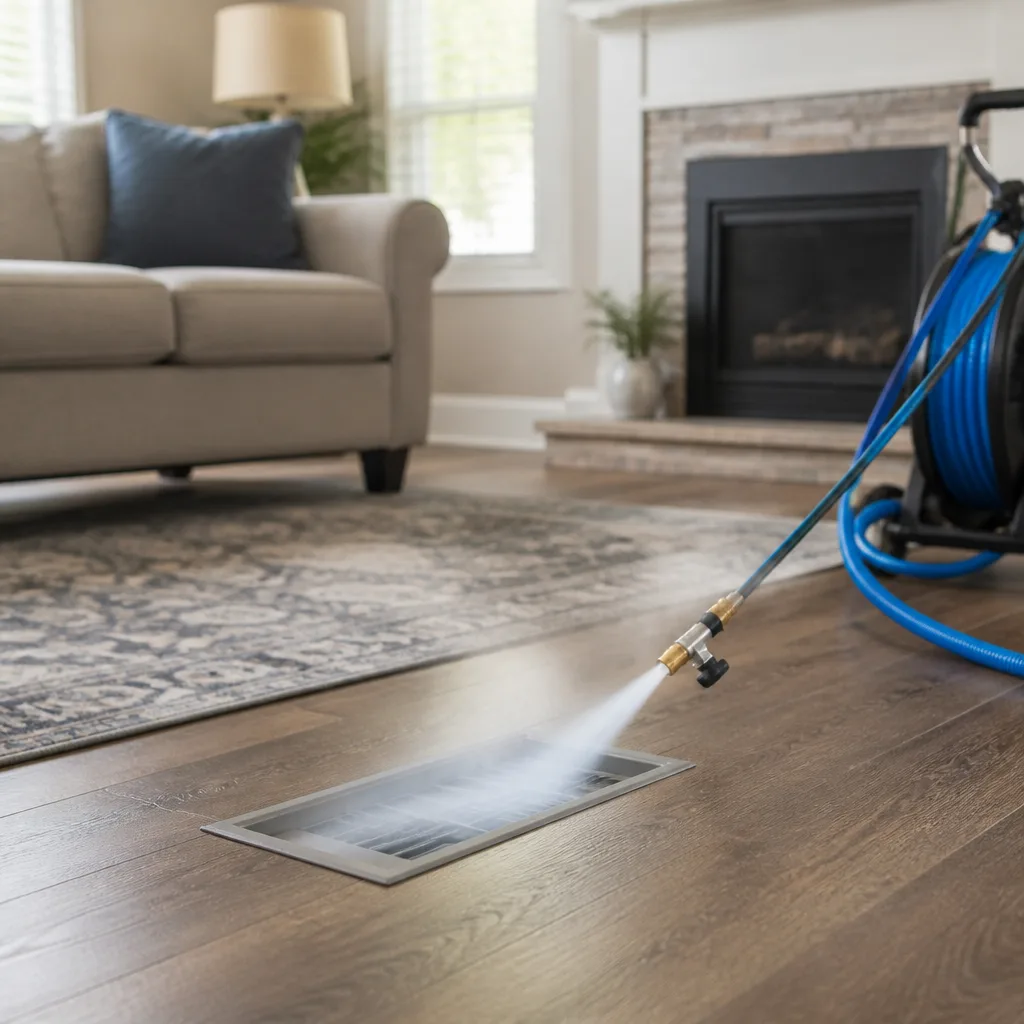 Sanitizing & deodorizing
Whole-system duct and dryer vent check with before-and-after photos - you see exactly what came out of your vents
That "$99 whole-house special" is a bait ad - the real number appears once they are in your hallway, or the "clean" is a shop-vac at the register. We photograph the inside of your ducts before and after instead.
DIY vs Professional Air Duct Cleaning: The Evansville Homeowner’s Decision Guide
Here’s a number that reframes this whole question: a homeowner with a $30 dryer vent brush and a shop-vac can clean roughly six inches of duct effectively. Everything past that point isn’t merely left dirty. Agitation without containment can lift settled debris into the airstream and move it further down the trunk, where it’s harder to reach with any tool, professional or otherwise. That’s the counterintuitive part of DIY duct work. The effort isn’t neutral. It can actively redistribute what you were trying to remove. This guide separates what homeowners in Evansville can genuinely handle from what calls for negative-pressure equipment, and it gives you a decision tree for the gray areas in between.
Quick Answer
Most Evansville homeowners can safely handle register cleaning, return grille washing, filter changes, and basic dryer vent maintenance on their own. Full duct system cleaning – meaning the trunk lines, branch runs, and plenum – is a different task that requires truck-mounted or high-CFM negative-pressure equipment to do without redistributing contamination into living spaces. DIY is sufficient for surface maintenance and annual upkeep. Professional cleaning is warranted for source removal, post-renovation cleanup, musty odor complaints, and any home that hasn’t been serviced in several years.
Styles & brands we work with
- Whole-home duct cleaning
- Dryer vent cleaning
- Camera inspection
- Sanitizing & deodorizing
Table of Contents
- What Homeowners Can Legitimately Do Themselves
- Why Shop-Vac Cleaning on Trunk Lines Is Counterproductive
- The Equipment Gap: CFM and Negative Pressure
- Scenarios Where DIY Is Genuinely Sufficient
- Scenarios Where DIY Makes Professional Cleaning Harder
- The Decision Tree: Square Footage, Contamination, Material, Occupant
- What a Professional Cleaning Actually Involves
- Common Mistakes to Avoid
What Homeowners Can Legitimately Do Themselves
We’ve seen enough Evansville duct systems to know that a fair amount of maintenance genuinely belongs in a homeowner’s hands. The mistake isn’t doing too little – it’s mistaking surface upkeep for source removal. Here’s what you can handle with confidence, and how to do each task properly.
Register and grille cleaning
Supply registers and return grilles collect dust at the face, and this is entirely a homeowner task. Remove each grille with a screwdriver, wash it in a utility sink with mild dish soap, dry it fully, and reinstall. For the register boot (the metal box behind the grille), a vacuum with a brush attachment reaches the visible interior. Do this once or twice a year, and more often if you have pets or a home near a busy Evansville road where dust settles faster.
Filter replacement
The single highest-value duct-adjacent task you own. A clogged filter starves airflow, forces the blower to work harder, and lets bypass dust coat the evaporator coil. Standard pleated filters at 1-inch depth should be replaced every 60 to 90 days in most Evansville homes. If you have a thicker media cabinet – a common setup with Honeywell or Aprilaire whole-home filtration – you’re looking at six to twelve months between changes. Follow the manufacturer’s rating and resist the urge to install a super-high-MERV filter in a system not designed for it; excessive restriction can hurt more than it helps.
Dryer vent maintenance
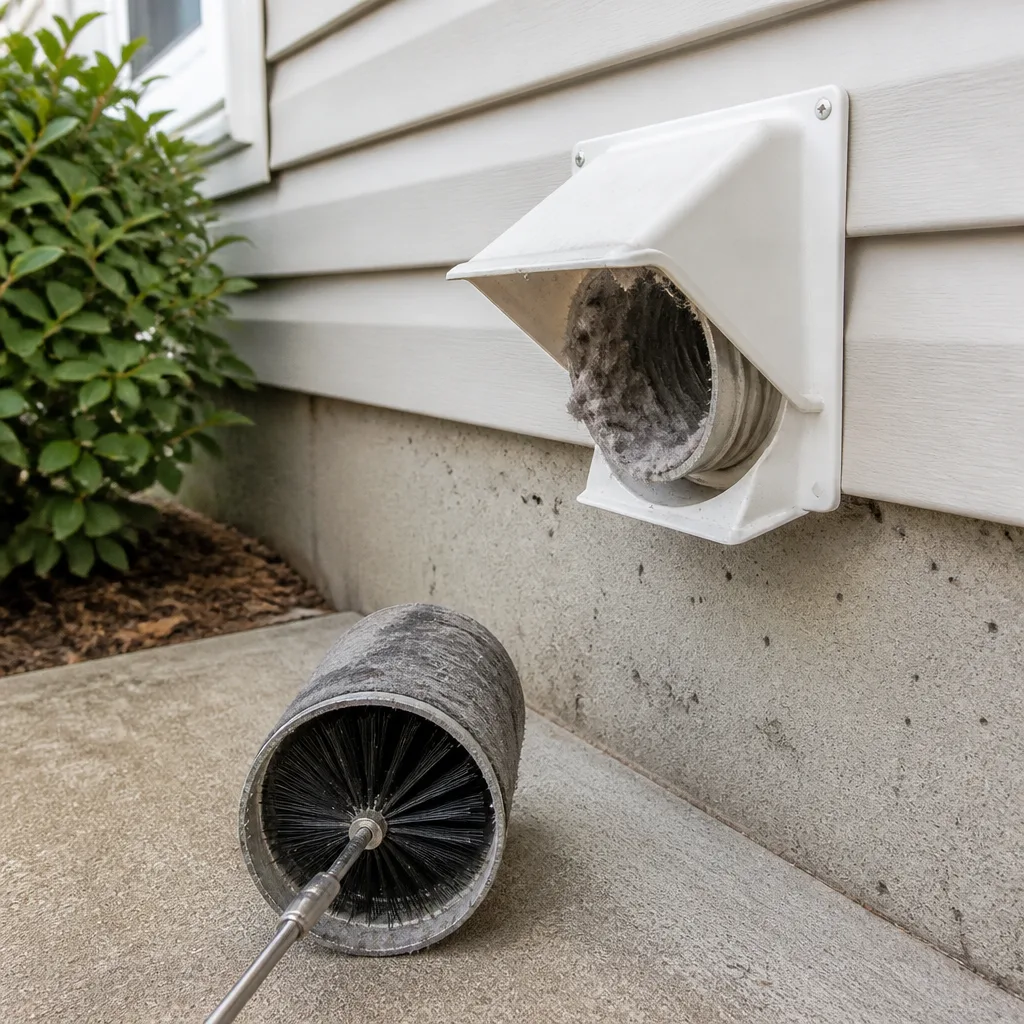
This is where DIY has real merit, but also real limits. Lint is the leading cause of dryer fires in U.S. homes, and the accessible portions of the vent run – the short flex behind the dryer, the exterior termination, the lint trap housing – can and should be cleaned by the homeowner. Pull the dryer out, disconnect the vent, vacuum the flex, and clear the exterior hood with a vent brush. What you can’t do is clean a long run through a wall cavity or a roof termination without specialty tools.
Obvious surface debris
If you pull a register and see a clump of lint, a pet toy, or a dust mat right at the boot, remove it. That’s extraction of visible debris, not system cleaning. Use a vacuum with a crevice tool and a flashlight. If you can’t see the bottom of the run, stop. You’re now past the point where a homeowner tool can safely reach.
Why Shop-Vac Cleaning on Trunk Lines Is Counterproductive
A shop-vac pulls air, but not the right volume of air, and definitely not under the right containment. When a homeowner agitates dust inside a trunk line with a shop-vac hose or a brush, the settled material becomes airborne. Without negative pressure holding the whole system at a lower pressure than the rooms, that airborne debris doesn’t reliably travel into the vacuum. It travels into the supply registers and out into the living room, the bedrooms, the kitchen. The homeowner has just moved the dirt from the ducts to the air they breathe.
Our own technicians have seen this pattern repeat in Evansville homes where a previous attempt was made: debris pushed down the trunk line into a lower branch, then redistributed rather than removed. The professional cleaning afterward is more involved, not less, because we’re dealing with more widely distributed contamination than a clean baseline would present.
There’s a second issue: whip and brush tools used at insufficient vacuum pressure don’t dislodge adhered debris. They stir the loose material. The caked-on dust, the microbial film, the construction dust that has set over years – those don’t come free without proper agitation paired with proper extraction. A shop-vac alone does neither well. Add a shop-vac’s exhaust into a small room, and you’ve got a fine particulate event happening in the space you’re trying to clean.
The Equipment Gap: CFM and Negative Pressure
The honest comparison isn’t “shop-vac vs. bigger vacuum.” It’s a completely different approach to the physics of a duct system. Here’s what a professional setup provides that no consumer tool can replicate.
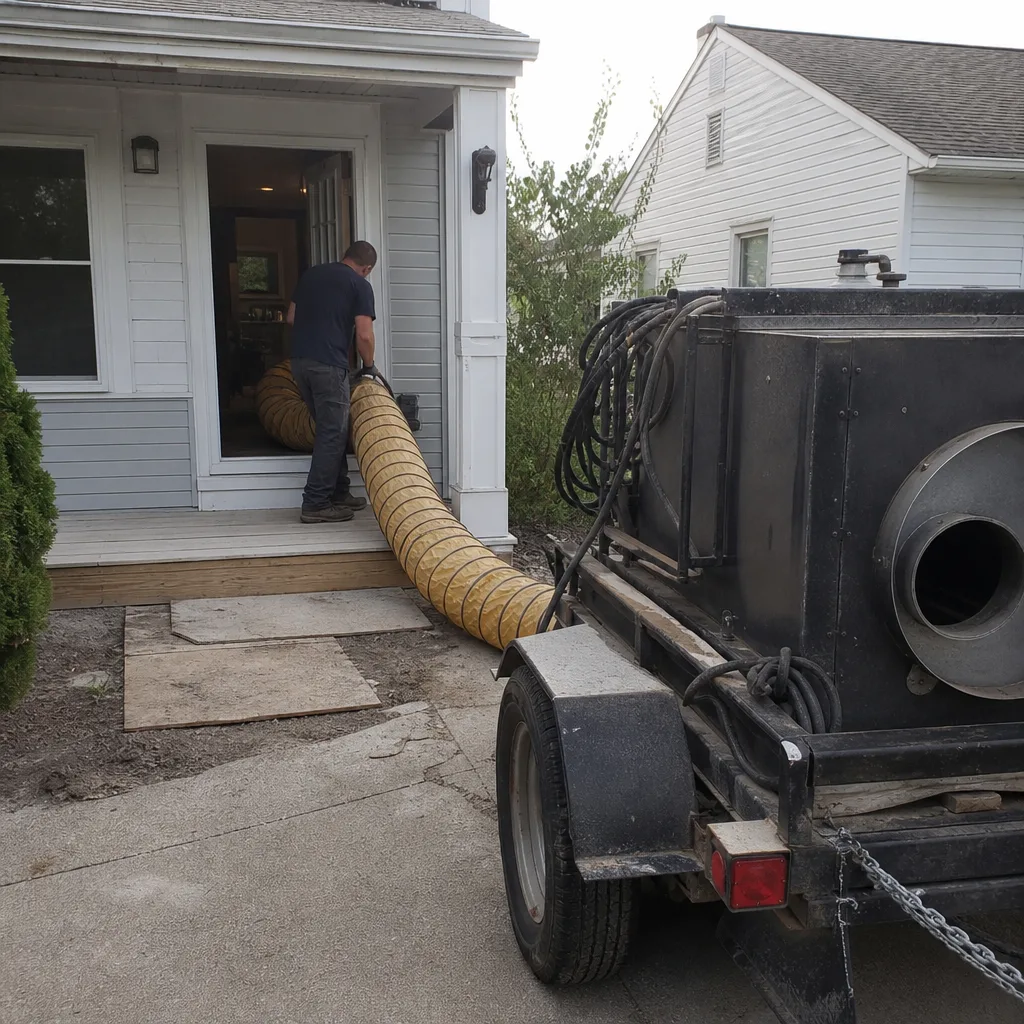
- Negative pressure containment. A professional system pulls the entire duct network into negative pressure, so when debris is agitated, it travels toward the extraction point rather than into the living space. Abatement Technologies negative-air and HEPA filtration equipment is the same class of gear used in remediation work – containment-level care applied to a residential job.
- Real CFM and static pressure. Consumer vacuums are rated in peak water-lift inches and marketing language. Professional systems are specified in cubic feet per minute and static pressure, and the difference in achievable airflow through a 30-foot trunk run is not incremental. It’s several orders of magnitude.
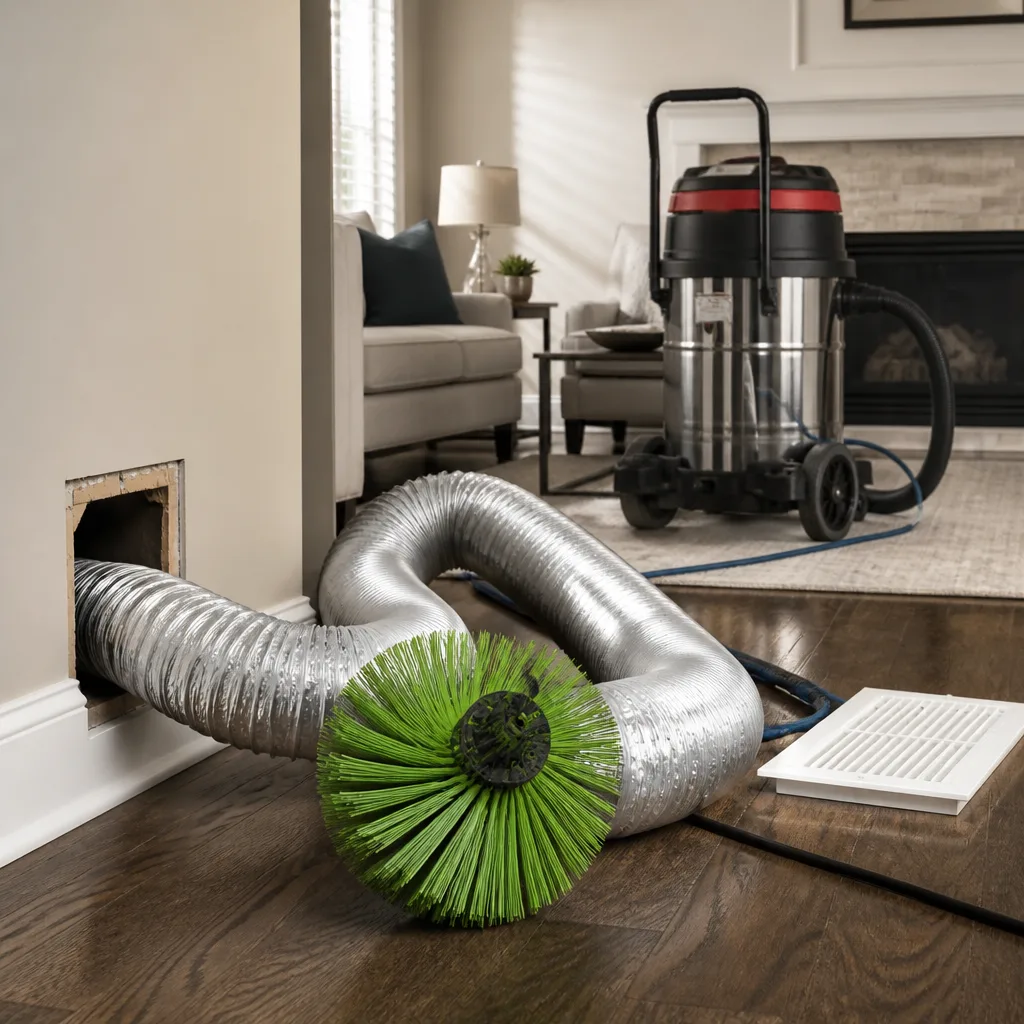
- Rotary agitation matched to duct type. Rotobrush systems use air-driven whip lines and rotary brushes designed for flex duct, rigid metal, and everything in between. Nikro tools cover the same territory with different mechanical action. The right tool gets matched to the system – not one tool forced on every run.
- HEPA exhaust. A shop-vac’s exhaust sends sub-micron particles back into the room unless it’s HEPA-rated. Even HEPA-rated shop vacs don’t typically provide the sealed containment of a professional setup.
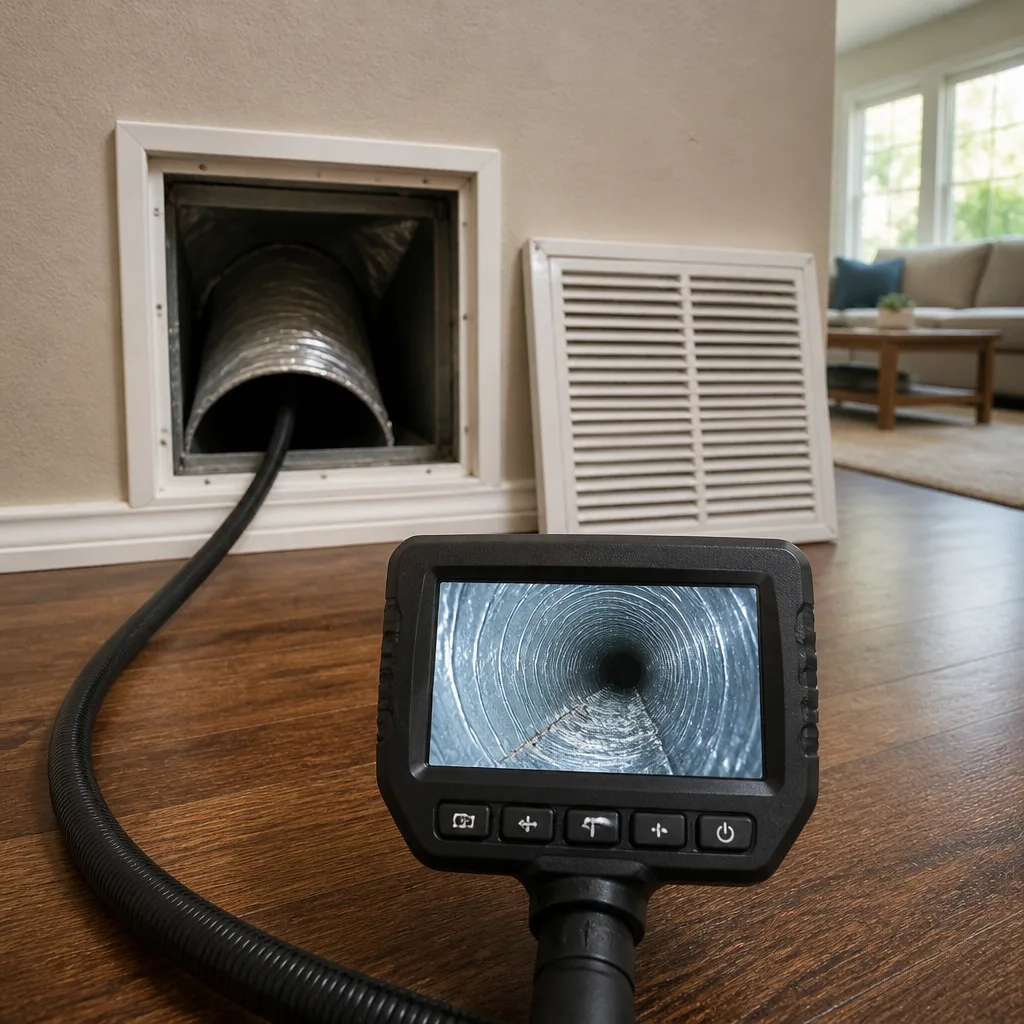
- Inspection. A technician with a camera can see the interior of the run, identify breaks, disconnected joints, or microbial growth, and document what’s actually there. A homeowner with a flashlight is seeing about a foot into the boot.
Professional-grade equipment, not a shop vac and a hose – the difference isn’t price point, it’s whether extraction actually happens or redistribution does.
Scenarios Where DIY Is Genuinely Sufficient
DIY duct maintenance has a legitimate place, and calling a professional for every minor dust concern wastes money. Here are the scenarios where we tell homeowners to handle it themselves.
- Annual maintenance on a recently cleaned system. If your system was professionally cleaned within the past two to three years, register and grille cleaning plus filter changes will keep it in good shape.
- Single-room dust complaint. If one room has a supply of visible dust at the register face, check the grille first. It’s almost always the surface.
- Filter upgrade or replacement. A homeowner swapping in a better filter is the highest ROI duct-adjacent action available. No professional needed.
- Post-move-in light cleaning of exposed boots. New owners of an Evansville home doing a quick surface pass before furniture arrives can handle the visible register faces and boots themselves.
- Dryer vent lint trap housing and short flex runs. Clean the accessible run every six months to a year. A dryer vent cleaning professional handles the long runs; a homeowner handles the accessible ones.
- Seasonal filter swaps on a schedule. Put a reminder in your phone. That’s the whole job.
Notice what isn’t on that list: trunk line cleaning, plenum cleaning, branch run cleaning, and any scenario involving musty odor or visible microbial growth. Those are source-removal tasks, and they’re where a professional system earns its place.
Scenarios Where DIY Makes Professional Cleaning Harder
Some DIY attempts don’t just fall short – they complicate the follow-up job. This is the part of the decision most homeowners don’t consider when they’re holding a shop-vac hose and looking at an open register.
- Any agitation without containment. As above, this can spread contamination deeper and further. The professional cleaning afterward is often more involved because the baseline was disturbed.
- Post-renovation cleanup attempts. Drywall dust is exceedingly fine and clings to duct interiors. Attempting a shop-vac pass during an active renovation just mixes more construction dust into the airstream. Wait until the renovation is complete, then call.
- Microbial concerns. If you’re seeing or smelling something that suggests mold inside the ductwork, agitation makes it worse. Guardsman-certified treatments applied after proper cleaning are the correct sequence; a shop-vac before that is just a dispersal event.
- Pest intrusion cleanup. Rodent droppings and nesting material require containment-level handling. This is genuinely not a homeowner task.
- Dislodged flex duct liner. Aging flex duct in older Evansville homes can have interior liner that degrades. A homeowner pushing a brush through it can tear the liner further, and then you’re looking at air duct cleaning plus repair in the same visit.
- Long runs through finished ceilings. A shop-vac hose can’t reach these. Attempts to force it can dislodge joints and cause duct separation, which is a repair, not a cleaning.
The Decision Tree: Square Footage, Contamination, Material, Occupant
When homeowners ask us whether to do it themselves or call a professional, the answer usually comes down to four factors: how big the home is, what kind of contamination is present, what the duct system is made of, and who lives there. Walk through these in order.
Step 1: Square footage
- Under 1,200 sq ft, single-story, simple layout: a DIY surface maintenance pass plus annual professional cleaning is often sufficient. The runs are short.
- 1,200 to 2,500 sq ft: more trunk length, more branch runs, more total surface. Professional cleaning is worth doing, and DIY is limited to filters and registers.
- Over 2,500 sq ft: professional cleaning on a scheduled basis. The surface area is simply too large for homeowner tools to cover.
Step 2: Contamination type
- Loose household dust and lint: DIY-safe for the parts you can reach.
- Pet dander and hair: DIY registers, professional for the runs. Multiple pets push toward professional.
- Construction dust from a recent renovation: professional only. The fine particulate settles throughout the system.
- Musty odor or visible growth: professional only, with Guardsman-certified treatment if microbial concerns are confirmed.
- Pest intrusion: professional only, with containment-level handling.
Step 3: Duct material
- Rigid metal: most tolerant of both DIY and professional tools. Professional cleaning with the right brush type gets a solid result.
- Flex duct: homeowner brushes and shop-vac hoses can damage the interior liner. Professional rotary tools (Rotobrush whip lines are designed for this) are the right approach.
- Ductboard: fragile. Professional only, with careful tool selection.
Step 4: Occupant sensitivity
- No allergies, no respiratory conditions: DIY maintenance plus a professional cleaning every few years.
- Household with allergy or asthma concerns: professional cleaning on a tighter schedule, with attention to filtration. A whole-home Honeywell or Aprilaire setup is worth discussing with us.
- Infants, elderly family members, immunocompromised: professional only, and consider filtration upgrades.
If you’ve gone through all four steps and any answer lands on the professional side, that’s the answer. Combining a filter change, register cleaning, and one piece of professional gear beats trying to make a shop-vac do something it can’t.
What a Professional Cleaning Actually Involves
We get this question a lot from Evansville homeowners who’ve had a bad experience with a one-man-with-a-shop-vac operation. Here’s what the process should actually look like.
- Inspection first. Before any equipment goes in, the technician inspects registers, accessible runs, and the plenum, and documents findings. A reputable specialist will show you what they find.
- System seal and negative pressure setup. Registers get covered, the equipment connects at the plenum or a dedicated port, and the whole system goes into negative pressure before any agitation starts.
- Source removal agitation. Rotary brushes and whip lines through each run, matched to the duct material. Rotobrush and Nikro tools are selected per system, not applied generically.
- HEPA filtration on exhaust. Everything pulled out gets filtered before it goes back into the air. Abatement Technologies equipment is our standard for this.
- Treatment where indicated. If microbial concerns are visible, a Guardsman-certified treatment is applied after cleaning.
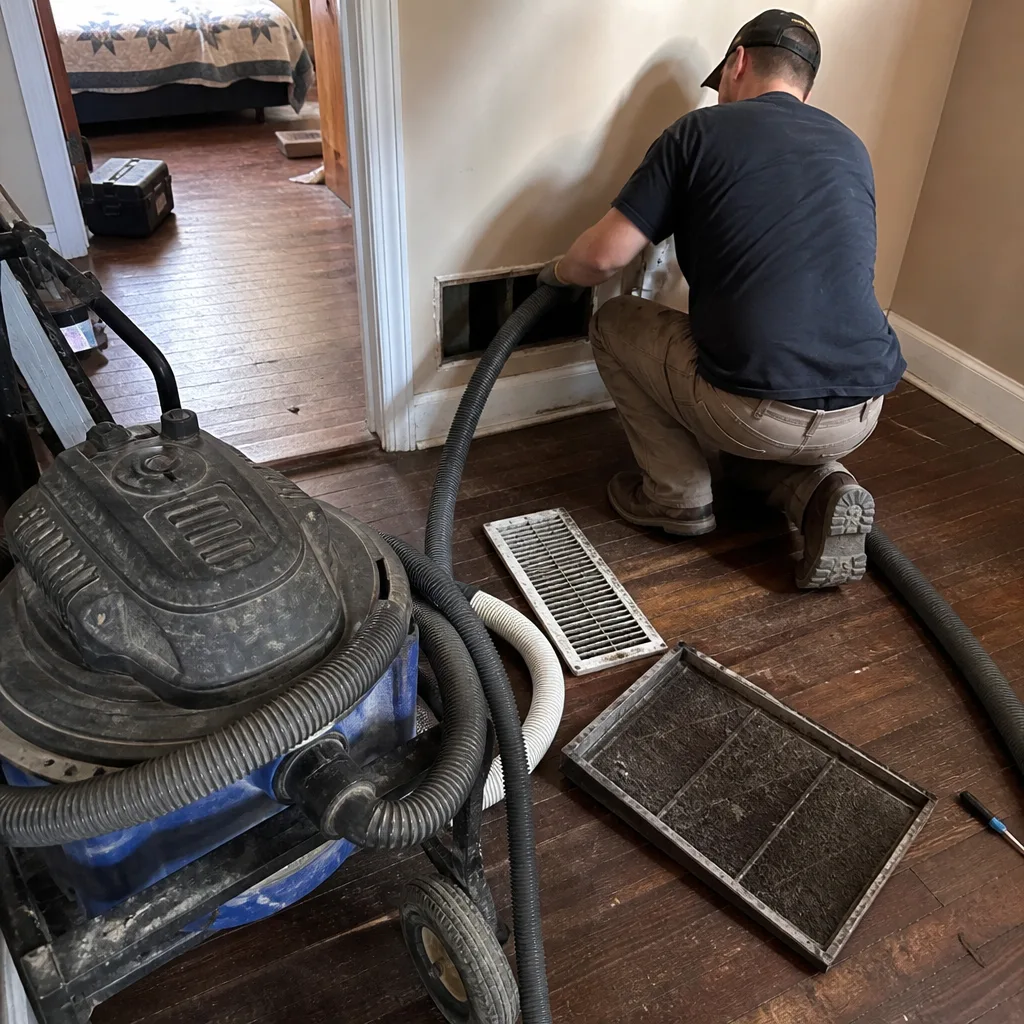
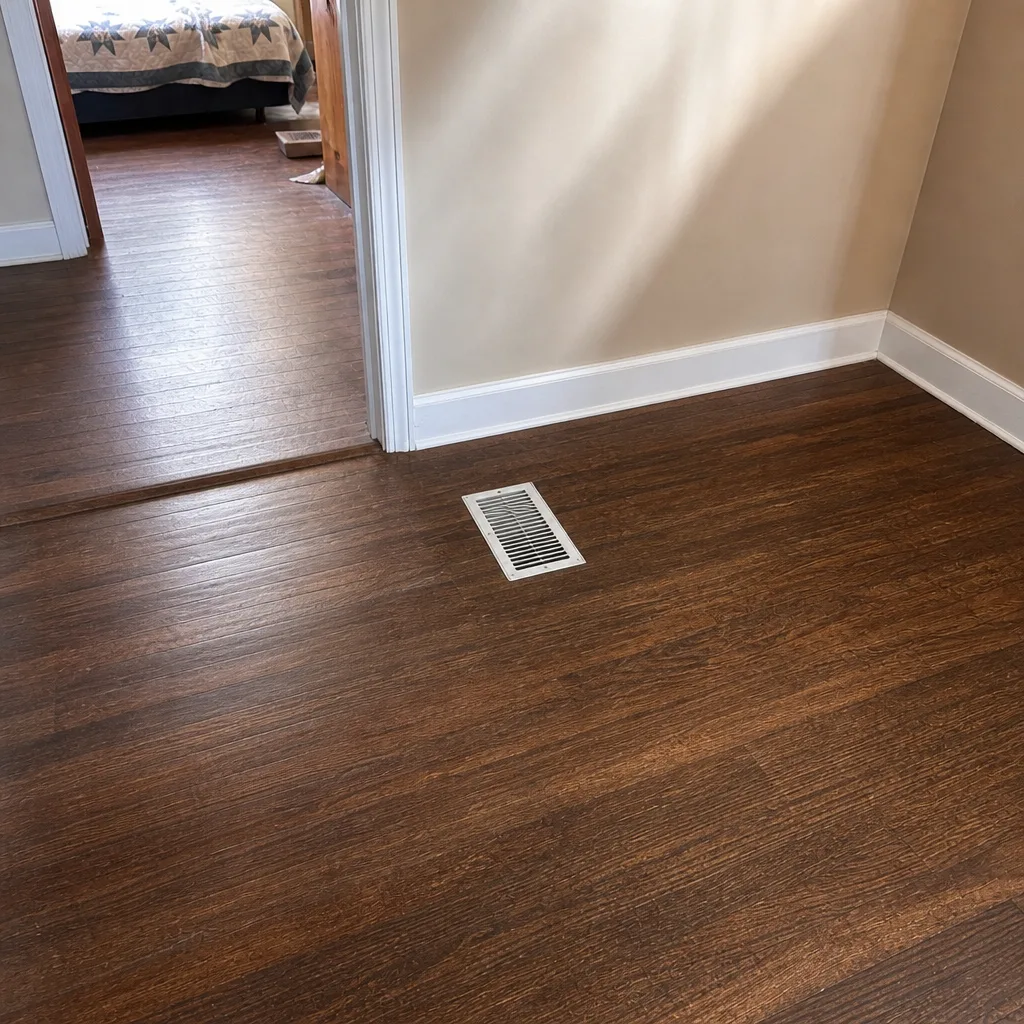
- Re-inspection and before-and-after photos. We photograph what we found and what we did. You see the interior of your system before and after, not just a claim that “it’s clean.”
- Repair if needed. Disconnected joints, damaged flex, torn liner – these get flagged during the cleaning and can be addressed in the same visit. Our Evansville duct repair is in-house, so you don’t have to call a second contractor.
That’s the difference between a cleaning and a maintenance pass. And it’s why the equipment matters: no shop-vac-based setup can perform steps two through four in a way that actually protects the living space.
How to Choose a Duct Cleaning Professional in Evansville
The market has plenty of companies that will quote a low number and then discover “problems” on-site. Here’s how to separate a specialist from a price-shopper trap.
- Ask what equipment they bring. A real answer names specific systems – Rotobrush, Nikro, Abatement Technologies, or equivalent. A vague answer (“we have industrial vacuums”) is a flag.
- Ask about containment. Negative pressure and HEPA exhaust are the core protections. Any company that can’t explain how they prevent particulate redistribution isn’t a duct specialist.
- Ask about pricing transparency. Anywhere from a few hundred dollars for a smaller single-system home up to $1,000 or more for a larger home with extensive runs is the realistic ballpark for professional whole-system cleaning. A teaser coupon price that balloons on-site is exactly what you’re trying to avoid.
- Ask about before-and-after documentation. Photos of your system’s interior, not stock imagery.
- Ask about the scope of service. A focused duct-and-vent specialist has a narrow service list by design. An HVAC company that also does duct cleaning as an add-on may well be using a shop-vac because that’s what’s on the truck.
How Often Should You Actually Do This?
Every three to five years is a reasonable baseline for most Evansville homes, and the frequency shifts with the conditions in the home rather than with any rigid schedule. A home with pets, a recent renovation, or a household member with respiratory sensitivity warrants a tighter interval. A home with a robust whole-home filtration system and no pets can often go longer.
The honest answer is that frequency follows contamination. If your supply registers show dust accumulation fast, if you’re noticing musty odor, if the static pressure at the registers is weak – those are signs to move up the timeline. Between professional cleanings, the DIY maintenance steps above keep the system in reasonable shape.
Dryer vent cleaning follows a different clock. Once per year for most households, and more often if you run loads frequently or notice the dryer taking longer to finish. That’s a service with a genuine safety profile, and it’s treated accordingly rather than as a courtesy add-on.
See the difference
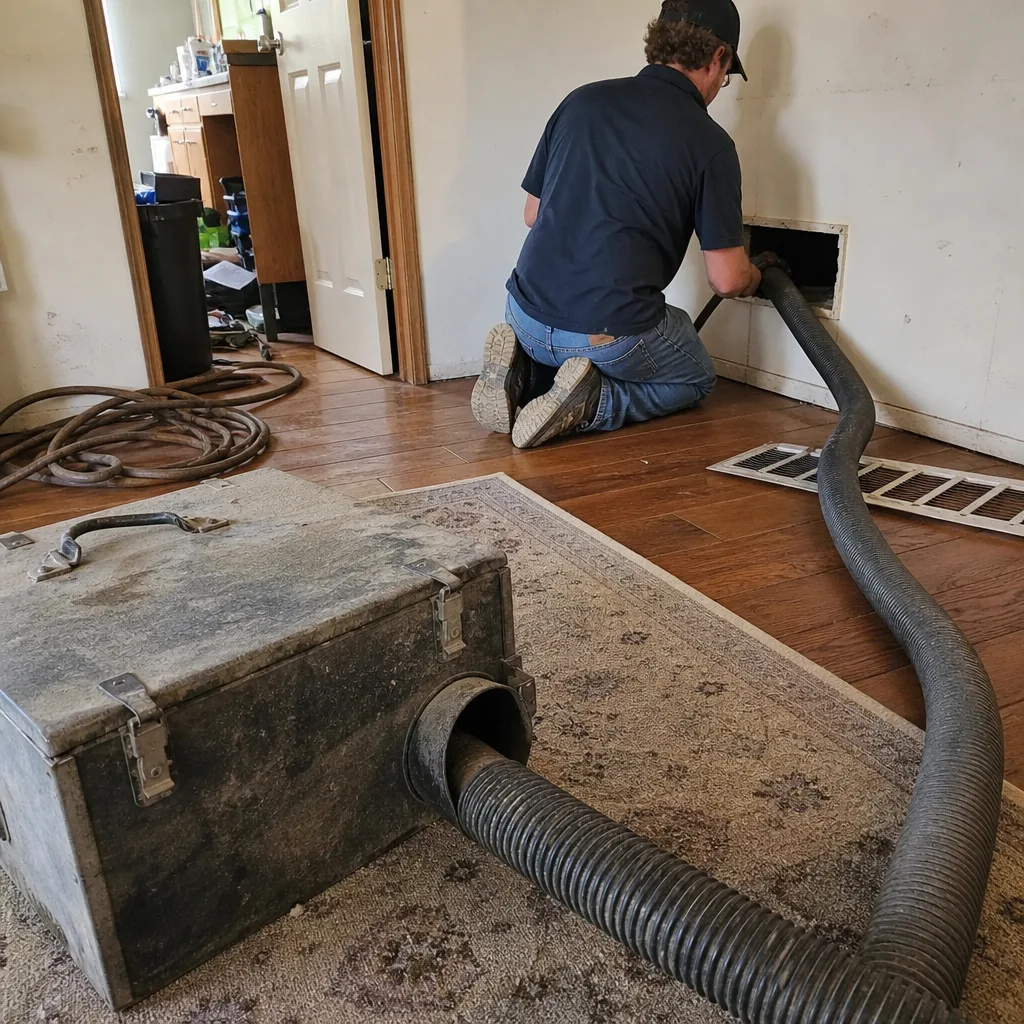 Before
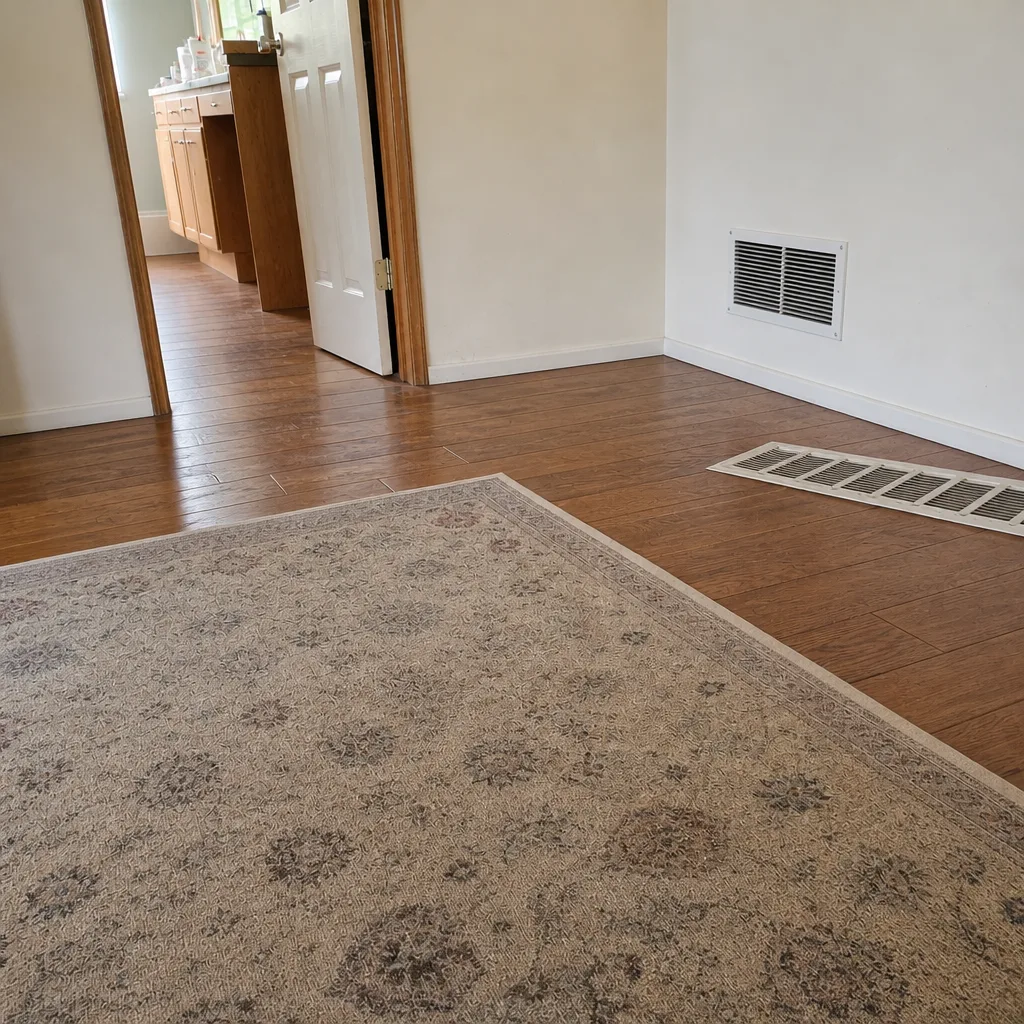 After
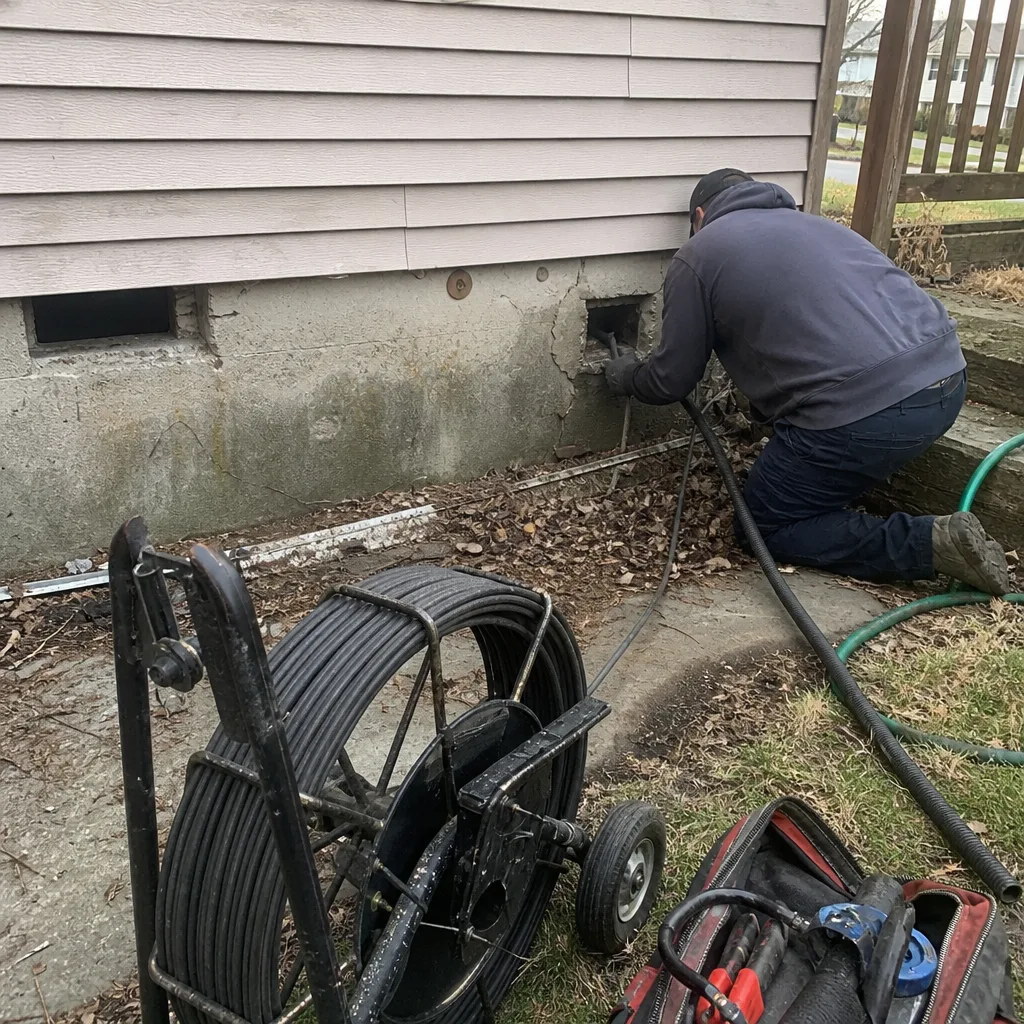 Before
 After
 Before
 After
Frequently Asked Questions
You can clean the surface of your supply registers and return grilles with a shop-vac, but you can’t safely clean the trunk lines, branch runs, or plenum. The problem isn’t effort – it’s containment. Without negative pressure and HEPA exhaust, agitation lifts settled debris into the airstream, and it ends up in your living space or pushed deeper into the system rather than extracted. Call (833) 725-5641 for an exact quote if you’re unsure which side of the line your project falls on – estimates are free.
Most professional whole-system cleanings in Evansville land in the range of a few hundred dollars for a smaller single-system home up to roughly $1,000 for a larger home with extensive runs and additional services. Prices are set per job by a written estimate, not a per-vent figure or a coupon number. If a quote sounds dramatically cheaper than the rest, ask what equipment they bring and whether they use containment. Call (833) 725-5641 for a free estimate.
For filter changes, register and grille cleaning, and accessible dryer vent lint removal, yes – DIY is genuinely sufficient and calling a professional for those is unnecessary. For source removal inside the duct runs and plenum, professional cleaning is the only approach that extracts rather than redistributes. Call (833) 725-5641 if you want to talk through a specific scenario.
Because some companies are quoting a shop-vac pass, not a professional cleaning. A low teaser price that becomes a larger invoice once the technician is on-site is the standard bait-and-switch pattern in this industry. We set one price per system in a written estimate before work starts, with no per-vent pricing and no on-site surprises. Call (833) 725-5641 for an exact quote.
Professional systems include a high-CFM negative-pressure vacuum connected to the duct system, HEPA filtration on exhaust, and rotary agitation tools matched to the duct material. We use Rotobrush and Nikro agitation systems paired with Abatement Technologies containment and HEPA equipment, and we coordinate with existing Honeywell and Aprilaire filtration setups when they’re present. Ask any company you’re considering which specific equipment they use.
Duct cleaning handles the HVAC system – the trunk lines, branch runs, plenum, and registers that carry heated or cooled air through your home. Dryer vent cleaning handles the separate exhaust run from the dryer to the exterior, which accumulates lint and is the leading cause of dryer-related house fires. They’re different systems, different tools, different risks, and they’re both part of our Evansville duct cleaning service. Call (833) 725-5641 to schedule either.
Common Mistakes to Avoid
- Using a shop-vac on the main trunk without containment. Agitation without negative pressure lifts dust into the airstream. The result is more contamination in the living space, not less.
- Pushing a homeowner brush through flex duct. Flex liner tears easily. Once it’s torn, you’re looking at repair and replacement, not just cleaning.
- Skipping the filter in favor of duct cleaning. A clogged filter is the number one airflow problem we find in Evansville homes. Fix the cheap thing first.
- Ignoring a musty odor. Odor usually means moisture or microbial growth somewhere in the system. Agitating it on your own can disperse it. Call a professional.
- Hiring a company that can’t name its equipment. “Industrial vacuums” is marketing. Ask for brand names and ask how they handle containment.
- Treating dryer vent cleaning as optional. Lint buildup is a real fire risk. It’s a homeowner maintenance task on the accessible portions and a professional task on the long runs.
- Believing a coupon price. A low teaser that becomes a large invoice once the technician is on-site is a well-worn pattern in this industry. One price per system, in writing, before work starts.
When to Call a Professional
Call a professional when the answer to any of these is yes: the home hasn’t been serviced in several years, there’s a musty odor, there was a recent renovation, there’s pest intrusion, or a household member has respiratory sensitivity. Call for dryer vent cleaning if the vent run runs through a wall cavity or terminates at the roof. Call if you’re not sure whether the visible dust is surface dust or something deeper. Evansville Duct Cleaning offers free estimates in Evansville – call (833) 725-5641 and we’ll talk through what you’re seeing and whether it warrants a visit.
Between visits, the DIY maintenance above is genuinely useful and we’re not going to pretend otherwise. The point of this guide isn’t to sell a cleaning to every homeowner who reads it. The point is to help you know which side of the line a particular task falls on.
The Bottom Line
DIY duct maintenance and professional cleaning aren’t competing approaches – they’re two different jobs that happen to share a topic. Filter changes, register cleaning, and accessible dryer vent maintenance are homeowner tasks that genuinely help. Source removal in the trunk lines, plenum, and branch runs requires negative-pressure equipment and agitation tools matched to the material, and that’s a professional job. Your best strategy is to do the small things consistently, call a specialist when containment-level work is warranted, and ask any company you hire to name the tools they use and show you before-and-after photos of your own system. That’s how you get real cleaning instead of a redistribution event.
Call (833) 725-5641 for a free estimate. We answer 24/7. Fast dispatch from 7am to 7pm, Sunday through Friday.
Written by the team at Evansville Duct Cleaning.