
Last updated November 15, 2026
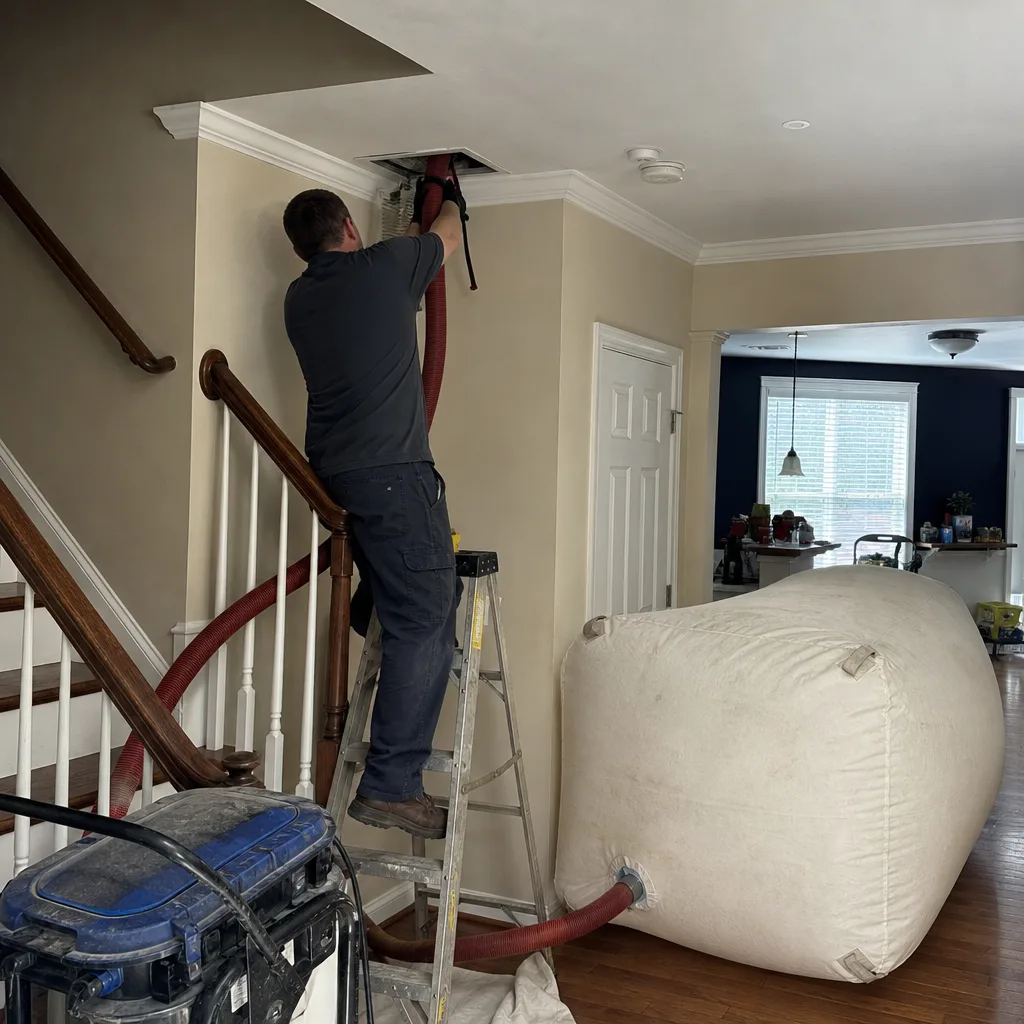
 Whole-home duct cleaning
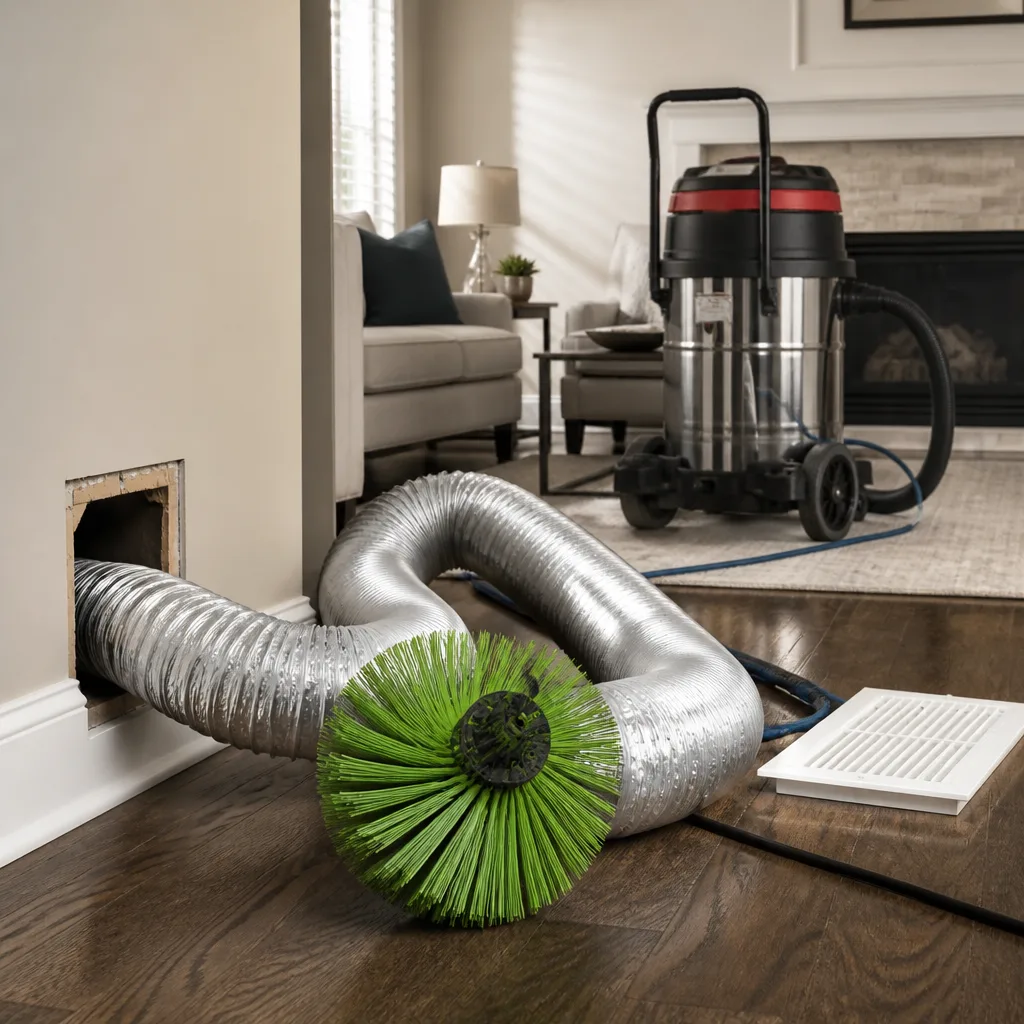
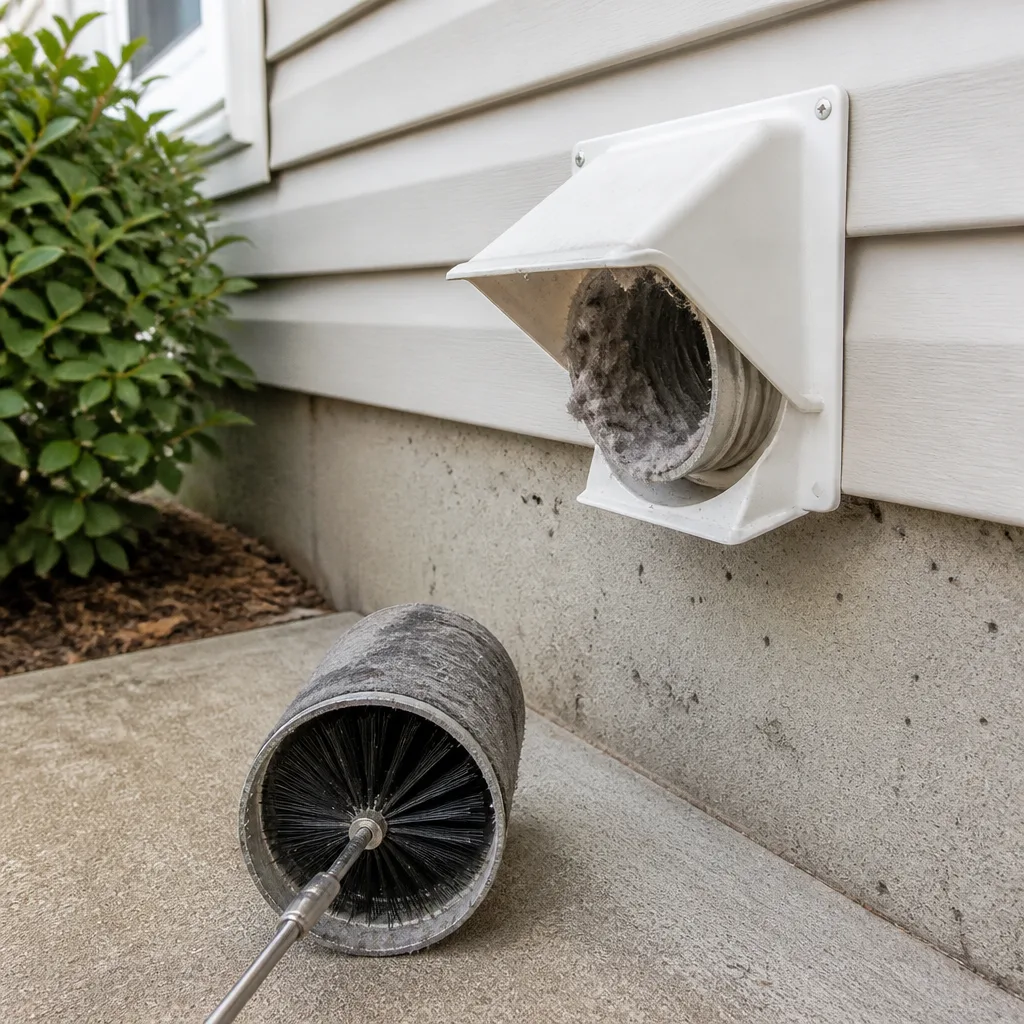 Dryer vent cleaning
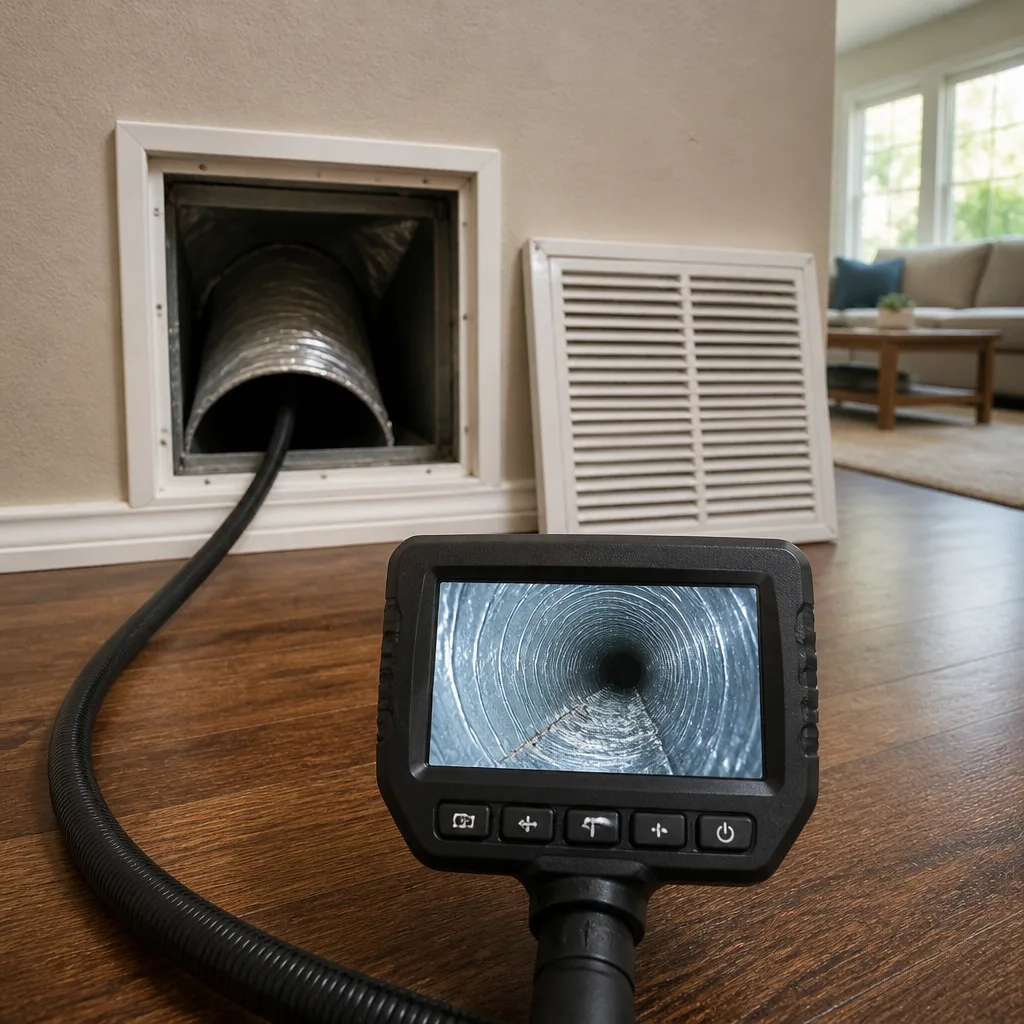 Camera inspection
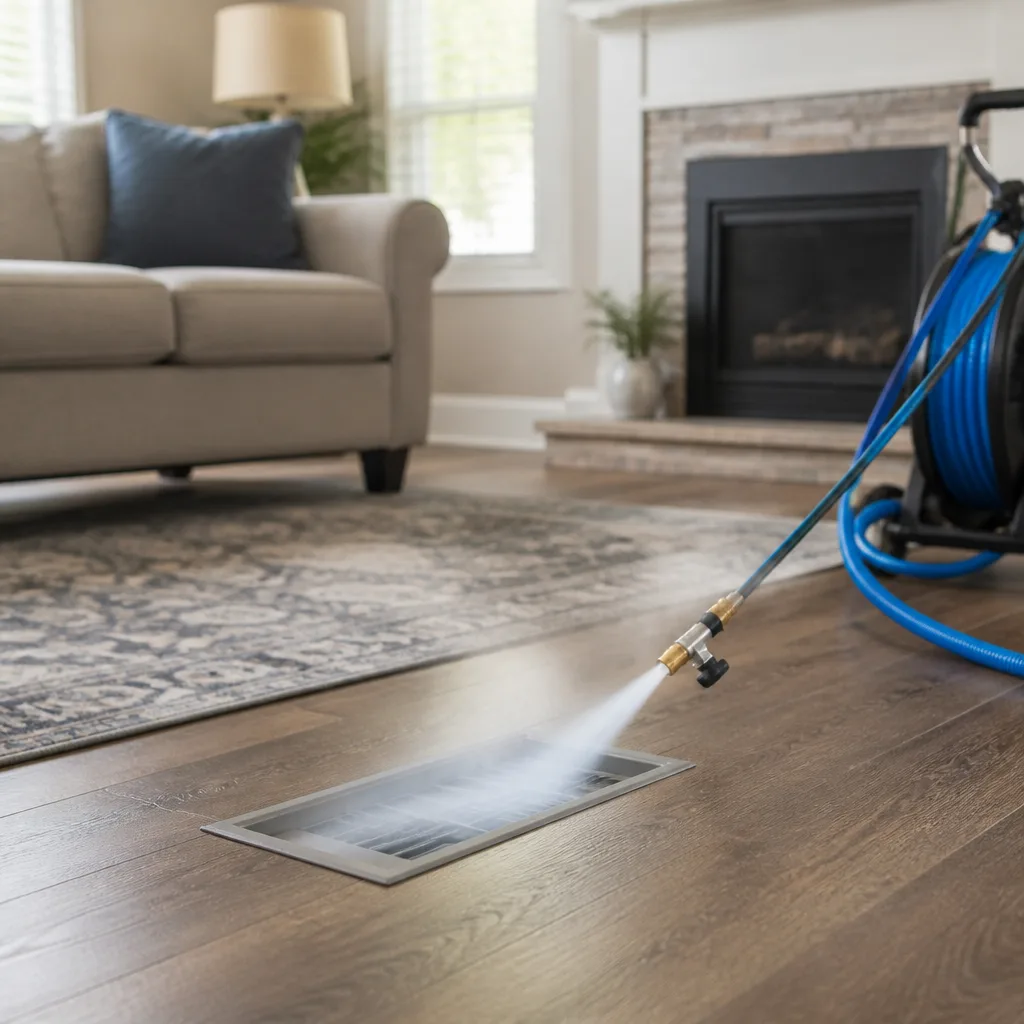 Sanitizing & deodorizing
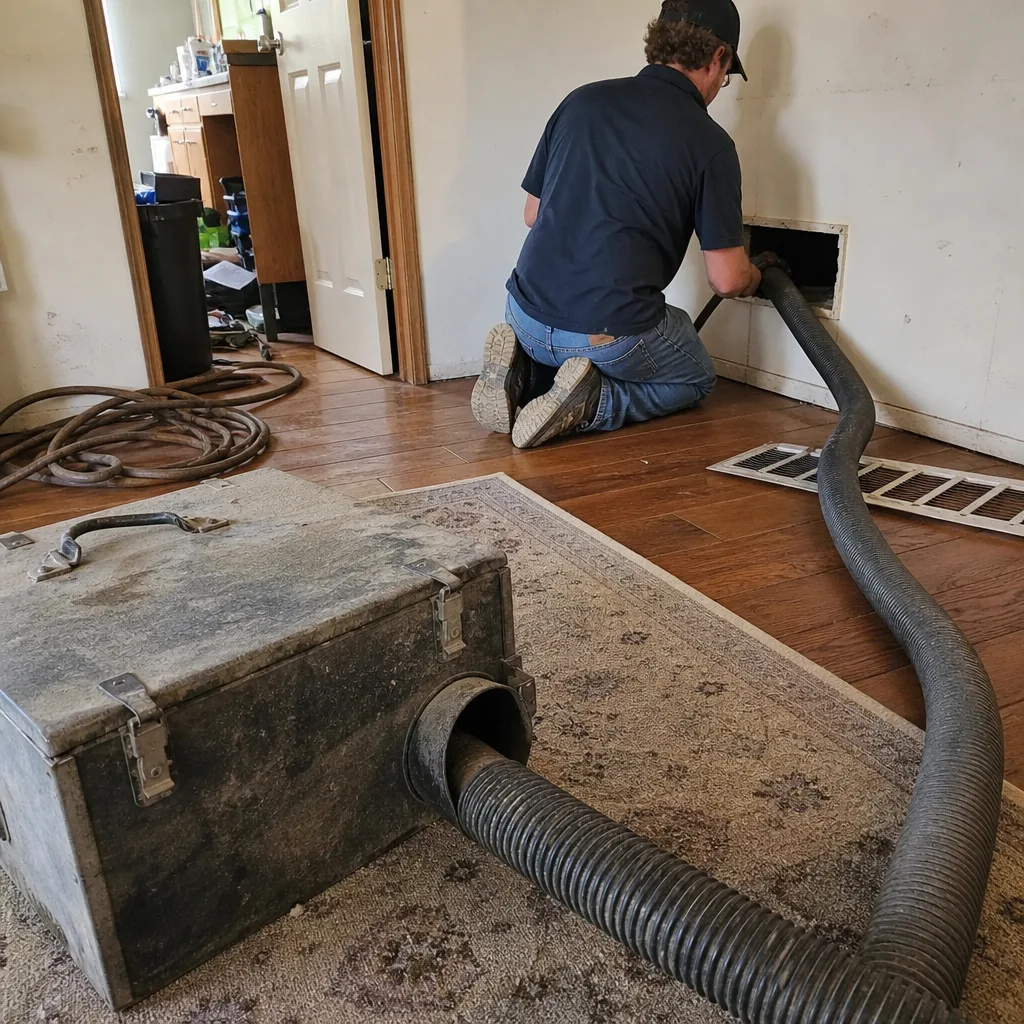
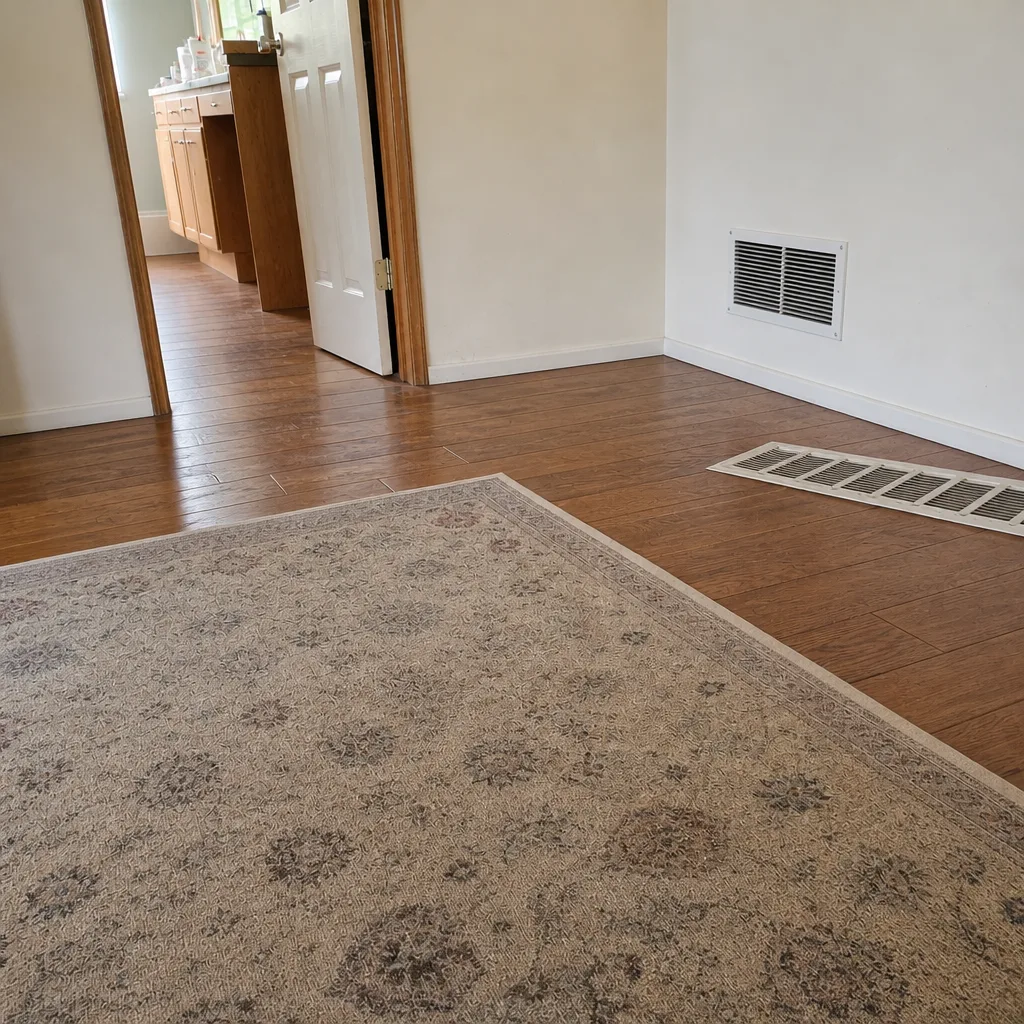
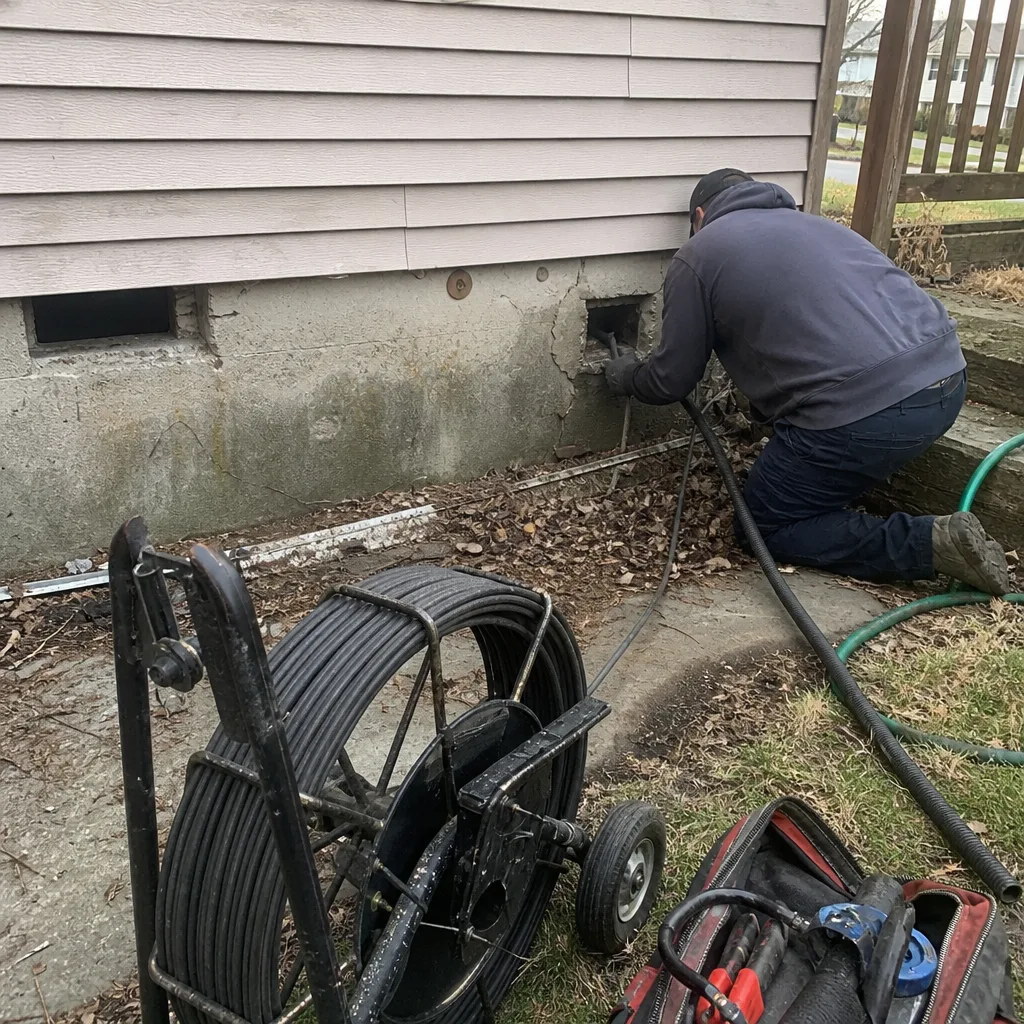
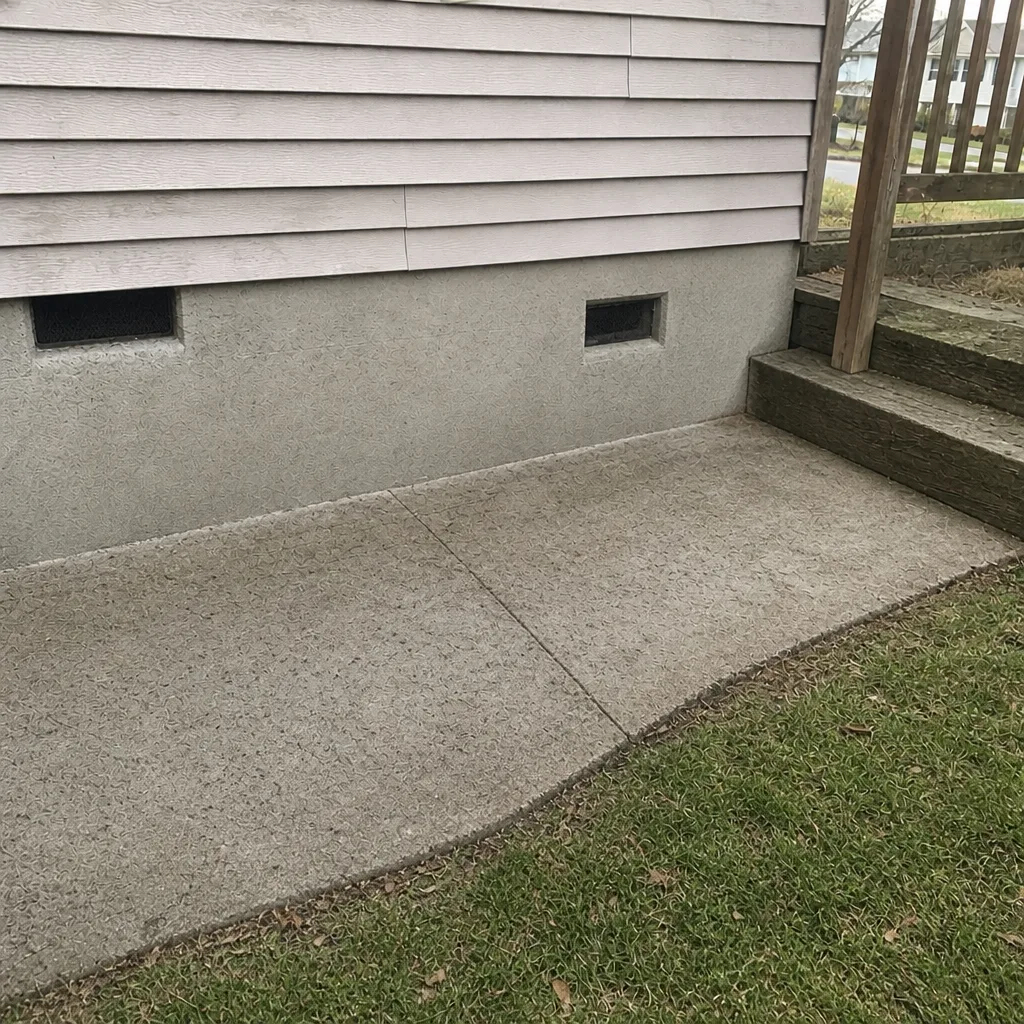
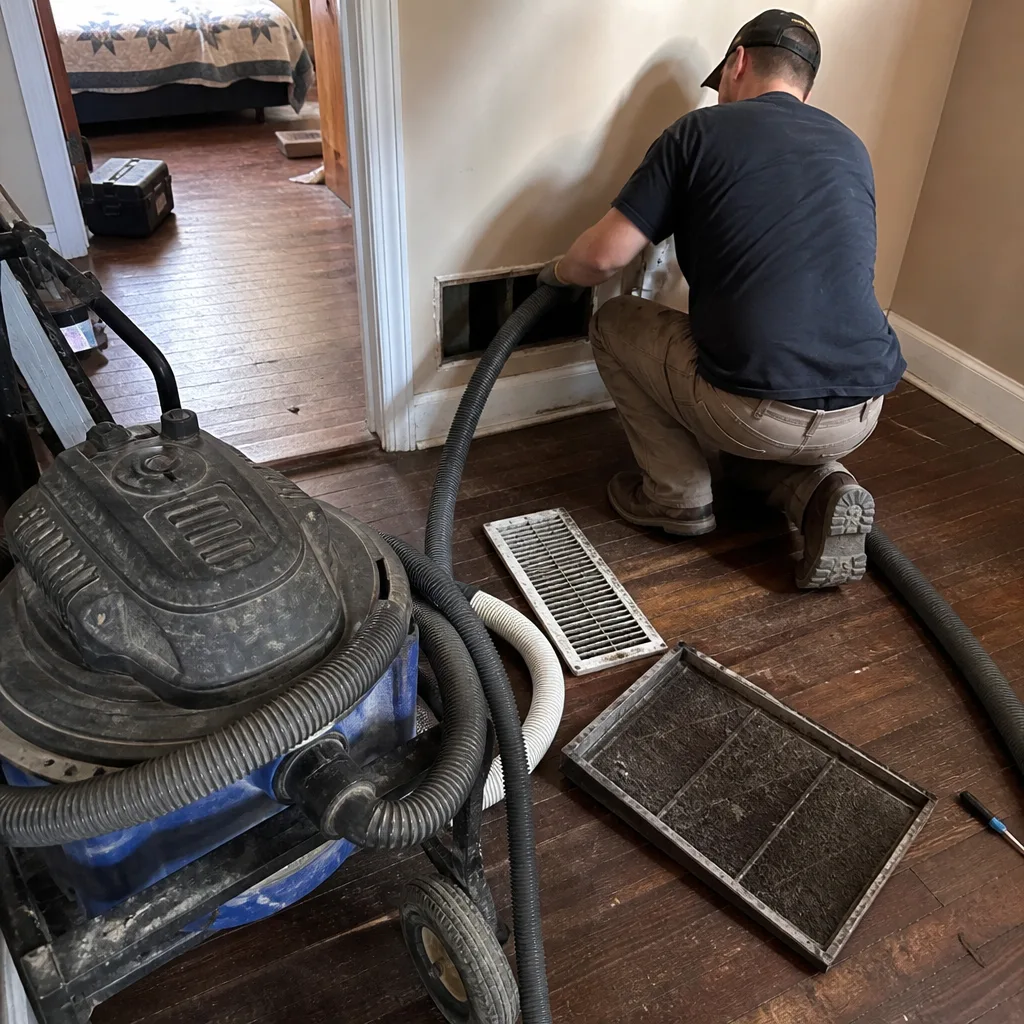
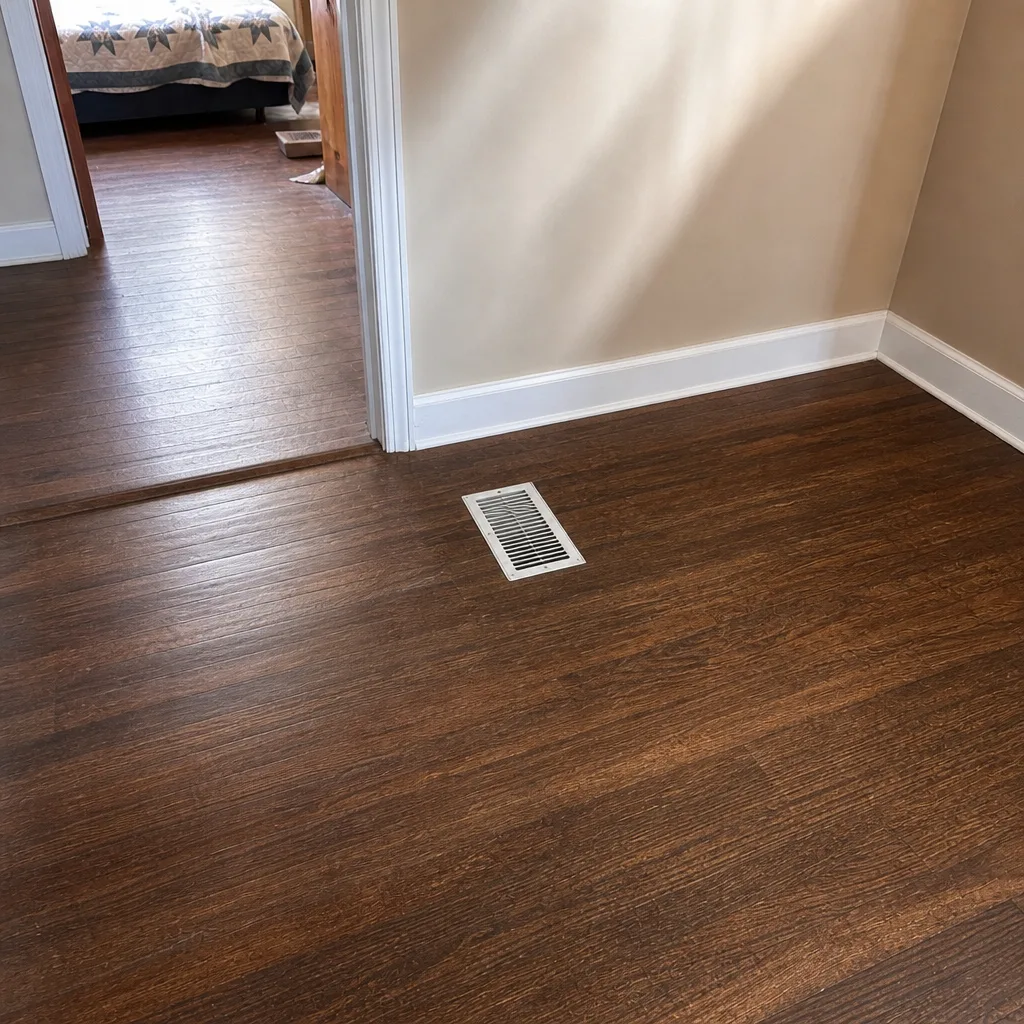
Whole-system duct and dryer vent check with before-and-after photos - you see exactly what came out of your vents
That "$99 whole-house special" is a bait ad - the real number appears once they are in your hallway, or the "clean" is a shop-vac at the register. We photograph the inside of your ducts before and after instead.
Air Duct Cleaning Troubleshooting in Evansville: Common Problems and How to Fix Them
If a duct cleaning fixed your musty smell for two weeks and it came back, the cleaning wasn’t the problem. The diagnosis was. Most odor callbacks trace to one overlooked section: the return air plenum, the stretch of ductwork between your return grilles and the air handler. Debris gets pulled out of the supply runs, but the plenum keeps feeding the same smell back into every room. In Evansville, where summers run humid and older homes mix duct materials across decades of additions, that pattern shows up often. This guide teaches you to read your duct symptoms the way a technician does: which half of the system each complaint belongs to, what each odor tells you, and when cleaning is the wrong answer entirely.
Quick Answer
Most air duct problems in Evansville fall into three groups: airflow complaints caused by debris, airflow complaints caused by duct design or static pressure, and odor complaints that come from the return side or the air handler rather than the supply ducts. Cleaning fixes the first. The second needs duct repair or redesign. The third needs a diagnosis before anyone touches a brush. The fastest way to know which one you have is to match the symptom to the zone.
Styles & brands we work with
- Whole-home duct cleaning
- Dryer vent cleaning
- Camera inspection
- Sanitizing & deodorizing
Table of Contents
- Which Half of Your System Owns Your Complaint?
- Dirty Ducts vs. Duct Design: How to Tell the Difference
- Reading Your Odors: Musty, Burnt, and Chemical
- Uneven Room Temperatures After a Cleaning
- The Return Air Plenum: The Section Everyone Skips
- When the Ducts Aren’t the Culprit at All
- Dryer Vent Symptoms You Should Never Ignore
- A Five-Step Diagnostic You Can Do Yourself
Which Half of Your System Owns Your Complaint?
Your duct system has two halves, and they fail in different ways. The supply side pushes conditioned air out to the rooms. The return side pulls air back to the air handler. Learning which half produces which symptom saves you from paying for the wrong service.
Supply-side problems usually show up as weak airflow at specific registers, rooms that never quite cool, or dust settling on horizontal surfaces near the outlets. Return-side problems show up as odors that appear throughout the house at once, a whistle or whoosh at a single large grille, or dust streaks around the return frame where air is being pulled through a gap.
Use this split as your first sorting step:
- One room is weak, the rest are fine: supply branch problem, often a crushed flex run or a closed damper.
- Every room feels weak at once: return-side restriction, a clogged filter, or a blower issue. Not a duct cleaning problem in most cases.
- Smell everywhere, all at once: return plenum or air handler. The supply ducts are just delivering it.
- Dust streaks at the return grille: air leaking past the filter frame, which means the system is pulling attic or wall-cavity air into the airstream.
That last point matters in Evansville, where a lot of housing stock includes returns run through unconditioned attic space or through wall cavities that were never sealed. A returning system pulling humid summer attic air into the airstream will leave the ducts wet enough to grow odor even after a thorough cleaning. We’ve seen this pattern repeatedly on the older neighborhoods near downtown, where additions and re-runs have stacked returns on top of each other.
Dirty Ducts vs. Duct Design: How to Tell the Difference
This is the most expensive confusion in the trade. A homeowner pays for a cleaning hoping to fix weak airflow. The airflow doesn’t improve, because the airflow was never restricted by debris. It was restricted by static pressure, the resistance the blower has to push against. Cleaning cannot lower static pressure that comes from undersized ducts, too many turns, or a filter that’s too restrictive for the blower.
Here’s how a technician separates the two:
- Measure static pressure at the air handler. A manometer reading above the manufacturer’s rated range tells you the blower is fighting the system. Debris alone rarely pushes a system out of range.
- Compare register velocity room by room. A dirty-duct problem shows up as debris visible at the register boots. A design problem shows up as consistently low velocity regardless of debris.
- Count the runs against the blower capacity. A system that’s had three supply runs added over the years often exceeds what the original blower was sized for.
- Look at the filter. A high-MERV filter in a system designed for a basic filter chokes the return. That’s a design mismatch, not dirt.
- Inspect flex runs for pinch points. A flex duct sagging across a joist, kinked behind a duct board corner, or compressed inside a tight chase loses capacity even when it’s clean.
Our technicians have up to 14 years of experience, and most of them can call this on the first walkthrough. If your system reads as a design problem, the honest answer is that a cleaning is not the fix, and we’ll tell you so. When the debris load is genuinely heavy, we use professional-grade Rotobrush and Nikro equipment to do the job properly rather than the shop-vac-and-hose approach that stirs dust without containing it.
Reading Your Odors: Musty, Burnt, and Chemical
Odor is the most useful diagnostic tool a homeowner has, and the most misread. Different smells point to different duct zones, and treating them all with the same cleaning is how callbacks happen.
Musty or earthy
Musty points to moisture. In Evansville’s humid summers, condensation inside ductwork is common, especially on runs through unconditioned space where metal duct sweats. The zone to inspect first is the return plenum and the air handler cabinet, then the supply runs closest to the coil. If the smell returns within days of a cleaning, the moisture source is still active. A duct cleaning that doesn’t address the moisture will not stick.
Burnt or scorched
A burnt smell is not a duct problem at all, and it rarely is dirt. It usually points to the blower motor, a failing capacitor, or electrical components inside the air handler. Turn the system off and get it looked at. A duct specialist should recognize this smell immediately and not sell you a cleaning for it.
Chemical or solvent-like
Chemical odors are the trickiest. They can come from new building materials off-gassing into a tight house, from a refrigerant leak at the coil, or from cleaning products pulled in through the return. Note when the smell appears: only during heating season, only during cooling, or all the time. That timing narrows down which zone is feeding it into the airstream.
Guardsman-certified treatments for microbial concerns exist for the cases where the odor genuinely traces to the duct surfaces. That’s a narrower category than most homeowners expect, which is why we treat the diagnosis as the first step and the treatment as the second. Familiarity with Honeywell and Aprilaire filtration systems also matters here, since a whole-home filtration setup can hide an odor problem by continuously scrubbing the air without addressing the source.
Uneven Room Temperatures After a Cleaning
You had the ducts cleaned, and one or two rooms are still warmer or colder than the rest. This is one of the most common frustration points we hear about in Evansville, and it almost never means the cleaning was done poorly. It usually points to flex duct collapse, a crushed run, or a damper position that was never touched.
Flex duct is the ribbed, insulated duct that runs from the main trunk to individual registers. It’s delicate. It can collapse when it’s pulled tight around a corner, compressed behind a joist bay, or stepped on during attic work. A collapsed run stops moving air even when it’s spotless inside.
Here’s how a technician checks for it:
- Trace the run end to end, looking for kinks, sharp bends, or sections that are flattened rather than round.
- Check that the run is supported every few feet along its length, not sagging between hangers.
- Verify the inner liner isn’t separated from the outer jacket, which tends to happen at the boot connection.
- Look for a manual damper on the trunk that’s partially closed and was never reopened.
If the airflow complaint is a collapsed flex run, cleaning won’t solve it. Air duct repair will. Evansville Duct Cleaning handles repair in-house, so a collapsed run found during a cleaning can be addressed on the same visit rather than sending you to a second contractor.
The Return Air Plenum: The Section Everyone Skips
The return air plenum is the ductwork and cabinet space between your return grilles and the blower. It sits under negative pressure all the time, which means it is constantly pulling air and dust toward itself. It also tends to be the dirtiest section of the system, because that’s where the largest volume of air passes through the least serviceable ductwork.
If your odor returns shortly after a cleaning, the plenum is the place to look first. Common findings:
- Dust and debris accumulated in the bottom of the return drop, where it’s out of reach of a standard brush.
- Standing moisture in the plenum from a coil drain issue, or from humid attic air leaking in through a poorly sealed return chase.
- Filter bypass, where air leaks around the filter frame and bypasses filtration entirely.
- Microbial growth on the plenum interior from repeated condensation cycles.
A proper cleaning reaches the plenum with the right equipment. That’s the difference between a specialty air duct cleaning and a quick sweep of the visible supply registers. Containment-level care matters here too. Abatement Technologies negative-air and HEPA filtration equipment keeps disturbed dust inside the work zone rather than redistributing it through the house, which is the same standard used in professional remediation work.
When the Ducts Aren’t the Culprit at All
Sometimes a duct cleaning “fails” because the real problem was never in the ducts. The air handler coil and the drain pan are the two most common false culprits, and both produce symptoms homeowners blame on dirty ducts.
The evaporator coil sits inside the air handler and condenses moisture out of the air. When the coil is dirty, airflow drops and the system can’t keep up, which reads exactly like a duct restriction. When the coil is clean but the drain pan is clogged or the pan is corroded, standing water breeds odor and mold. The ducts downstream pick up the smell and deliver it to the whole house.
Signs the air handler coil or drain pan is the real issue:
- A musty smell that’s strongest at the return grille and weaker near the supply registers.
- Water stains or rust at the air handler cabinet or the base of the unit.
- Airflow that improves after the filter is changed, then drops again within weeks.
- Visible moisture or standing water where the condensate drain exits the cabinet.
If you find any of these, get the air handler looked at by an HVAC contractor before booking a duct cleaning. We’re a specialist in ductwork, and a duct cleaning cannot fix a failing coil or a clogged drain pan. Being clear about that boundary is part of the job.
Dryer Vent Symptoms You Should Never Ignore
Dryer vents get filed under laundry convenience when they belong in the safety column. Lint accumulation inside a dryer vent restricts airflow, and a restricted dryer vent is a real fire risk. This is a separate system from your HVAC ducts, and it needs its own inspection.
Watch for these signs:
- Clothes take noticeably longer to dry than they used to, in the same loads, in the same dryer.
- The dryer or the wall behind it gets hot to the touch during a cycle.
- The exterior vent flap barely opens or doesn’t open at all.
- A burning smell in the laundry area, which is a stop-everything signal.
- Lint visible around the dryer connection or in the vent run.
We treat dryer vent cleaning as a standalone service for exactly this reason. If you haven’t had the vent checked in years, it belongs on the same list as your smoke detectors. We run dryer vent cleaning alongside our duct work so the safety issue doesn’t sit unresolved because it was an add-on to another trade’s visit.
A Five-Step Diagnostic You Can Do Yourself
Before you call anyone, work through these five steps. They give you a clear symptom picture, which makes the conversation faster and the estimate more accurate.
- Write down the symptom pattern. Is the complaint airflow, temperature, dust, or odor? Is it one room or the whole house? Does it show up during heating, cooling, or both?
- Change the filter and note what happens. If the symptom improves with a fresh filter, the problem is filtration-related, not debris inside the ducts.
- Walk each register with your hand. Compare airflow room by room. Weak registers point to supply-side issues; weak everywhere points to the return or blower.
- Check odor timing. A smell that appears only when the system runs is coming from inside the airstream. A smell that’s constant is coming from the space.
- Look at what you can see. Dust streaks at the return, moisture at the air handler, or a crushed flex run in the attic are all things you can note for the technician.
Each of these five is a fact you can report, and facts are what shorten a diagnosis. Our Evansville duct cleaning and repair specialist team works from your symptom picture and the system inspection together, not from a script.
Common Mistakes to Avoid
- Booking a cleaning to fix a design problem. If your system’s static pressure is out of range, a cleaning won’t move the needle on airflow. A technician who tests before cleaning tells you this. One who quotes over the phone doesn’t.
- Assuming one visit fixes every room. Uneven temperatures after a cleaning usually mean flex duct collapse or damper position, which are repair items. Plan for a follow-up diagnostic if the problem persists.
- Skipping the return plenum. The supply side gets all the attention during a cleaning. The return plenum is where most odor callbacks trace back to. Ask specifically what the crew does with the plenum.
- Ignoring moisture. In Evansville’s humid summers, a duct system with a moisture source will re-grow odor after any cleaning. Find the moisture first.
- Treating a dryer vent as an optional service. Lint buildup in the dryer vent is a fire-safety problem, not a comfort issue. It deserves its own inspection schedule.
- Buying a “whole-house” cleaning off a phone quote. A flat price per system, agreed before work starts, is the honest way to buy. A per-vent price is the setup for a bait-and-switch.
- Assuming the ducts are the culprit when they’re not. A dirty air handler coil or a clogged drain pan produces the same musty smell as dirty ducts and needs a different contractor.
See the difference
 Before
 After
 Before
 After
 Before
 After
When to Call a Professional
Call a professional when you have persistent odor that returns after a cleaning, visible dust streaks at return grilles, weak airflow across the whole house, moisture or rust at the air handler, or a dryer vent that hasn’t been inspected in years. Call before you book a cleaning if the symptom is airflow-related, so the diagnosis happens first. Call us if you want a straight answer about whether cleaning or repair is the right next step. Evansville Duct Cleaning offers free estimates in Evansville, and we’ll tell you when the honest answer is that cleaning isn’t the fix. Call (833) 725-5641. We answer 24/7. Fast dispatch from 7am to 7pm, Sunday through Friday.
Frequently Asked Questions
Air duct cleaning in Evansville typically runs a few hundred dollars for a standard whole system, with larger or multi-system homes costing more. We price by the system, agreed as one flat price before work starts, not per vent. Call (833) 725-5641 for an exact quote. Estimates are free.
Because the moisture source or the return plenum wasn’t addressed. A cleaning removes debris, but if the return plenum keeps pulling in humid attic air or a drain pan is holding water, the smell returns quickly. The fix is diagnosing the source before the next cleaning. Call (833) 725-5641 and we’ll walk through the symptom pattern with you.
Usually yes. If airflow is weak across the whole house at once and there’s no visible debris at the registers, the problem is more likely static pressure or a restricted return than debris. A technician confirms by measuring static pressure at the air handler. Call (833) 725-5641 to schedule a free estimate.
We handle it. Air duct repair is one of our three core services, so a collapsed flex run found during a cleaning can be repaired on the same visit. Call (833) 725-5641 for an estimate.
Most homes go several years between cleanings, and a cleaning is scheduled when symptoms justify it rather than on a fixed calendar. Signs it’s time include persistent odors, visible debris at registers, and significant dust buildup after renovations. Call (833) 725-5641 to talk through your situation.
Because the cheap quote is usually for a per-vent sweep of the visible registers, not a whole-system clean with containment. Professional equipment, including HEPA filtration and negative-air containment, costs more to run. The honest comparison is a whole-system flat price with a written estimate. Call (833) 725-5641 for ours.
The Bottom Line
Your duct symptoms are information. Weak airflow in one room means a supply branch. Weak airflow everywhere means static pressure or the return. A musty smell that returns quickly means moisture or the return plenum. A burnt smell means the blower or electrical, not the ducts. Uneven temperatures after a cleaning usually mean collapsed flex duct. Reading these correctly is the difference between paying for a cleaning and paying for the right fix. When the diagnosis is unclear, get it examined before you book. That’s the standard we work to in Evansville.
Ready to sort out what’s actually going on with your system? Evansville Duct Cleaning is a focused indoor air quality specialist, and we offer three services: air duct cleaning, dryer vent cleaning, and air duct repair. We work with Rotobrush, Nikro, and Abatement Technologies equipment, and we know the Honeywell and Aprilaire systems many Evansville homes already run. Our technicians have up to 14 years of experience. Call (833) 725-5641 for a free estimate. We answer 24/7, with fast dispatch from 7am to 7pm, Sunday through Friday.
Written by the team at Evansville Duct Cleaning.