
Last updated November 15, 2026
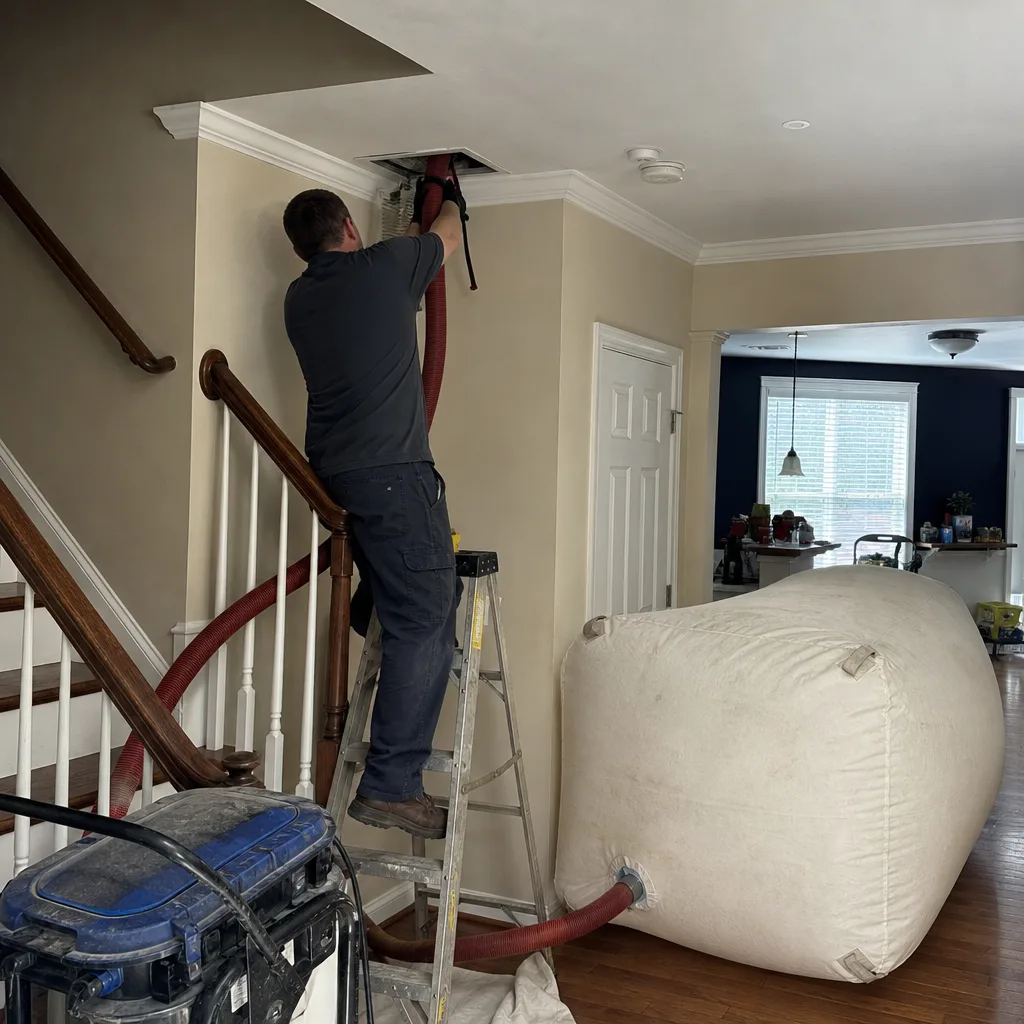
 Whole-home duct cleaning
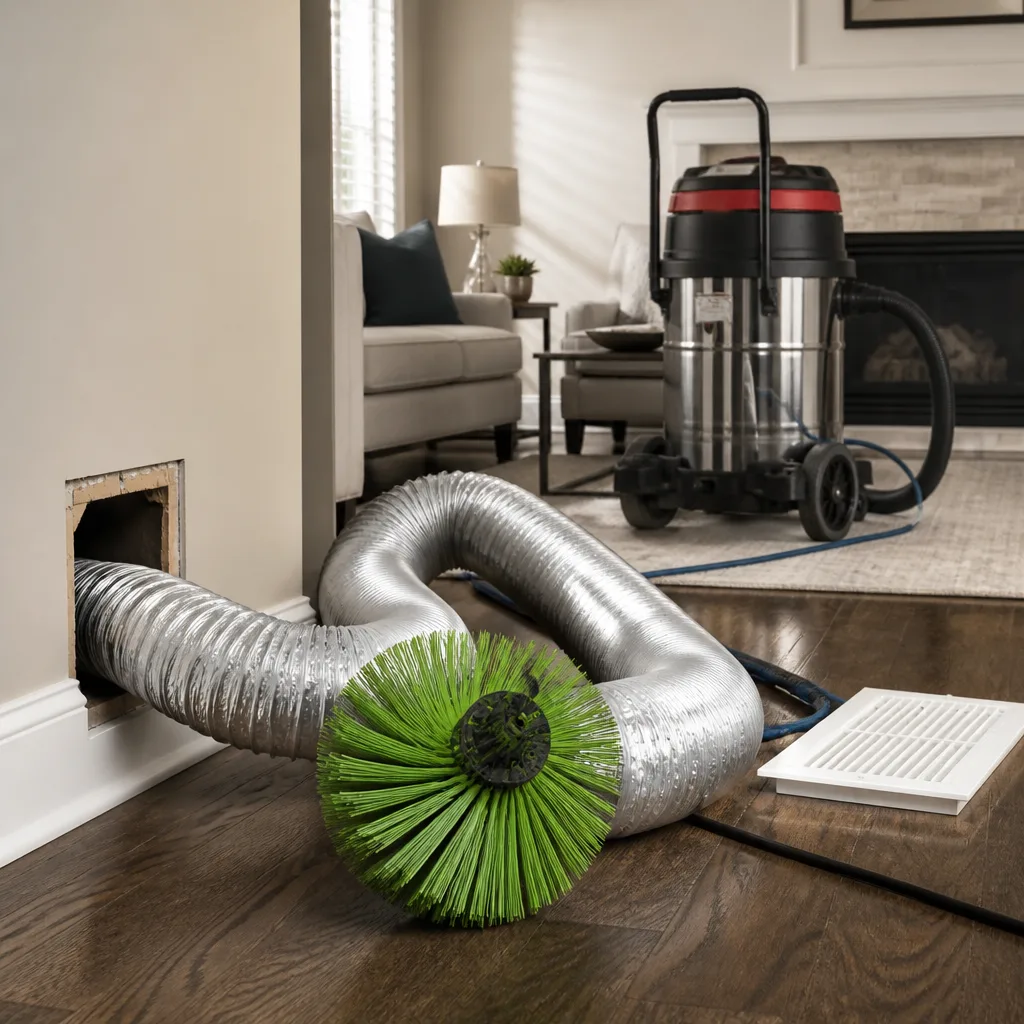
 Dryer vent cleaning
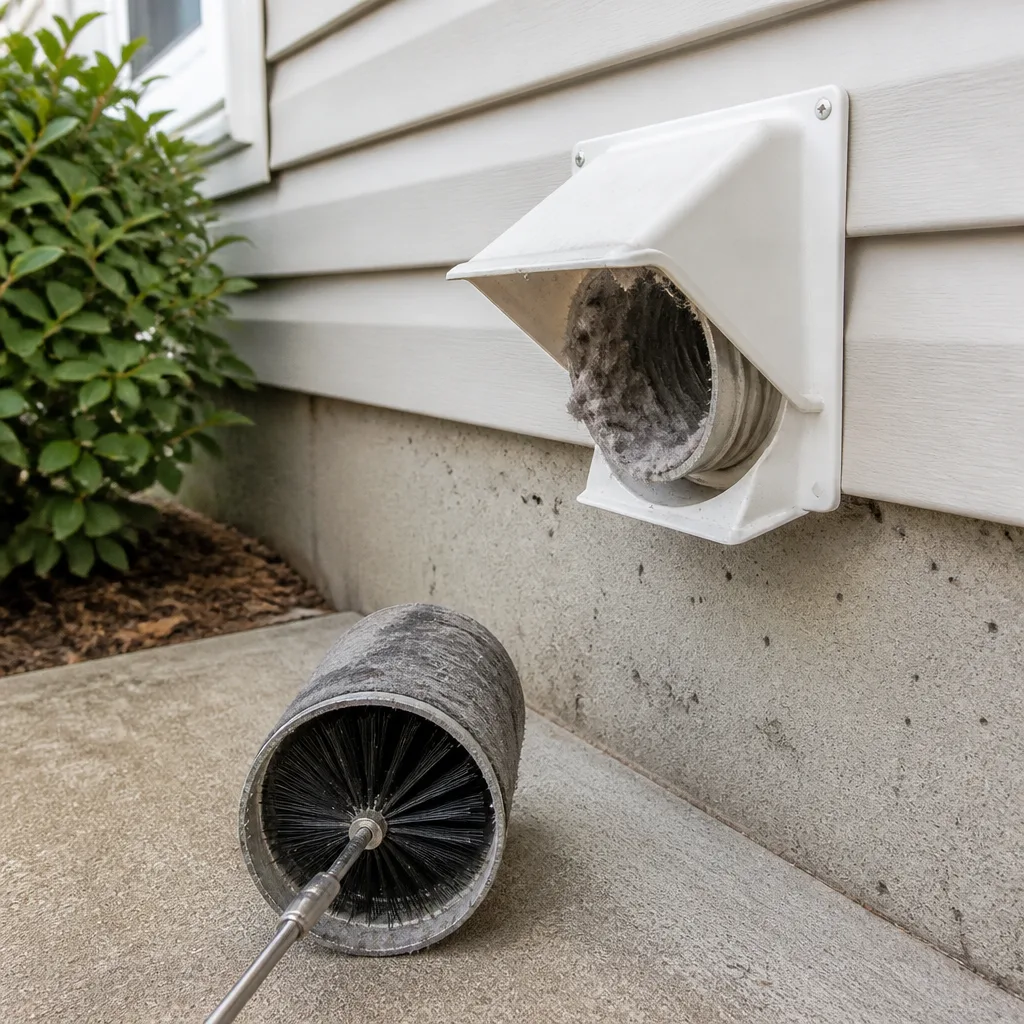
 Camera inspection
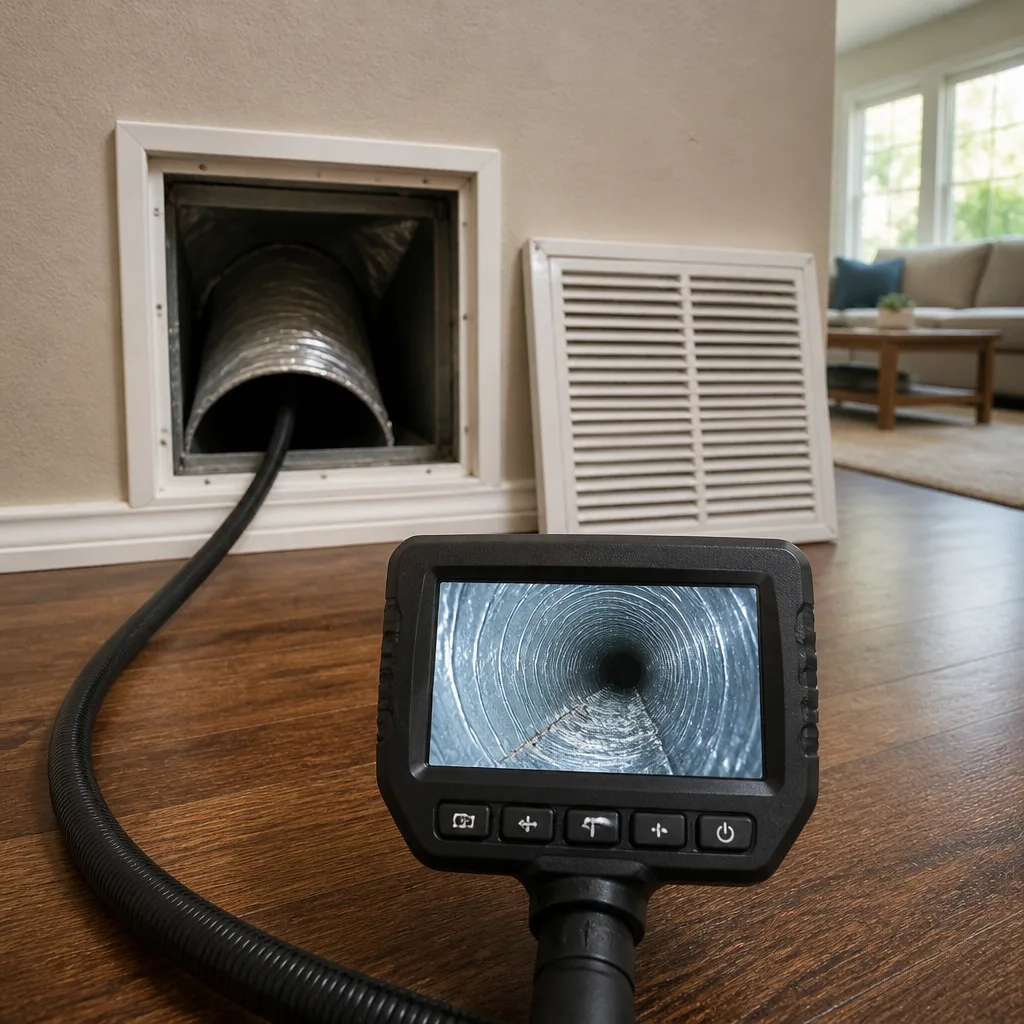
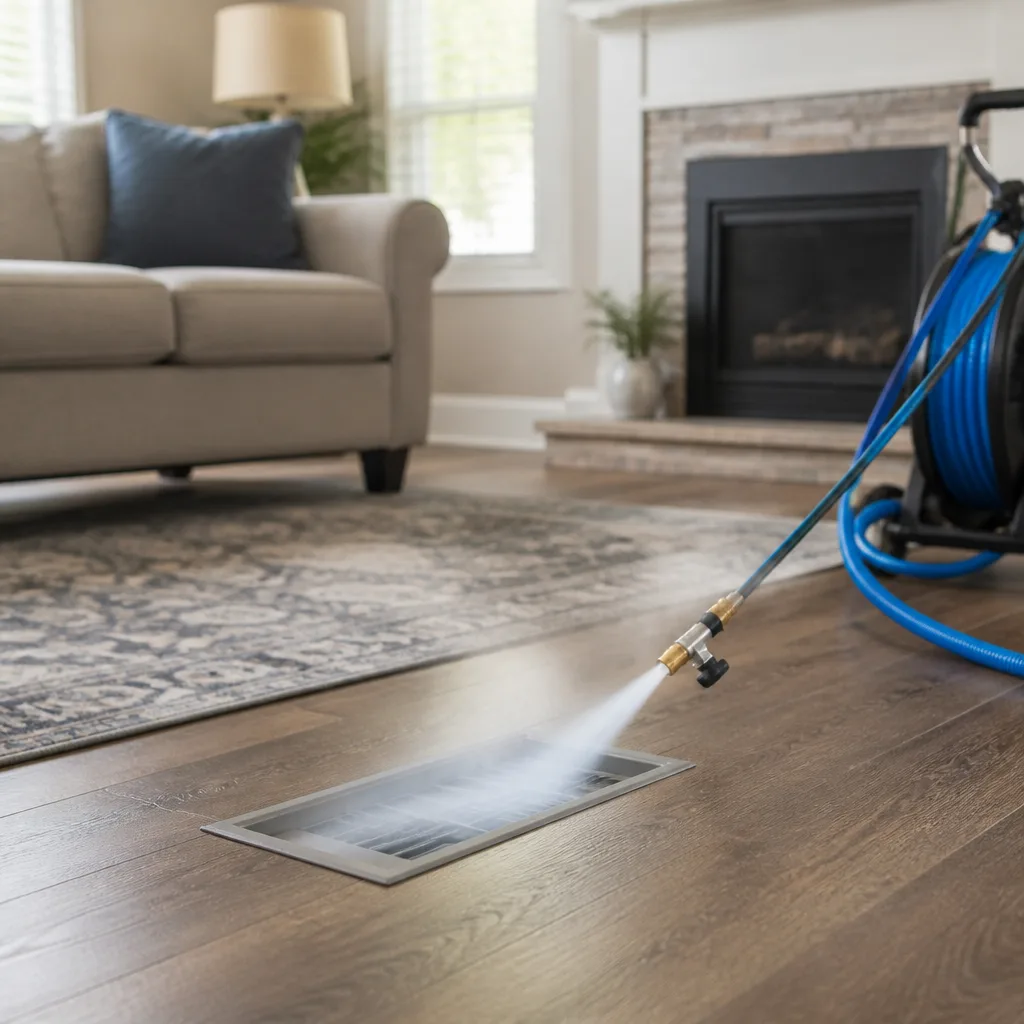 Sanitizing & deodorizing
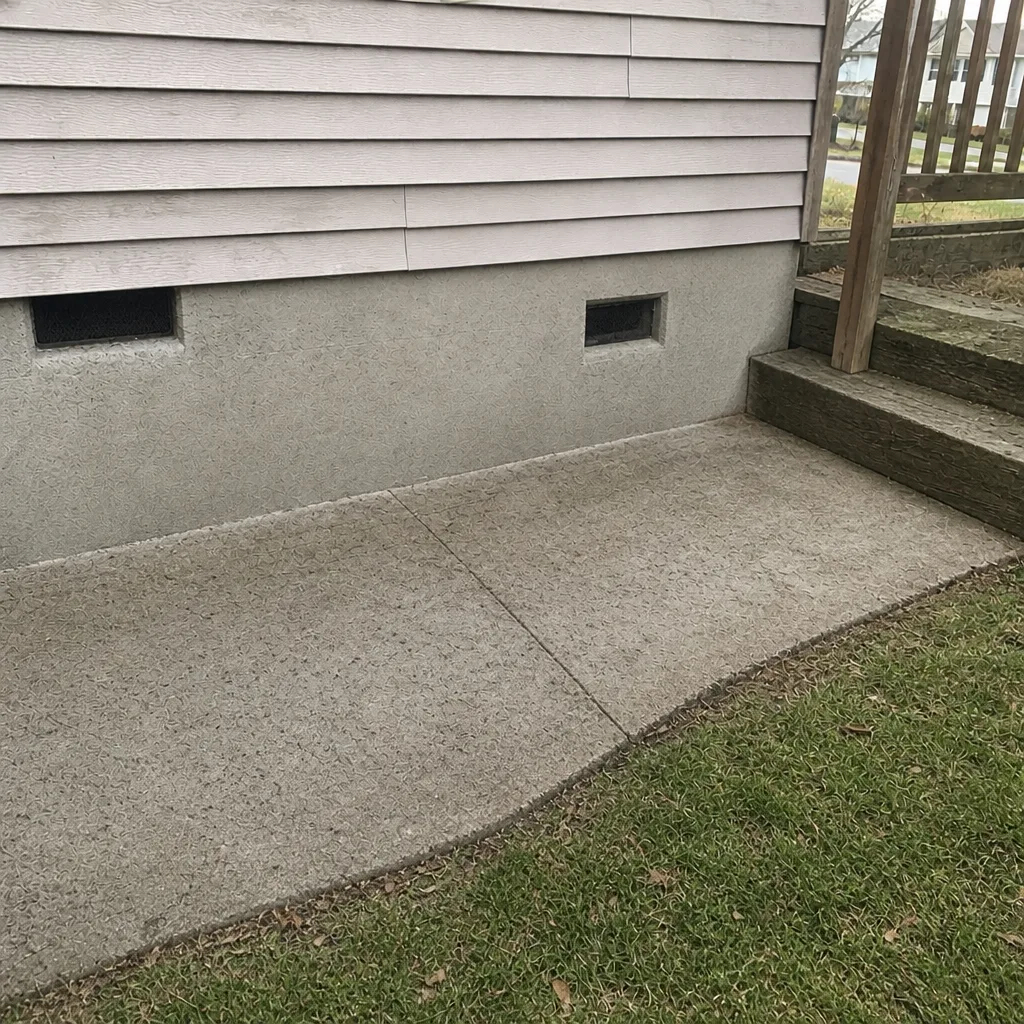
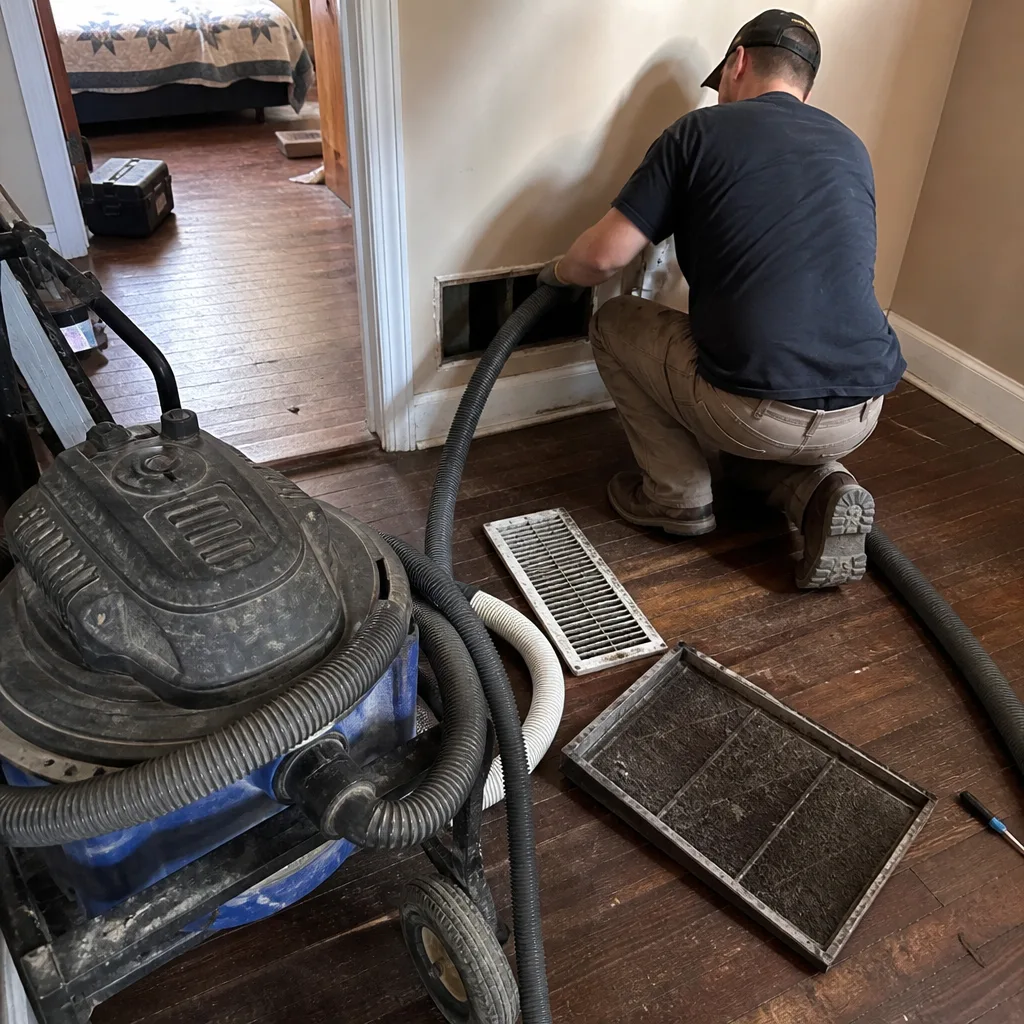
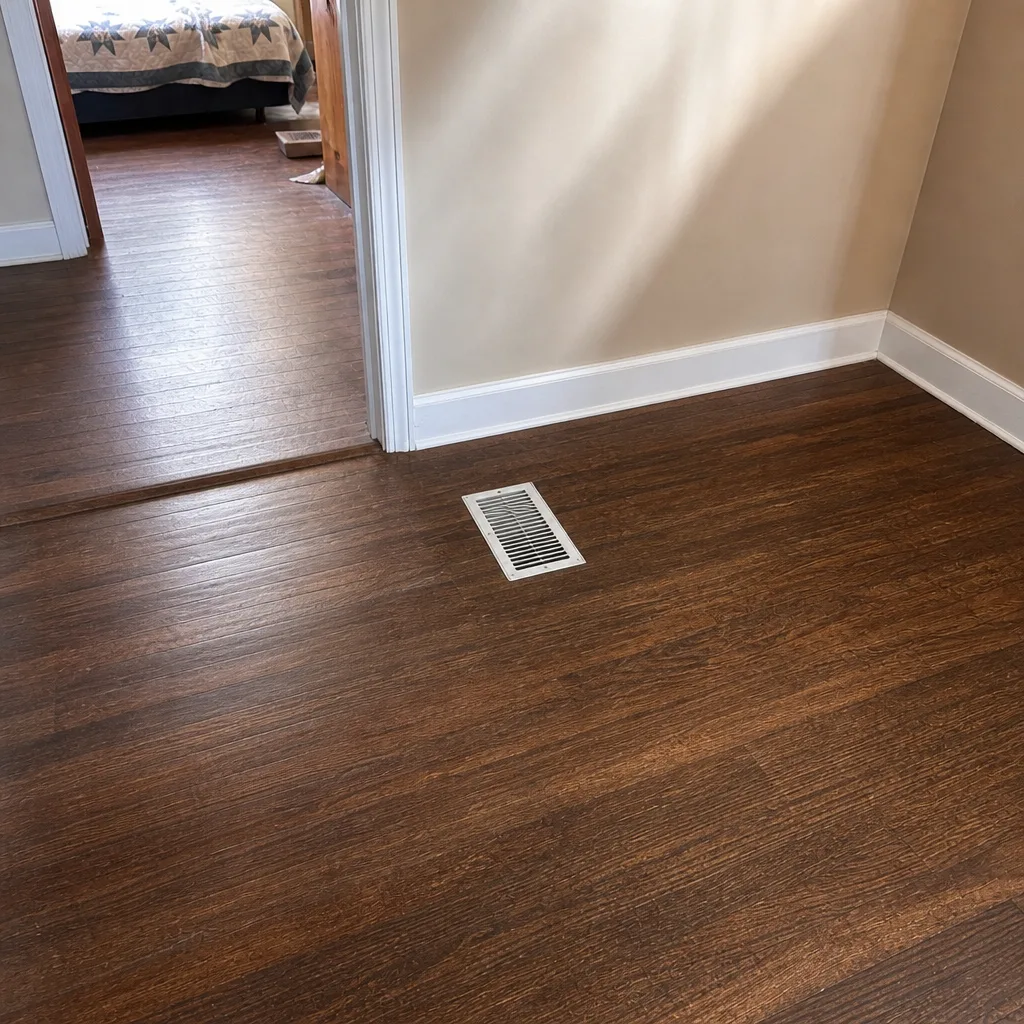
Whole-system duct and dryer vent check with before-and-after photos - you see exactly what came out of your vents
That "$99 whole-house special" is a bait ad - the real number appears once they are in your hallway, or the "clean" is a shop-vac at the register. We photograph the inside of your ducts before and after instead.
Air Duct Cleaning Permits, Codes & Inspections in Evansville, IN: What You Need to Know
Here’s the part most homeowners get wrong: cleaning your ducts usually needs no permit at all, but the job can cross a legal line the moment a technician disconnects a run of ductwork, drops in a new section, or sprays a chemical into the system. Indiana’s residential mechanical code draws a real distinction between “cleaning” and “alteration,” and that distinction matters if someone pulls flex duct off a trunk line in your attic and doesn’t reconnect it to spec. In Evansville, that gap between maintenance and modification is where problems hide. This guide walks you through what the code actually governs, when the county building department gets involved, how antimicrobial products are supposed to be registered, and what real inspection documentation looks like compared to the paper some contractors hand over.
Quick Answer
Air duct cleaning by itself is maintenance and does not require a permit in Evansville or under Indiana’s residential code. A permit and inspection become relevant when the work crosses into mechanical alteration – cutting, replacing, or rerouting ductwork, installing UV or whole-home filtration equipment, or encapsulating duct interiors with a sealant product. Antimicrobial treatments applied inside ducts must use EPA-registered products applied per their label, and any “clearance” claim after mold-related work should come from an independent party, not the company that did the cleaning.
Styles & brands we work with
- Whole-home duct cleaning
- Dryer vent cleaning
- Camera inspection
- Sanitizing & deodorizing
Table of Contents
- Where Cleaning Ends and Code-Regulated Work Begins
- What Indiana Residential Code Section M1601 Actually Governs
- When the Evansville-Vanderburgh Building Department Gets Involved
- EPA Registration and Antimicrobial Products Inside Ducts
- What a Post-Remediation Inspection Really Requires
- How to Request Documentation That Scope Stayed in Bounds
- Why Evansville Homes See Duct Problems in the First Place
- Common Mistakes to Avoid
- When to Call a Professional
- Frequently Asked Questions
Where Cleaning Ends and Code-Regulated Work Begins
Indiana’s residential mechanical code treats ductwork as a system with defined performance requirements, and it draws a distinction between maintaining that system and modifying it. Cleaning – brushing, agitating, vacuuming with negative pressure – is maintenance. Anything that changes the physical configuration, the material, or the sealed integrity of the system is an alteration, and alteration is where code provisions attach. This matters in Evansville because a lot of duct cleaning work happens in older homes where the ductwork is already marginal, and a technician who “just fixes” a loose connection while cleaning has technically performed mechanical work.
Here’s how to tell which side of the line a given task sits on:
- Cleaning only: source removal of dust and debris through access openings, HEPA vacuuming, agitation with rotary or compressed-air tools, then resealing the access points. No permit.
- Alteration: cutting into a trunk line to add a run, replacing a collapsed or torn flex section, changing duct size, rerouting a run around a new beam, or installing a new register boot. This is mechanical work and generally requires a permit from the local authority having jurisdiction.
- Equipment installation: adding a UV purification lamp in the air handler, installing a whole-home media filter cabinet, or adding a bypass humidifier. These modify the mechanical system and typically trigger permit review.
- Interior coating or encapsulation: spraying a sealant on the inside of ductwork to lock down debris or address microbial growth. This is a treatment application, not cleaning, and it comes with its own documentation requirements.
In our experience, the honest answer to “do I need a permit?” starts with what the technician is actually going to touch. If the plan is to clean and reseal, you’re in maintenance territory. If the plan involves a saw, a new section of duct, or a chemical sprayed inside the system, ask the question directly before the work starts.
What Indiana Residential Code Section M1601 Actually Governs
Section M1601 of the Indiana Residential Code is the duct systems chapter, and it covers the things that make a duct system safe and functional: material standards, how joints and seams get sealed, support spacing, clearance to combustibles, and the requirement that ducts be installed tight and terminated properly. What it does not do is regulate routine cleaning. There’s no language in M1601 that says a duct system must be cleaned on any schedule, and no provision that requires a permit for source removal of debris. The code is concerned with the system’s construction, not its cleanliness.
Where M1601 becomes relevant to a cleaning job is in the reconnection. When a technician disconnects a section of flex duct to clean behind it or to access a trunk line, that duct has to go back together in a way that satisfies the same sealing requirements as a new install. In practical terms, that means:
- Joints reconnected with the same class of sealant or approved tape the original install used, not a wrap of duct tape that will dry out and peel within a season.
- Support straps restored at the required spacing so the duct doesn’t sag and restrict airflow after the work.
- Clearance to heat sources maintained, particularly in attic runs where a reconnect can put duct closer to a flue or recessed fixture than it was before.
- Access openings sealed back to the same tightness as the rest of the system so the cleaning doesn’t leave you with a new leak path.
This is exactly the scenario that catches Evansville homeowners off guard. The cleaning itself was fine, but the reconnect wasn’t sealed to M1601 standards, and now the system is pulling attic air into the supply side. A reputable duct cleaning specialist reseals access points as part of the job. If someone leaves openings covered with tape and calls it done, that’s a red flag worth noting. You can read more about our own process on the air duct cleaning page.
When the Evansville-Vanderburgh Building Department Gets Involved
The Evansville-Vanderburgh County Building Department issues mechanical permits for work that alters a home’s mechanical systems, and duct work falls under that umbrella when it goes beyond cleaning. The thresholds differ by task, and knowing which tasks trigger a permit keeps you from being surprised mid-job.
- Duct replacement: Replacing a section of ductwork – a collapsed flex run, a rusted galvanized section, a crushed boot – is mechanical alteration and normally requires a permit.
- Duct extension or new runs: Adding a supply or return to a finished room means cutting into a trunk and installing new duct, which is permit territory.
- Encapsulation products: Coating the interior of ductwork with a sealant or encapsulant is a treatment application rather than a mechanical alteration in most cases, but because it changes the interior surface of the system and involves a chemical product, some jurisdictions want documentation of the product and its intended use. In Evansville, the safest approach is to ask the building department directly whether the specific product and scope require review.
- UV system installations: Adding an in-duct UV purification lamp means electrical work in or near the air handler, so it falls under the electrical permit side, and some configurations also touch mechanical.
- Whole-home filtration: Installing a media cabinet or a bypass filter is a mechanical modification and generally requires a permit.
The practical takeaway: a cleaning scope that stays within cleaning needs nothing from the building department. The moment the scope grows, ask who is pulling the permit. If the answer is “nobody, it’s just duct work,” that’s the moment to slow down. For homeowners doing a broader air quality review, our overview of Evansville Duct Cleaning explains the three services we actually offer and where our scope ends.
EPA Registration and Antimicrobial Products Inside Ducts
Any antimicrobial product applied inside ductwork in the United States must be registered with the EPA for that specific use, and it must be applied according to its label. That’s not a formality. A product registered for use on hard surfaces in a bathroom is not automatically approved for application inside an HVAC system, and a technician who sprays an unregistered product into your ducts has crossed from cleaning into an application that falls outside its legal labeling. Ask for the EPA registration number and the label use directions before anything gets sprayed.
What a compliant antimicrobial application looks like:
- The product is EPA-registered for HVAC interior use. The registration number should appear on the product label and in the documentation you’re given.
- The system is cleaned first. Antimicrobials applied to a dirty duct treat the surface debris, not the duct. Source removal comes first, then treatment, or the product is wasted and the growth comes back.
- The label directions are followed exactly. Application method, dwell time, ventilation, and any required re-entry interval come from the label, not from the technician’s habit.
- You get the product name, registration number, and application record. A one-line invoice saying “sanitized system” isn’t documentation.
- The applicator understands the treatment is not a clearance. Applying an antimicrobial is not a mold remediation completion, and it doesn’t stand in for an inspection by an independent party.
We use products from brands like Guardsman for microbial concerns inside duct systems, and we match the treatment to the condition we actually find rather than spraying on every job. If a system is clean and dry, it doesn’t need an antimicrobial – it needs to stay clean and dry. The Evansville humidity through the summer is enough to keep a wet system wet if the cause of the moisture isn’t addressed, which is a conversation worth having before a spray happens.
What a Post-Remediation Inspection Really Requires
Indiana does not license mold remediation contractors in the way some states do, and there is no state-mandated “clearance” certificate that only certain companies can issue. What the state does require is that work be done in a way consistent with recognized industry standards and, when a permit was pulled, that the work pass inspection by the authority having jurisdiction. For duct work involving mold, that gap is where contractors sometimes pass off a self-issued “certified clearance” as an official inspection. It isn’t one.
What a legitimate post-remediation review looks like on a duct system:
- Visual inspection of the interior surfaces after cleaning and any treatment, documented with before-and-after photographs of the same sections.
- Moisture assessment of the duct interior and the surrounding assembly. Mold won’t stay gone in a duct that keeps getting wet, so the moisture source has to be identified and corrected before anyone signs off.
- HVAC system check confirming the equipment isn’t reintroducing moisture through a condensing issue, an oversized system short-cycling, or a coil that needs cleaning.
- Independent verification when the work was significant. If a company both did the remediation and issued its own clearance, ask whether an independent party reviewed the result. That’s the difference between a job completed and a job verified.
- Written record of what was found, what was done, and what was left in place, tied to photographs and dates.
For duct work in Evansville that involves visible microbial growth, we tell homeowners the same thing every time: if the situation is large enough to need a formal clearance, that clearance should be issued by someone who didn’t do the work. Our job is cleaning and repair, and we’re honest about where that ends.
How to Request Documentation That Scope Stayed in Bounds
You can protect yourself with a simple request before any work starts: a written scope of work that lists exactly what the technician will touch, what will be removed, what will be resealed, and what products will be applied. Ask for it in writing, and compare the finished job to it. A company that can’t produce a written scope before starting is a company that will define the scope after the fact, usually on the invoice.
Here’s the documentation to request, in order:
- Written scope of work. Cleaning, repair, or both, with the duct sections listed by location (supply trunk, branch runs, returns, air handler).
- Product documentation for anything sprayed or applied inside the system, including the EPA registration number for antimicrobial products.
- Before-and-after photographs of the interior of the duct, taken at consistent points so the comparison is real. Ask to see them on completion, not just be told they were taken.
- Repair documentation for any duct section that was replaced or reconnected, listing the material used and the sealing method.
- A statement of permit status if the work included anything beyond cleaning. If a permit was required, the permit number and inspection result should be part of the record.
- Signed completion form confirming scope stayed within cleaning and any listed repair, with the technician’s note of conditions found.
We use professional-grade equipment from Rotobrush and Nikro and containment-class gear from Abatement Technologies, and we hand over before-and-after photographs of your own ducts as a standard part of the job. That’s not a marketing flourish – it’s the clearest way to demonstrate the work stayed inside the cleaning scope. If your home also uses a Honeywell or Aprilaire filtration setup, ask how the cleaning interacts with it, because those components have their own maintenance cadence.
Why Evansville Homes See Duct Problems in the First Place
Evansville sits in a stretch of the Ohio Valley where summers run humid and the shoulder seasons swing between heat and cool, which means HVAC systems here cycle through long cooling seasons and short heating seasons. That pattern affects ductwork more than most homeowners realize. A system that runs the cooling side hard from May into September keeps the supply ducts cool and often damp, especially in older homes where duct insulation has thinned or flex duct sits in an unconditioned attic that gets brutal in July. Moisture plus dust equals a surface that supports microbial growth. The cleaning isn’t the problem – it’s that the moisture source was there before the cleaning and stays after.
Housing stock matters too. Evansville has a lot of mid-century homes with galvanized trunk lines and short branch runs that have been patched, extended, and reconnected over the decades. Every one of those reconnections is a potential leak point, and a leaky return in an attic or crawl pulls unconditioned air into the system all season. We see a fair number of homes where the ducts haven’t been cleaned in a decade and the return side is the worst of it, partly because that’s where the filter sits and where dust accumulates first.
None of that changes the permit picture. Cleaning is still maintenance in Evansville, and cleaning is still what most homes need. But it does explain why we spend as much time talking about moisture and duct repair as we do about cleaning itself, and why we offer air duct cleaning alongside repair rather than treating them as separate businesses.
Common Mistakes to Avoid
- Assuming cleaning always needs a permit. It doesn’t, and a contractor who insists otherwise may be inflating the scope or may not understand the code. Cleaning is maintenance; alteration is where permits attach.
- Assuming the work never needs a permit. The opposite error is just as common. Replacing a duct run or installing a UV system without a permit can complicate a future home sale or insurance claim in Evansville.
- Accepting a verbal scope. A one-line invoice that says “cleaned ducts” tells you nothing about what was removed, what was resealed, or what was sprayed. Ask for the written scope before work starts.
- Taking “sanitized” as documentation. Antimicrobial products need an EPA registration number tied to HVAC use. If the documentation doesn’t name the product, the treatment isn’t documented.
- Believing a self-issued clearance is an inspection. When a company both performs the remediation and certifies it as clear, you don’t have independent verification. You have a statement.
- Letting access openings go resealed with duct tape. Tape peels within a season and leaves a leak path in the system. Sealing back to M1601 standards is part of finishing the job.
- Skipping the moisture question. Cleaning a duct system that stays wet from an unrelated cause means the growth returns. The moisture source is the real problem, not the dust.
When to Call a Professional
Call a specialist when you’re seeing or smelling something the system shouldn’t be producing – a musty odor that returns after the AC cycles off, visible debris blowing from registers, uneven airflow between rooms, or an unexplained jump in allergy symptoms that tracks with time spent at home. Call when a duct section has collapsed, torn, or come disconnected in the attic or crawl, because that’s a repair, not a cleaning. Call when you’re buying an Evansville home and the inspection report flags the ductwork, because the repair scope and the cleaning scope are different conversations. And call when you’ve had a contractor hand you a “sanitized system” receipt with no product name and no photographs attached. Evansville Duct Cleaning offers free estimates in Evansville – call (833) 725-5641. We answer 24/7. Fast dispatch from 7am to 7pm, Sunday through Friday.
Frequently Asked Questions
No. Air duct cleaning is maintenance under Indiana’s residential code and does not require a permit from the Evansville-Vanderburgh County Building Department. A permit becomes relevant when the work crosses into mechanical alteration – replacing duct sections, adding new runs, or installing UV or filtration equipment.
Indiana does not issue a specific air duct cleaning license. Mechanical work that modifies ductwork does fall under contractor licensing and permitting requirements at the state and local level, which is part of why the cleaning-versus-alteration distinction matters so much. Ask any contractor to explain which category the work falls into before it begins.
Cleaning removes debris from the inside of the duct system without changing its configuration, and alteration changes the material, routing, or physical structure of the ductwork. Section M1601 of the Indiana Residential Code governs how ducts are built and sealed, not how often they’re cleaned. If the job involves cutting, replacing, or adding duct, you’re on the alteration side.
Yes. Any antimicrobial applied inside ductwork must be EPA-registered for HVAC interior use and applied according to its label directions. Ask for the product name and EPA registration number, and confirm the system was cleaned before treatment was applied – treating a dirty duct just treats the debris.
A real inspection includes before-and-after photographs of the duct interior, moisture assessment, a check on the HVAC equipment, and independent verification if the work was significant. Indiana does not license mold remediation contractors, so a “clearance certificate” issued by the company that did the cleaning isn’t an official state inspection. It’s a self-certification.
Ask for a written scope of work before any work begins, then compare the completed job against it. You want a list of sections cleaned, products applied with EPA registration numbers, photographs of the duct interior before and after, and a statement of permit status if any repair or equipment installation was part of the job.
See the difference
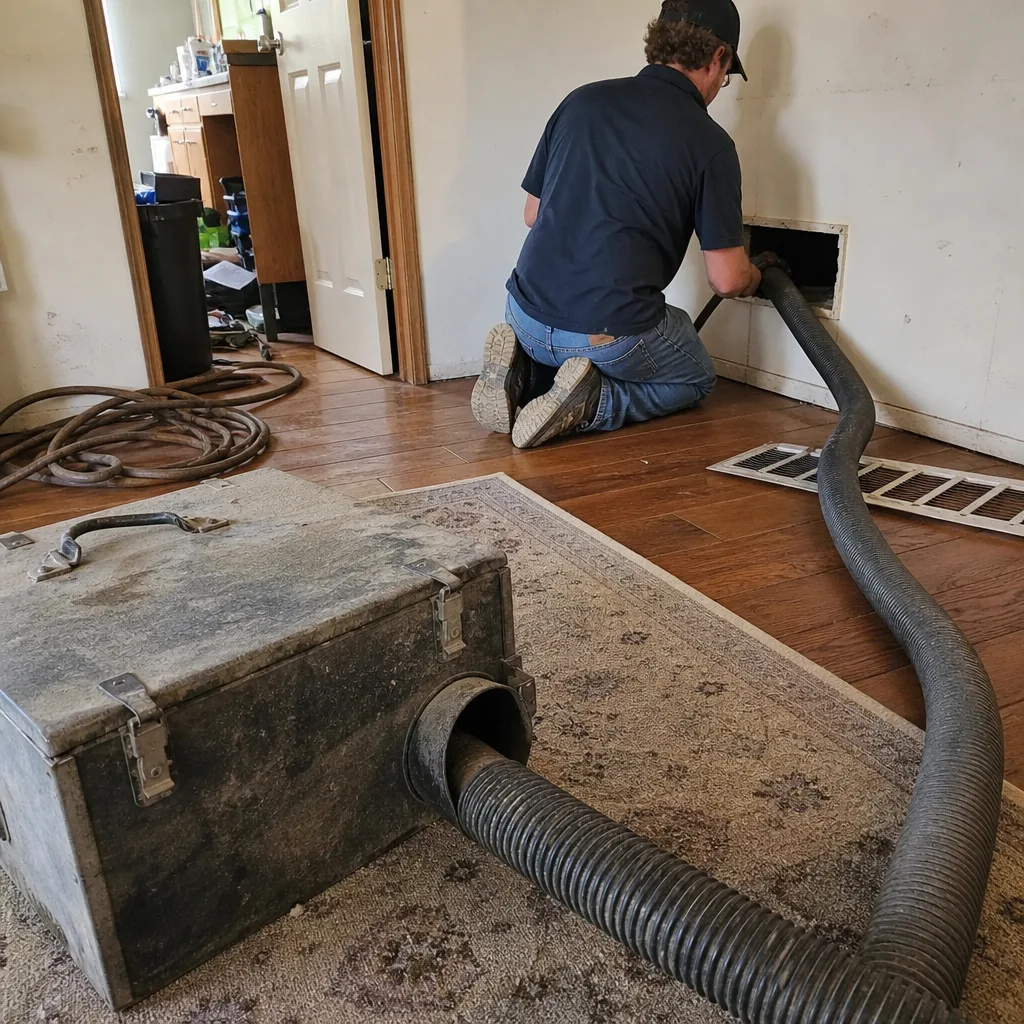 Before
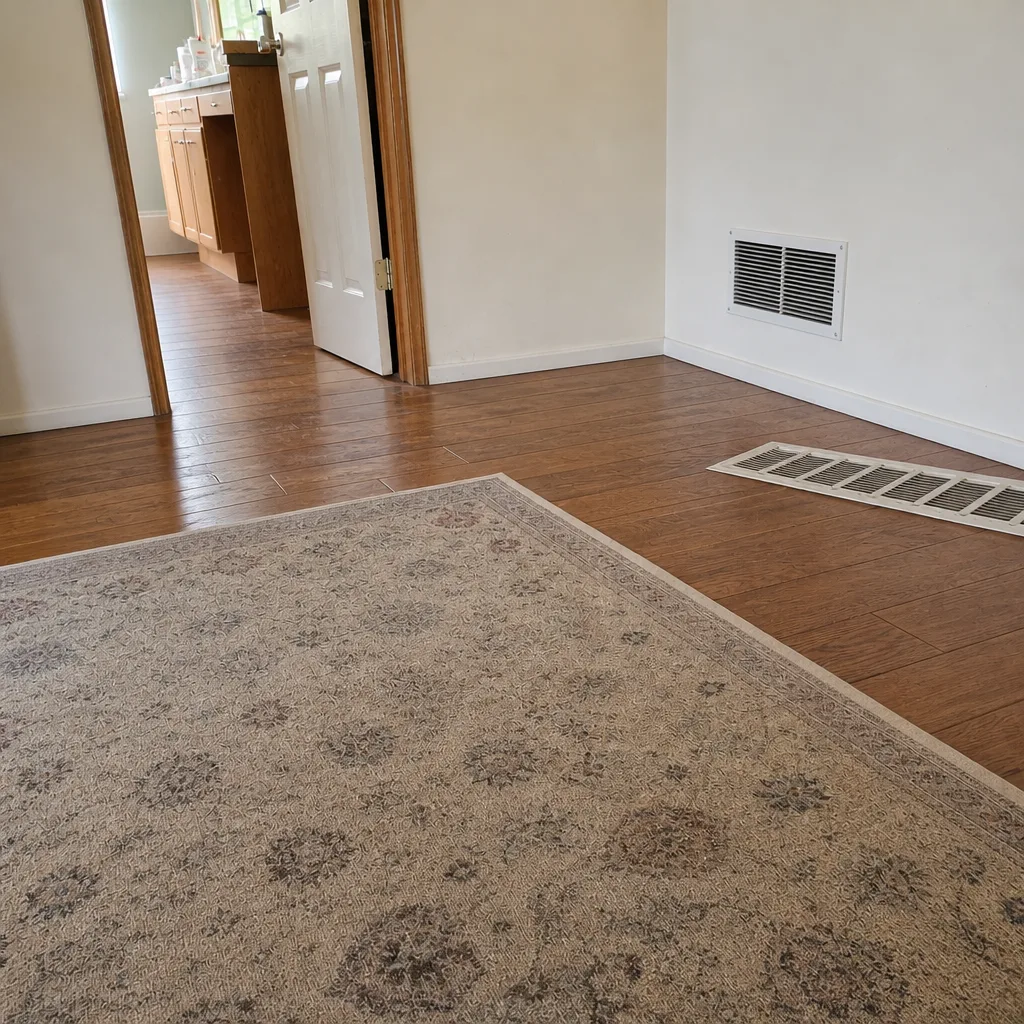 After
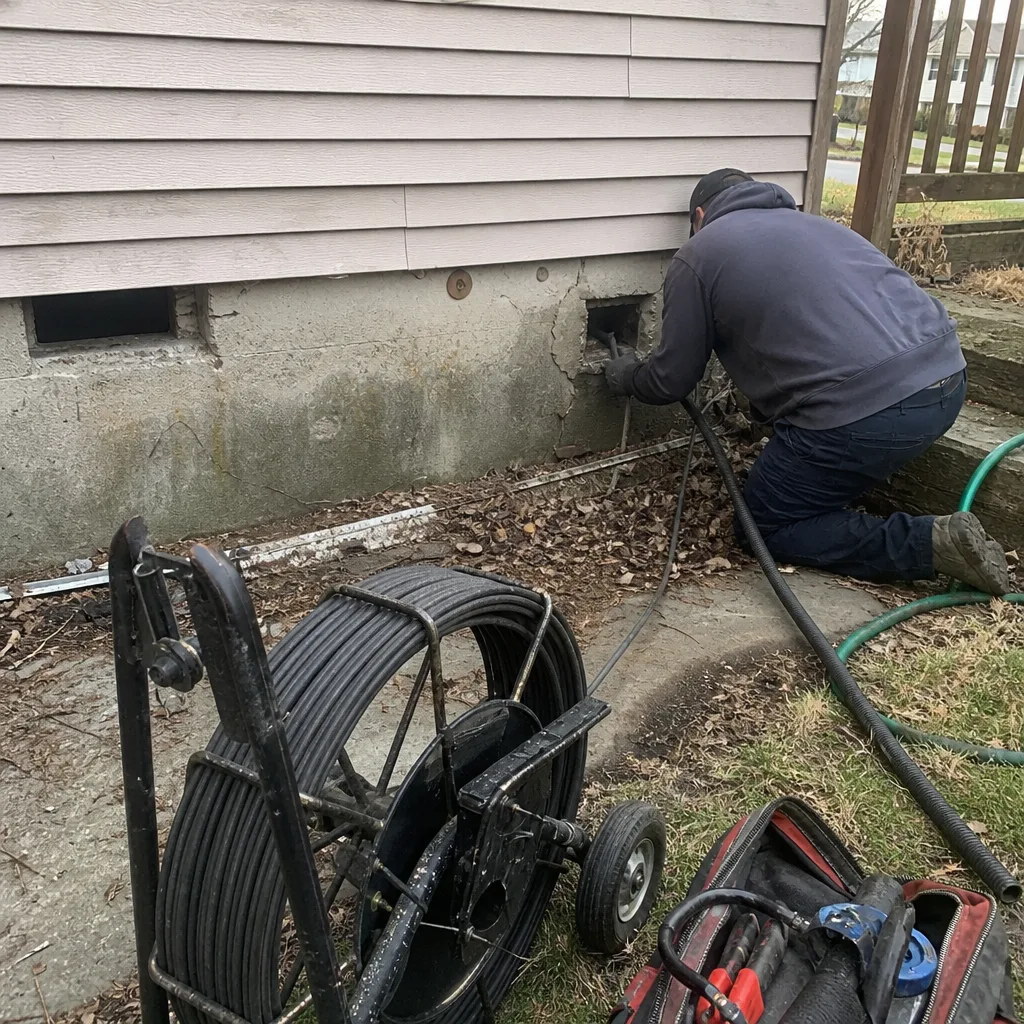 Before
 After
 Before
 After
The Bottom Line
Air duct cleaning in Evansville is maintenance and doesn’t require a permit. The code questions start when the job moves from cleaning into alteration – cutting, replacing, or adding duct, installing equipment, or applying a treatment product inside the system. Know which side of that line your job sits on, ask for a written scope before the work begins, and ask for the EPA registration number on anything sprayed. If a contractor offers you a “certified clearance” on their own work, treat that as a statement rather than an inspection. We clean and repair, and we document the work. Written by the team at Evansville Duct Cleaning.
Related Reading
- dryer vent cleaning – the one duct in your home that’s a fire-safety matter, not just an air-quality one.
- Evansville – how the local climate and housing stock shape what we find in duct systems here.
Get a Free Duct Assessment in Evansville
If you’re not sure whether your project is cleaning or repair, that’s the first question we answer on every estimate. We bring professional-grade equipment and a clear scope of work, we reseal every access opening to code, and we hand over before-and-after photographs of your own ducts. Licensed and insured, one flat price per system agreed before any work starts, and a satisfaction guarantee on the job. Call (833) 725-5641 for a free estimate. We answer 24/7. Fast dispatch from 7am to 7pm, Sunday through Friday.
Written by the team at Evansville Duct Cleaning.